










 “India’s one billion plus population is the most heterogeneous in the world. There are far more ethnic, linguistic and religious groups than in, say, the European Union. Yet, a far greater degree of unity has been achieved among India’s disparate ethnicities than among the tribes of Western Europe.” – Prof. Jean-Pierre Lehmann
Many in the West and elsewhere were shocked that an Afghan man, Abdul Rahman, was facing possible execution for having converted to Christianity. This is a crime, we were told, punishable by death according to Shariah law, which is the law of the land in Afghanistan, as well as in a good number of other Muslim countries.
 And even now that Mr. Rahman has safely arrived in Italy, where he was granted asylum, the episode is a telling example of the intolerance that is often the result of strict monotheism.
To be sure, Christianity was even worse in its own heyday, not only because “heathens” were exterminated in all sorts of diverse forms, but also those whose Christianity (for example, the Albigensians in the 12th and 13th centuries) was deemed to be “heterodox.”
Also, the Spanish conquistadores in Latin America, in collusion with the Church authorities, burned a good number of infidel American Indians.
Declining hostility
Generally speaking, however, over the course of the last couple of centuries or so, as the political clout and influence of the Christian churches has waned, the execution, torture and imprisonment of infidels and heretics has greatly decreased.
Today, there are a good number of converts to Islam living in Christian countries — and they have encountered relatively little hostility.
Religious collusion
 The idea that Christian civilization (a fairly loose term) renounced religious persecution simply because the power of the churches declined is, of course, belied by the Holocaust.
Despite being carried out by secular authorities, the Holocaust took place in Christian countries — and with the silent connivance of the established Christian churches. A quite vivid illustration is that of the fascist Ustaše movement in Croatia, which was in close cahoots with the Catholic Church.
The Jews who were brought to the concentration camps were far worse off than Abdul Rahman, who — before he found refuge in Italy — had been told he would not be executed if he converts back to Islam. The Jews at Auschwitz were not given a similar option.
Violent records
Although both Christianity and Islam each have their strong points, without doubt, on balance their historical record would show more liabilities, more warfare, more intolerance, more persecution, than truly positive assets.
The number of people killed in the name of these two religions must be far greater than the numbers killed for any other cause. Furthermore, in this first decade of the 21st century, religion plays a far more prominent role than it used to.
Hijacking the faith
In the case of the three monotheistic religions, Judaism, Christianity and Islam have all been hijacked by their respective fundamentalists.
I am a great believer that the progress of civilization requires the gradual eradication of all forms of established religion. Not by force, I hasten to add, but by the evidence of history, the rationality of man and the persuasion of humanist secularism.
In Western Europe, where the vast majority of the population is no longer Christian in anything but name, sadly humanism has not taken hold.
Filling the void
An addiction to money, or psychoanalysis or drugs — or a combination of the three — tends to prevail. Whatever has the upper hand, it is definitely not humanism.
So it would seem people have a natural desire for religion or something that can be substituted for it — if not god, then mammon.
Polytheistic acceptance
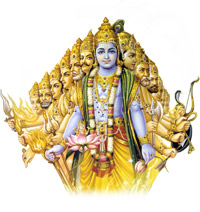 In recognizing this reality, therefore, it would seem that perhaps rather than eradicating religion per se, we should instead eradicate monotheistic religion in favor of polytheistic religion.
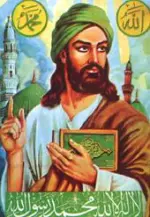
If you have only one god, and you believe that god is all-powerful and omniscient, and you come across someone who does not agree, then you may feel it is your duty to kill him.
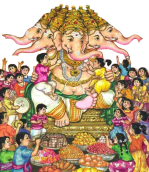
If, on the other hand, you believe there are hundreds, indeed thousands of gods, and that none can be totally almighty or omniscient, then you are likely to be far more tolerant.
Intolerant tendencies
The great pre-Christian civilizations of Greece and Rome had no religious wars and had a far healthier view of their frolicking gods and goddesses than the intolerant monotheistic Christianity that later came to dominate Europe.
Polytheistic religions also tend to have a far more positive and healthier attitude to sex, which is seen as a good thing, than do the monotheistic faiths, where there is a much stronger tendency to equate sex with sin.
Militant Christianity
 As concerns the United States, militant Christianity is clearly in ascendance, indeed it has one of its own in the White House. According to a recent Pew survey, 15, 14 and 20% of the U.S. population said they would have reasons not to vote for a presidential candidate who was Catholic, Jewish or Evangelical Christian.
However, when that candidate was an atheist, the percentage, at 41%, was substantially higher. This is extremely worrying and does not portend well for the future. While it would seem that religious Americans are more tolerant as concerns their respective religions, they remain brazenly intolerant of atheists.
Perhaps the most encouraging development in this early 21st century is the emergence of India as an increasingly global force, economically, politically and culturally.
Managing multiculturalism
There are many anomalies, problems and injustices in Indian society — and some of these, such as the caste system, have been perpetrated by religion.
But India is a microcosmic reflection of how globalization can work, especially in its generally remarkable ability to have managed multiculturalism to such a brilliant extent.
Diverse Unity
India’s one billion plus population is the most heterogeneous in the world. There are far more ethnic, linguistic and religious groups than in, say, the European Union. Yet, a far greater degree of unity has been achieved among India’s disparate ethnicities than among the tribes of Western Europe.
Thus, though Fareed Zakaria in “The Rise of Illiberal Democracy” has rightly pointed out that democracy can more often than not be the problem rather than the solution in inter-communal relations — witness Iraq!
Perhaps the greatest achievement of India is to have maintained a very robust democracy in an extremely multi-ethnic environment. Contrast that with Egypt, for example, which used to have a highly multi-ethnic make-up, but which has now been mostly dissipated.
Hardly Utopia
Of course India is not Utopia. No place is — and no human is perfect. Against the remarkably inspirational preaching of non-violence of Mahatma Gandhi, India has opted to become a nuclear power.
Nehru’s alleged egalitarianism notwithstanding, India has the dubious distinction of having the world’s greatest number of illiterates, especially among women. So, yes, there are failings galore and there are also, alas, Hindu fundamentalists.
A global ethical role model?
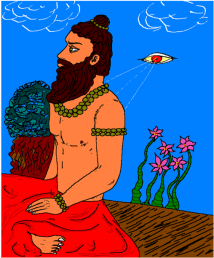 But in a global environment desperate for ideas, philosophy and religion, India is the most prolific birthplace of all three — because of the great synergy of democracy and diversity, and the much greater degree of self-confidence that Indians now feel.
Indians and members of the enormous Indian Diaspora — over which the sun never sets — are the thought leaders in economics, business, philosophy, political science, religion and literature.
The planet needs quite desperately a sense of moral order, spirituality and an ethical compass. The Indian religious and philosophical traditions can provide a great deal of all three.
It was in a recent conversation with an Indian religious guru that I was also pleased to discover I could adhere to his religious tenets, while maintaining my secular convictions. No imam or priest would allow me that.
More than a global economic force
The planet also needs an alternative geopolitical force to the American Christian fundamentalist brand of hegemonic thinking that the Bush Administration has generated — and that is not likely to evaporate even after his departure from office.
Europe is an inward-looking and, in many ways, spent force. China is a dictatorship. The Islamic world is going through an awkward moment — to put it mildly.
Hence the importance of the role India must play in this respect — both because of its innate qualities and because there is no other serious contender. The 21st century better become the century inspired by the virtues of Indian polytheism — or else we are headed for disaster. – The Globalist, Washington, March 30, 2006
» Prof. Jean-Pierre Lehmann teaches International Political Economy at the International Institute for Management Development (IMD) in Lausanne, Switzerland.
Filed under: india | Tagged: abrahamic religions, civilization, culture, ethnography, globalisation, hindu dharma, hinduism, holocaust denial, monotheism, multiculturalism, polytheism, religion, secularism, theology | 9 Comments »