









 “As modern India renews ties with Central Asian nations with whom we lost our land links due to Partition, it would help to teach students that while it is a colonial (and post-colonial) fantasy that the Aryans raced down the Central Asian steppes, the Mongols and medieval Turks took this route in their quest for empire. For a century between 1221 and 1327, the Mongols raided the subcontinent, subduing Kashmir and occupying much of modern Pakistan and Punjab. … The Great Khans rank among the world’s greatest imperialists, overrunning Russia, China, and Central Asia.” — Sandhya Jain
 At the banquet hosted for Mr Modi, Uzbekistan President Islam Karimov said, “Quite a lot of history, literature, music, painting and architecture of the Uzbek and Indian people, their mutual enrichment and mutual penetration is linked with the name of our great ancestor Zahir-ud-din Muhammad Babur and his descendants, with everlasting heritage which they left to humanity”. He added, “ancient Indian culture, which strikes with its depth, perfect form and variety, exerted and continues to exert a startling influence on many countries of the Orient. It is for this very reason that today India and its diligent people enjoy a stable respect in our country”.
Babur, of Mongol-Uzbek descent, founded the Moghul empire; Hindu memory of his legacy clashes with that of the Uzbek, for whom he ranks as a warrior of the genre of Chengez Khan, in an age when History belonged to the conqueror. But the larger point being made by President Karimov is that history is factual—it cannot be undone—and seamless. The continuity of Time links apparently tectonic ruptures.
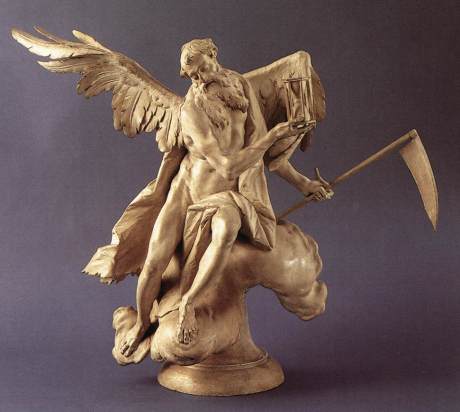
Hence Chronology (from the Greek god, Chronos, Time) is the backbone of History, against which students are taught about nations and civilisations. Yet textbooks of the erstwhile UPA government, currently under review for correction, are remarkable for persistent disrespect to chronology, depriving tender minds of a coherent sense of history. Some chapters of Indian history have a mixed, even vexed, legacy; shying away from the factual narrative (which alone is required at school level) can only produce an intellectually handicapped citizenry.
The NCERT Social Science textbook, Our Pasts, for Class VII (12-year-olds), deals with new dynasties such as the Rashtrakutas and Cholas in a chapter that suddenly mentions Mahmud of Ghazni, though there was no link between them. The chapter on Delhi Sultanate omits the Turkish invasions which were the backdrop to its establishment. Possibly the intention is to project the Sultanate as an indigenous kingdom, a grave distortion.
Qutbu l-Din Aibak, founder of the Delhi Sultanate, is ignored, while there is sudden mention of Iltutmish as father of Razia, a short-lived ruler of no consequence. This chapter discusses architecture of the Sultanate era, mainly the Quwwat-ul Islam mosque, while a later chapter mentions the Qutb Minar. The eminent historians who oversaw the project (the Who’s Who of history scholars) were so confused that Sultanate architecture again figures in the chapter on Mughal architecture! It mentions the Mongols, without linking them to developments of the time.
 As modern India renews ties with Central Asian nations with whom we lost our land links due to Partition, it would help to teach students that while it is a colonial (and post-colonial) fantasy that the Aryans raced down the Central Asian steppes, the Mongols and medieval Turks took this route in their quest for empire. For a century between 1221 and 1327, the Mongols raided the subcontinent, subduing Kashmir and occupying much of modern Pakistan and Punjab. Their ingress brought them into conflict with the Delhi Sultanate. Hulagu Khan’s desire for conquests in the west took the bulk of the Mongol armies towards Baghdad and Syria, sparing India, though wars continued. In Baghdad, the Mongols converted to Islam; native Mongolians remained Buddhist. The Great Khans rank among the world’s greatest imperialists, overrunning Russia, China, and Central Asia.
 It is a safe bet that average students do not know that the Turks originated in Central Asia; the Arab armies converted them to Islam in the seventh century and blocked the land route by which Chinese pilgrims came to India. Korean pilgrim Hyecho was possibly the last to take this route, and witnessed the changes being wrought by the new faith.
It is these ancient land routes—beaten out by traders and pilgrims and followed by armies—that Asia’s contemporary rulers want to revive to mutual advantage; hence the International North South Transport Corridor, BRICS, Shanghai Cooperation Organisation, Ashgabat Agreement, Silk Road Economic Belt and Eurasian Economic Union. Ignorance of history can only be a handicap to the rising generation.
All nations joining these initiatives are equally concerned with terrorism. There are the Chechens in Russia, Uighurs in China, the Islamic Movement of Uzbekistan, the Taliban in Afghanistan, Al Qaeda and multiple groups in Pakistan and India. Iran is helping Iraq fight the Islamic State of Iraq and Syria.
Closer home, fundamentalism in undivided Bengal, specially the Great Calcutta Killing of 1946, forced the Congress to succumb to Partition. But, in recent times, Bangladesh Prime Minister Sheikh Hasina Wajed has emerged as the foremost leader fighting jihadis; she is also denying sanctuary to northeast insurgents from India. To reciprocate, Prime Minister Narendra Modi persuaded West Bengal Chief Minister Mamata Banerjee to help resolve the vexed land boundary dispute with Dhaka. Both nations are now working on the sharing of Teesta waters, and will hopefully tackle the issue of illegal immigrants.
History is thus a continuum. Hence, it is inexplicable how purging Rana Pratap from the story of Akbar makes better history. Even the fact that the early Mughals distrusted and fought the Afghans is suppressed to project the ruling elite as a composite balance of foreign and Indian ethnic groups. Actually, the Mughals incorporated the Marathas much later in a bid to pacify them when they could not be crushed militarily.
Temple destruction may be mentioned or omitted altogether. But centuries of iconoclasm by Muslim armies cannot be equated with stray instances of Hindu rulers taking the tutelary deity of a defeated king to their own realms. The great Vijayanagar empire; the stressful relations between the Sikh Gurus and Jehangir and subsequent emperors, particularly the execution of Guru Tegh Bahadur, have place in an honest history. Any reference to Shivaji is meaningless without explaining Aurangzeb’s 25-year bid to expand the Mughal empire into the Deccan. In sum, the modification of textbooks is overdue. – Vijayvaani, 15 July 2015
» Sandhya Jain is a writer of political and contemporary affairs for The Pioneer, New Delhi. She edits an opinions forum, Vijayvaani, and contributes to a web portal, Niticentral.

Filed under: asia, india | Tagged: babur, hindu civilisation, indian historians, indian history, moghuls | Leave a comment »




 BHARATA BHARATI