














 “While meat consumption levels have plateaued in industrialised countries, there is a general correlation between wealth and diet. As incomes rise in the emerging economies, meat consumption is booming. Left unchecked, shifting diets, coupled with a growing population, would see global meat consumption increase by more than 75% by 2050.” – Laura Wellesley
 As the Paris Conference of the Parties (COP21) draws near, the international spotlight is more focused on climate change than at any time since the Copenhagen talks of 2009.
But amid all the talk of decarbonising energy and transport systems, one crucial area remains in the shadows. The livestock sector produces about 15% of global greenhouse gases, roughly equivalent to all the exhaust emissions of every car, train, ship and aircraft on the planet.
A new report from the think tank Chatham House, Changing Climate, Changing Diets: Pathways to Lower Meat Consumption, argues that without concerted action to address over-consumption of meat, it will be near impossible to prevent global warming from passing the danger level of 2C.
Who is eating all this meat?
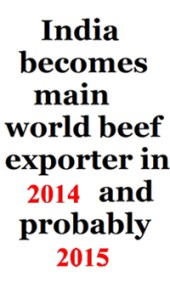
The US has one of the highest levels of meat consumption in the world at about 250g per person per day, almost four times the amount deemed healthy by experts. Europe and the major livestock-producing nations of South America are not far behind, while, at the other end of the scale, Indians average less than 10g of meat per day.
While consumption levels have plateaued in industrialised countries, there is a general correlation between wealth and diet. As incomes rise in the emerging economies, meat consumption is booming. Left unchecked, shifting diets, coupled with a growing population, would see global consumption increase by more than 75% by 2050.
What is being done about it?
Very little. As of 21 October, commitments to reducing emissions from the livestock sector appear in only 21 of the 120 national plans submitted in advance of the Paris climate conference. Reducing meat consumption appears in none.
Why not?
Governments fear a backlash from voters over interference in such a personal choice as diet. And because public awareness of the link between diet and climate change is so low, there is very little pressure on governments to do anything about it. This “cycle of inertia” means dietary change continues to be a low policy priority despite its importance.
Are there any grounds for optimism?
Yes. Even though COP21 is highlighting the need for climate action and, though a deal seems likely, the pledges made in advance of the summit would put us on a path to warming of about 3C by the end of the century, leaving much work to be done if we are to get to 2C.
But reining in excessive meat consumption could close the gap by as much as a quarter and will represent an attractive strategy for governments in need of credible and affordable solutions.
Moreover, with excessive meat consumption now in the headlines for health reasons, there has never been a better time to act. Governments should seize this opportunity.
 What should be done?
The first priority is to increase public awareness—both to allow people to make informed choices about what they eat and to build support for further action. But it is clear that information campaigns alone will not suffice.
Governments should use the full range of policy levers available to them. Changing the food served in public organisations—to offer a greater share of vegetarian and vegan options—would provide a boost to sustainable suppliers and issue a powerful signal to the millions of people who eat in public offices, schools, the armed forces, hospitals and prisons.
Price reform will also be needed to reflect environmental costs and incentivise behaviour change at the scale needed.
Will the public accept government intervention in our food choices?
Focus groups carried out by Chatham House in four countries suggested that as long as the public could see a strong rationale for change, they would come to accept government intervention on diets.
What’s more, the public appears to expect that governments will take action in the public good. With a strong enough signal from governments and the media about why we need to change our eating habits, the public is likely to come to accept initially unpopular policies.
History also provides grounds for optimism in this regard. Awareness-raising and price reforms have been successful in shifting our behaviour in terms of smoking and drinking. – BBC, 24 November 2015
» Laura Wellesley is a research associate at the think tank Chatham House. This article is based on a new Chatham House report Changing Climate, Changing Diets: Pathways to Lower Meat Consumption by Laura Wellesley, Catherine Happer and Antony Froggatt.


Filed under: india | Tagged: beef, climate change, development, economic development, environmental pollution, geopolitics, india, international politics, meat export, meat-eating | 3 Comments »