










 “We take issue with India’s Daughter not because it sheds light on the pervasiveness of violence against women in India, but because its fundamentally flawed understanding of the issue is the basis for a globally-funded campaign. Further, viewers are manipulated into seeing Indian culture as inferior, Indian people as in need of global saviours.” – Sakhi
 This International Women’s Day marked the beginning of a large-scale campaign to eradicate gender inequality and end violence against women in India. India’s Daughter, a documentary from Leslee Udwin focusing primarily on the December 2012 gang-rape of Jyoti Singh, was intended to air on BBC that day to launch the campaign. According to Udwin, the campaign will show this film to twenty million schoolchildren in an effort to educate them on issues of gender sensitivity. BBC decided to release the film four days early while the Indian government banned it amid controversy. Discussion around India’s Daughter since then has primarily focused on the ban. The conversation has effectively shifted away from the contents of Udwin’s film with voices falling into two camps divided on the issue of free speech. We’d like to make our stance very clear: of course India’s Daughter should not be banned. However, the current debate has created a climate in which necessary critique of the documentary and campaign has been sidelined. Missing from India’s Daughter is a contextualization of violence against women in India, an understanding of violence as structural, and the voices and decades-long efforts of grassroots activists in India. The resulting documentary makes reductive conclusions, harmful because they are the foundation of a globally-funded campaign.
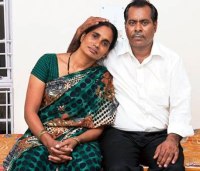 This documentary has a singular focus on Jyoti Singh’s case. There is an in-depth look at its surrounding elements: the perpetrators, Jyoti (through the eyes of her parents and friend), the litigation, the political response, and glimpses of the protest. The problem arises as these elements are used to draw broad conclusions about violence against women — that somehow gendered violence is inherent to Indian culture. It is not. Media coverage of the documentary is disproportionately centered on disturbingly misogynist quotes from one of the perpetrators, Mukesh Singh, and the case’s defense lawyers. The reaction to these quotes has been to ascribe this attitude as typical of Indians rather than indicative of widely-held, patriarchal beliefs about women. These attitudes, though they may be voiced in different words or acted out in different ways, are present everywhere. We must remember that there is not a single part of the world in which gender-based violence has been eradicated.
 Udwin’s documentary is deliberate in its characterization of Indian men as exceptionally brutish. By making this a question of personality and mindset, the result of a “sick society” in need of education, the film ignores the structural nature of violence. For a documentary meant to be a platform for a campaign to eliminate violence against women, it must acknowledge that violence is a product of and perpetuated by intersecting systems of power, such as consumerism, globalization, and privilege. Instead, the documentary simplifies violence by presenting Jyoti Singh’s case as emblematic of the nature of all violence against women in India. There is no typical victim and there is no typical perpetrator. Violent acts cross lines of class, intention, education, power, and privilege.
 In 1972, Mathura, a young Dalit girl, was raped by two police officers. Seven years and multiple courts later, the police officers were acquitted by the Supreme Court. In response to this injustice, protesters took to the streets, women mobilized, created women’s rights groups that still exist today, and the consent clause in India’s rape law was amended. This case is considered a turning point for the women’s movement in India. Leslee Udwin, however, frames the demonstrations in the aftermath of the Jyoti Singh case as the first of their kind — something spontaneous, as though void of history. In interviews, Udwin claims that the December 2012 protests were the inspiration for this film, but devotes little time to the voices of the protesters. Rather than using her platform to highlight India’s long history of grassroots organizing in response to ongoing violence, Udwin erases agency from women in Indian society. India’s Daughter relegates Indian women to spaces of marginalization and vulnerability. This two dimensional view means that the voices of women doing this work, the voices capable of bringing about real change, are muted rather than uplifted.
 Sakhi for South Asian Women recognizes that women should be in charge of their own narrative. As an organization in New York City, we are also very intentional about the way we speak about issues affecting women living in South Asia; we defer to the expertise of those on the ground. We know that violence against women is a problem in India, as it is a problem everywhere. Agreeing with this premise does not mean refusing to interrogate the assumptions and methods of others looking to raise awareness and find solutions. We take issue with India’s Daughter not because it sheds light on the pervasiveness of violence against women in India, but because its fundamentally flawed understanding of the issue is the basis for a globally-funded campaign. Further, viewers are manipulated into seeing Indian culture as inferior, Indian people as in need of global saviours. We look forward to a documentary and call to action that recognizes these same issues but proposes solutions that are inclusive, reflective, and progressive. – Sakhi, 11 March 2015
» Sakhi for South Asian Women exists to end violence against women. It unites survivors, communities, and institutions to eradicate domestic violence and to create strong and healthy communities.

“The best thermometer to the progress of a nation is its treatment of its women.”
Filed under: india | Tagged: BBC, film ban, gang rape, geopolitics, india, india's daughter, jyoti singh, leslee udwin, media, mukesh singh, propaganda, psychological warfare, rape, tv, violence against women | Leave a comment »