








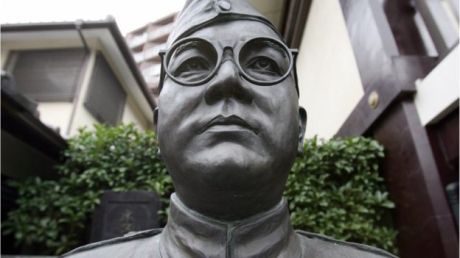
 “A consensus has emerged among historians and generations of researchers on two points: 1) Bose disappeared, and did not die in the crash; 2) he was in Soviet Russia post-1945. Whether it was as a prisoner in a Siberian gulag or under house arrest has not been established. Beyond some broad hints dropped by post-Soviet Russian historians, anecdotes of Indians in Moscow, and stifling silences, no definitive official record has emerged. Neither from the depths of the KGB archives, opened after the Soviet downfall, or the colonial papers in London.” – Santwana Bhattacharya
 On May 13, 1952, S. Radhakrishnan was sworn in as the first Vice-President of India. A few months prior to that, he had visited his old colleagues at the Philosophy Department of the Calcutta University. His endearing personality, academic reputation, and added to it, his ambassadorial stint in the Soviet Union ensured he had a rarefied audience of five professors and senior research scholars. One of those present in the ‘adda’ that day, who would go on to become the V-C of Burdwan University, Shankari Prasad Banerjee, would later recount in an affidavit to the Mukherjee Commission a story Radhakrishnan shared with them—of Netaji Subhas Chandra Bose’s presence in Soviet Russia and of him fleetingly seeing Bose there. Another well-known philosopher, then a young researcher, J. N. Mohanty, was also present.
There was a surprise inflection to this story: Radhakrishnan’s subsequent appointment as Vice-President, a post not there in the original scheme of things. Implicit in this turn, as read by those in the know, is the suggestion that it had something to do with the story he had narrated to his former colleagues in the Calcutta University. Soon after that outing of a risky fact, Radhakrishnan was whisked away from the academic world. As V-P, naturally, he later retracted. Little corners of Bengal, however, are still awash with such curious Bose anecdotes. A book on Netaji’s disappearance mystery by Prof Purabi Roy has even devoted a whole chapter to the most popular among the startling anecdotes.
The Mukherjee Commission, before which Shankari Prasad Banerjee had deposed on the Radhakrishnan angle, was the first and only one of the three government-appointed panels to conclude that Bose did not die in the plane crash in Formosa/Taiwan. Its report was rejected by the then UPA government and the Sugata Bose-Krishna Bose wing of the family. Neither was ready to buy what they call the “myth-cum-conspiracy” theory that Bose did not die of third degree burns in the plane crash of August 18, 1945—the last fortnight of World War II, two years before India’s Independence—and that it is not Bose’s ashes buried in Tokyo’s Renkoji Temple. Nonetheless, for many, Bose, the daring ‘revolutionary’ who cocked a snook at the British Empire to raise an Indian army with civilian-Tamils living in Malay and Singapore and martially trained men from Punjab, could not have died at 48. But this may not be a mere desire born out of hero worship. They have reasons to propagate the anti-air crash death theory—it stems primarily from the Indian government’s caginess, its stowing away of intelligence reports and files on Bose as “top secret” for decades on the ground that “international relations” are at stake. At an emotional level, the faithful believed Bose stage-managed his own death with his friends in the Japanese Army (that a new Indo-Japanese research team is coming into being soon shows the credence given to what was once called ‘kite-flying’).
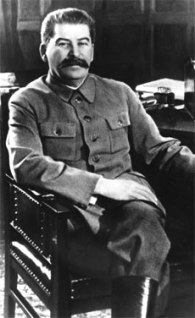
 Popular theories apart, a consensus has emerged among historians and generations of researchers on two points: 1) Bose disappeared, and did not die in the crash; 2) he was in Soviet Russia post-1945. Whether it was as a prisoner in a Siberian gulag or under house arrest has not been established. Beyond some broad hints dropped by post-Soviet Russian historians, anecdotes of Indians in Moscow, and stifling silences, no definitive official record has emerged. Neither from the depths of the KGB archives, opened after the Soviet downfall, or the colonial papers in London or among the Communist Party of Great Britain’s correspondences in Manchester. Where does CPGB feature here? Because it groomed successive generations of Indian communists, including Jyoti Basu, Bhupesh Gupta, Indrajit Gupta and Mohit Sen. One of their preceptor-stalwarts, Rajni Palme Dutt, had Gandhi, Nehru, Bose and even Sheikh Abdullah contributing to his Labour Monthly. At a documentary level, what is available is Stalin’s rather scathing views on Gandhi-Nehru, as British imperialist implants in the Indian national movement (similar to the Justice Katju tweets we see these days), and more sympathetic take on Bose. The CPGB had a diametrically opposite view, inspired by Palme Dutt. The reason for this duality of opinion on Bose obtained from Moscow and London could have had to do with the conflicting position the two powers found themselves in vis-a-vis the Great Game. Bose’s flight via Afghanistan in 1941 to Moscow (en route to Berlin) buttresses this early proximity. Even when Bose and INA warriors flitted from Singapore to Bangkok to Saigon on that fated path, after getting news of Hiroshima-Nagasaki and the Japanese surrender—between August 16 and 17—his original destination could have been Russia, the only power he felt at that point would be ready to take on Britain.
 If indeed Bose met with his death in Formosa, what explains the furtive silence and stealth that surrounds all government moves? Why should revelation of all that lies behind intelligence vaults imperil international relations? Did Bose reach Moscow and then, get entangled in something? Was he ill-treated by Soviet Russia? Or was he deported but forced to live incognito? Revelations would, no doubt, cast a long shadow on Nehru and revive the memory of his uneasy relation with Bose (though Nehru was the one who defended the INA soldiers caught by the British Army in Burma). As also the Communist leadership of India, who must have been in the know of it and helped Nehru’s government keep things under wraps. If the official history is right and unproblematic, why are the Bose papers never made public? Why did the PMO even under A. B. Vajpayee shy away from revelations? Why did even the Modi government take one step forward and two steps backward? Why does the Bose family get riled when too many questions are asked? What is this fact that is so tangible even in its absence? An explosive potency that has not got blunted by the years?
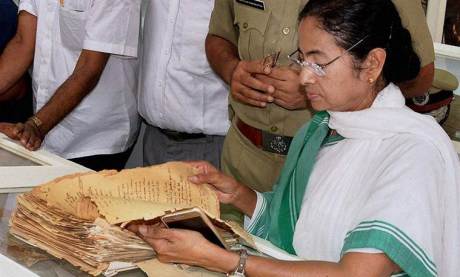
It is in this context that West Bengal CM Mamata Banerjee’s sudden conjuring up of 64 classified files gains significance. Obviously, she has a political angle. Mamata wants to pip BJP-Modi in the race to encash the Bose myth. And she would not mind if, in the process, she can damage the Congress and the Left, in case their joint complicity in keeping Bose out of Indian politics comes out in the process. But can Bose—or a frenzy created around him—be a vote-catcher in Bengal? The short answer is: no. Bose’s own party, Forward Bloc, as a Left Front constituent, shared power with the CPI and CPI-M for 34 years. Still, Mamata cannot allow a politically ascendant Modi-BJP to walk off with a Bengali icon right under her nose. Though many die-hard Bengal Congressmen would tell you Bose means little to Bengal, and has far more fan following in Odisha and Punjab. – The New Indian Express, 18 September 2015
» Santwana Bhattacharya is Political Editor of The New Indian Express. E-mail: santwana@newindianexpress.com
See also
Filed under: india | Tagged: death of netaji, geopolitics, india, indian government, kolkata, mamata banerjee, netaji files, PMO, state governments, state secrets, subhas chandra bose | 7 Comments »