















 Rama was wrong. Rama was unfair. These statements reflect incomplete comprehension of what our itihasa/purana texts propound. There is nothing ‘wrong’ or ‘right’ in absolute terms, in black and white. – Dr. Bibek Debroy
The word ‘Ramayana’ means Rama’s progress or movement. The Ramayana is Rama-centric. The other itihasa, the history of the lunar dynasty, the Mahabharata, has no such focus on one individual alone. Therefore, in the Mahabharata, we come across the views of multiple protagonists. In this respect, the Mahabharata is like a novel. The Ramayana is like a short story. We never get to know what Urmila, Lakshmana’s wife, thinks. For that matter, for the most part, we don’t get to know what Lakshmana thinks either. I have used the word ‘Ramayana’. Which Ramayana? There are non-Sanskrit versions of both the Ramayana and the Mahabharata and our views on individuals and incidents are often shaped on the basis of retellings in these. When we seek to ‘judge’ Rama, we typically depend on these. For Sanskrit retellings, there may be minor regional variations, but the Mahabharata is one unified whole. Indeed, there is now a critical edition of the Mahabharata, brought out by the Bhandarkar Oriental Research Institute (BORI). Even for Sanskrit retellings, there are five versions of the Ramayana story: Valmiki Ramayana, Adhyatma Ramayana, Yoga Vasishtha Ramayana, the Kalidasa version in Raghuvamsham and the Rama story in the Mahabharata. They differ. For Valmiki Ramayana, there is a critical edition brought out by the BORI and some bits are not part of the edition. An example is the position of nakshatras at the time of Rama’s birth. The Uttara Kanda, large chunks of which have been excised from the critical edition, is clearly a later interpolation. One is not being unnecessarily pedantic. Before ‘passing judgment’ on Rama, as people are often prone to do, one should ask, which Ramayana? If it is Valmiki Ramayana, is it the critical edition? Does one include Uttara Kanda? The differences can be significant.
Rama was wrong. Rama was unfair. These statements reflect incomplete comprehension of what our itihasa/purana texts propound. There is nothing ‘wrong’ or ‘right’ in absolute terms, in black and white. This was never a binary world; there were shades of grey. There is always a conflict between two or more pulls of dharma in different directions. There is no obvious optimum and, given trade-offs, an individual chooses and bears his/her consequent karma. Karma is the flip side of dharma—the two are linked. That’s the core problem. I am perfectly within my rights to say that given a specific situation Rama faced, I wouldn’t have behaved the way Rama did. In that conflict of dharma, I would have chosen differently. That is my right and had I behaved that way, there would have been my consequent karma. But a strong statement like Rama being ‘wrong’? The moment I do that, I am displaying arrogance about my knowing what is right and wrong. That’s compounded by my applying today’s value judgments (from Kali Yuga) to Treta Yuga. For instance, a person with very strong views recently told me, Rama was a bad husband. We certainly have a conception of husband and wife today, of conjugal married life. But the way a husband and wife were jointly required to undertake tasks of dharma then, was quite different. Rama was from Treta Yuga, the person with strong views is from Kali Yuga. Dharma progressively declines from Satya Yuga to Treta Yuga, declines further from Treta Yuga to Dvapara Yuga and declines most in Kali Yuga. To repeat the analogy used, dharma has four feet in Satya Yuga, three in Treta Yuga, two in Dvapara Yuga and one in Kali Yuga. But oddly, in Yali Yuga, we are more sure about what constitutes dharma than anyone in Satya Yuga ever was.
We should remember how Valmiki Ramayana starts. Valmiki asks Narada, “Right now, who in this world is valorous and possesses all the qualities? Who knows about dharma and about what has been done? Who is truthful in his words and firm in his vows? Who also possesses good conduct and is engaged in the welfare of all creatures?” (All quotes are from my translation of the Valmiki Ramayana, published by Penguin.) Who is truthful in his words and firm in his vows? If we understand this trait, we will begin to understand Rama’s behaviour.
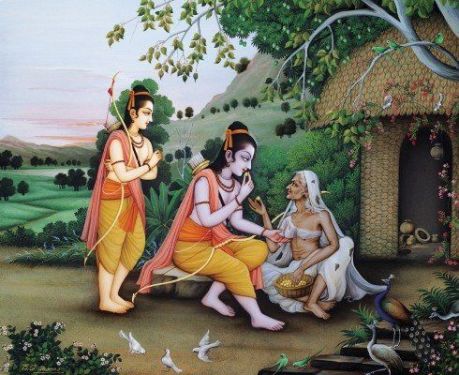
As an example, take the incident of Vali being killed, often cited as an instance of Rama being unfair. We may think we are discovering something new. However, in Valmiki Ramayana, this is what Vali himself tells Rama: “What qualities have you achieved by slaying someone who was not facing you? … In my kingdom, or in my city, I have not committed a wicked act towards you. … My skin cannot be worn. The virtuous shun my body hair and bones. My flesh cannot be eaten by those like you who follow dharma.” Invoking dharma and artha, there is a strong indictment and I have only quoted a fragment. Rama has a point by point rebuttal, but the initial lines are, “Without knowing about dharma, artha, kama and the contracts that people follow, why are you now reprimanding me in this childish way? … I have a friendship with Sugriva and it is just like that with Lakshmana. I will give him his wife and kingdom and he will do what is best for me. In the presence of the apes, I gave him this pledge.” There is a lot more that Rama says, but this is the crux, not only for this incident, but Rama’s conduct in general. Rama and Sugriva had a pact of friendship and walked seven times around a fire as a pledge. (We think seven steps around a fire are only for a bride and a groom getting married. That ritual is observed for any pledge of friendship. Saptapadi isn’t only for man and wife, it is for all friends.) Sugriva pledged to do everything possible to get Sita back, Rama pledged to do everything possible to make Sugriva the king and get his kingdom back. He was honouring the contract and being true to his words, a defining trait for everything Rama did. Both in the Manusmriti and the Mahabharata (Shanti Parva), there is a listing of 17 most important types of civil cases a king must get tried in order of priority. On both the lists, right at the top, we have breach of contract.
Let’s move on to the Shambuka incident, from Uttara Kanda. An aged Brahmana’s young son has died and he comes to the palace, lamenting and searching for justice. Rama summons Brahmanas (Markandeya, Moudgalya, Vamadeva, Kashyapa, Katyayana, Jabali, Goutama and Narada), ministers and traders to find out what has happened. Narada replies, “Listen to the reason why this child died before his appointed time. … Earlier, in Krita Yuga, only Brahmanas were ascetics. … In Treta Yuga, there were Brahmanas and Kshatriyas who tormented themselves through austerities. … When Dvapara approached, Vaishyas started to engage in austerities. … However, Shudras did not obtain the right to perform the fierce austerities of dharma. Those born in Shudra wombs will only obtain the right to perform austerities in Kali Yuga. … In Dvapara, a Shudra is performing a great act of adharma. … An evil-minded Shudra is performing austerities. That is the reason this child has died.” There can be a broader debate on rigidities of the varna system. So far as Rama is concerned, as a king, it is his dharma to protect his subjects and a Brahmana’s son has had an untimely death because the king has failed to protect the virtuous and punish the wicked. This is not Rama’s decision alone. It is also what the ministers and advisers tell him. Rama finds Shambuka and kills him. The Brahmana’s son comes back to life. Immediately thereafter, Rama visits the sage Agastya, who applauds his deed. As a king, Rama has pledged to protect his subjects, whatever the costs. That pledge overrides everything else. Indeed, true to that vow of kingship, King Harishchandra got into all his problems.
From Uttara Kanda we also have the story of Lakshmana being banished. Kala (Time) arrives and wants to meet Rama alone. The conversation must be private. Violators will be instantly killed. Therefore, guards are sent away and Lakshmana is stationed there instead, to prevent anyone from entering. Unfortunately, the angry sage Durvasa arrives at the time and demands that he be allowed to see Rama immediately. “Present me before Rama this very instant. Otherwise, I will curse the kingdom, the city, you and Raghava. I will not spare Bharata’s sons and yours.” Confronted with his own conflict of dharma, Lakshmana goes and interrupts the conversation between Kala and Rama. After Durvasa leaves, Lakshmana tells Rama, “You should not be tormented on my account. … Slay me without hesitation and fulfill your pledge. … Men who do not keep their promises go to hell.” Lakshmana understood Rama perfectly well. After consulting his ministers, Rama replies,
“I am casting you away. Virtuous ones have decreed that killing and abandoning are both regarded as the same.” Lakshmana, his companion of several years, was instantly exiled. We think of Sita being banished, we don’t normally think of Lakshmana being banished. Rama’s attitude was gender-neutral. We shouldn’t read a gender angle into Sita’s banishment.
The incident of Sita’s banishment occurs in Uttara Kanda. A report is brought to Rama: “Hear about the agreeable and disagreeable words citizens speak in the crossroads, the forests and the groves. … Raghava killed Ravana in the battle and got Sita back. … He finds pleasure and happiness with Sita. Though Ravana had forcibly abducted her earlier, he takes her up on his lap. … We will also have to tolerate this from our wives. Subjects follow whatever a king does.” Rama summons his brothers and tells them, “There is great and terrible condemnation among the residents of the city and the countryside. … In my inner soul, I know that the illustrious Sita is pure. … Scared and terrified of condemnation, I am prepared to give up my life and all of you, not to speak of Janaka’s daughter.” He exiles Sita, who eventually finds herself in Valmiki’s hermitage, where she delivers Lava and Kusha. Note that Rama never married again. Note also that husband and wife are required to jointly participate in sacrifices and rites. For every sacrifice that Rama undertook thereafter, a golden statue of Sita’s was kept, so as to comply with this requirement.
The ordeals by fire are what get Rama condemned most often. The first of these doesn’t even occur in Uttara Kanda, the segment with later interpolations. After Ravana has been killed, Sita has to be brought into Rama’s presence. When Rama instructs Vibhishana to bring Sita before him, Vibhishana tries to clear the place of the ordinary people. Rama’s response reveals quite a bit about his character. “Cease this attempt to disperse people. They are my own people….” The ordeal by fire occurs in public, not with a limited presence of close friends and companions. When Rama finally meets Sita, the words are quite harsh. This leads to the incident most people are familiar with, the first ordeal by fire. After Agni pronounces Sita to be pure, Rama says, “I know that Maithili, Janaka’s daughter, is single-mindedly devoted to me and that her mind is only on me. However, I am devoted to the truth. For the sake of persuading the three worlds, I ignored Vaidehi when she entered the fire.” It was about persuading the worlds, not Rama alone. That’s the reason the trial had to be in public.
As I said at the beginning, if it is the Valmiki Ramayana, Rama’s conduct is about being true to a pledge and not committing breach of contract, regardless of the consequences. That was his dharma and karma. Before we condemn his action, the least we can do is understand his reasons and that can only be done by reading the Valmiki Ramayana, or whatever Ramayana we choose as database for our case. – Open, 22 November 2019
› Prof. Dr. Bibek Debroy is an Indian economist, author and bureaucrat. He has made significant contributions to game theory, economic theory, income and social inequalities, poverty, law reforms, railway reforms and Indology. Currently Dr. Bibek Debroy is chairman of the Prime Minister’s Economic Advisory Council.
Filed under: india | Tagged: dharma, karma, rama, ramayana, right & wrong | Comments Off on Being fair to Rama – Bibek Debroy











