









Religious reform must be driven from within the community of believers, through dialogue and consensus, rather than imposed by judicial fiat. Only then can we ensure that our progress is not just a matter of legal record, but a genuine evolution of the Indian heart. – Shashi Tharoor
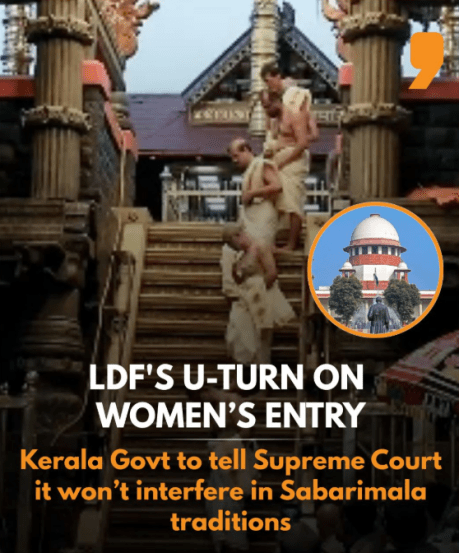
The news of the Kerala LDF cabinet’s decision to reverse its earlier position and support the traditional ban on women below 50 entering the Sabarimala temple, informing the Supreme Court that long-standing customs should be preserved, is as significant as it is transparently electoral. After years of dogmatic adherence to a court order that ignored the nuances of lived faith, the ruling coalition has finally recognised that the sentiments of the devotee cannot be steamrolled by the state. Yet, this reversal provides a critical moment for us to revisit the broader tension that has defined this saga: The delicate, often precarious relationship between constitutional morality and the sanctity of religious tradition.
When this controversy first erupted, I found myself in an invidious position. As someone whose life has been dedicated to the defence of individual rights and the progressive evolution of Indian society, my instinctive response was to champion the principle of non-discrimination. However, Sabarimala is not a simple matter of gender equality in the secular sphere; it is a matter of the specific, localised sanctity of a deity in a particular manifestation. It is an issue that leaves instinctive liberals torn, forcing us to weigh the abstract elegance of legal rights against the profound, visceral reality of faith.
As I explained at the time, there were four principles at stake in Sabarimala, all of which I normally have no difficulty adhering to: Unconditional respect for the equality of women and men; respect for the Constitution and the Supreme Court; respect for the rights of religious adherents to follow their beliefs and practices, so long as they do no harm to others; and respect for Indian democracy and the rule of law that sustains it. What was unusual about Sabarimala is that it offered the first example, in my experience, of these invaluable and seemingly unchallengeable principles clashing with each other. As a constitutionalist and a liberal, I could easily uphold the first two principles. As a democrat and an elected representative responsive to his voters, I was happy to uphold the last two. The problem is that the two pairs of admirable values were diametrically opposed to each other on Sabarimala.
The core of the debate lies in the judiciary’s role as a promoter of religious reform. In a diverse democracy, the Court is often called upon to be the arbiter of social progress. Yet, when the gavel falls on matters of deep-seated belief, it must do so with an awareness of the limitations of legal logic. The 2018 Supreme Court verdict was a triumph of constitutional literalism, but it was a failure of religious and sociological understanding. It treated the temple not as a space of specific spiritual practice, but as a public utility where “access” was the only relevant metric.
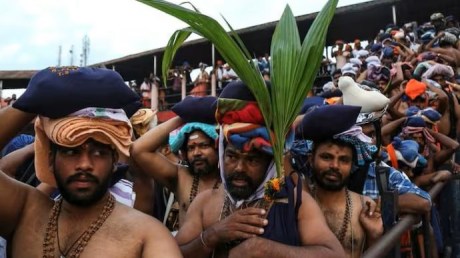
For the devotees of Lord Ayyappa—men and women alike—the restriction on women of a certain age group was never about misogyny or the impurity of menstruation. It was about the naishtika brahmachari nature of the deity at Sabarimala. The legend of the deity at Sabarimala is that Lord Ayyappa did not want to see any female in the reproductive stage of life, and deliberately removed himself to his jungle abode for that purpose. Therefore, women are barred out of respect for his wishes. These are questions of faith, not rationality: To ignore this is to ignore the very essence of the faith being practised. When the judiciary attempts to “reform” a religion by stripping away the specificities that define it, it risks becoming an instrument of alienation rather than enlightenment.
The LDF’s initial zeal to implement the Court’s order by “any means necessary” resulted in a profound rupture in Kerala’s social fabric. It was a classic example of “top-down” secularism—an attempt by the state to impose a modernising logic on a community that felt its most sacred traditions were being desecrated. The backlash was not merely a political mobilisation, it was a spontaneous outpouring of hurt from those who felt the state and the courts were overreaching into the one sanctum where they sought solace.
As I argued when this controversy began back in 2018, we must distinguish between social evils that demand state intervention—such as untouchability or Sati—and religious practices that, while perhaps appearing exclusionary to an outsider, are integral to the theological identity of a shrine. True liberalism must include the “freedom of the devotee”—the right of a community of faith to preserve the unique character of its worship, provided it does not cause secular harm to others.
The LDF’s change of heart, while driven by the looming shadow of the ballot box, is a tacit admission that the “reform” they championed was one that the devotees were simply not prepared to accept. It is a reminder that in a democracy, the law can only go as far as the collective conscience of the people will allow. If the judiciary and the state move too far ahead of the community they seek to reform, they do not bring about progress; they bring about resentment.
Moving forward, the lesson of Sabarimala must be one of humility—for politicians and judges alike. We must seek a path that respects the constitutional mandate of equality without eroding the pluralistic tapestry of our religious traditions. We must recognise that faith cannot be reshaped to suit the prevailing legal fashion.
The challenge of the coming years will be to find a “middle path”—one where religious reform is driven from within the community of believers, through dialogue and consensus, rather than imposed by judicial fiat. Only then can we ensure that our progress is not just a matter of legal record, but a genuine evolution of the Indian heart. The LDF has learned this lesson the hard way; let us hope the rest of the nation does not have to. – The Indian Express, 26 March 2026
› Shashi Tharoor is an Indian politician, author, public intellectual and diplomat.
Filed under: india | Tagged: judicial over-reach, religious reform, sabarimala temple entry, supreme court of india, temple traditions | Comments Off on Sabarimala: LDF’s U-turn and a lesson on forced religious reform – Shashi Tharoor