







The Supreme Court’s earlier harsh order against three academics has once again highlighted the larger debate around academic freedom, textbook writing and criticism of institutions in India. While some experts believe textbooks should openly discuss challenges and criticism related to public institutions, others argue that such discussions must remain balanced and carefully framed for school students. – Swastika Sruti
The Supreme Court of India on Friday withdrew its earlier adverse remarks against three academics linked to the controversy surrounding an National Council of Educational Research and Training (NCERT) Class 8 Social Science textbook.
The court also modified its earlier order that had directed governments and educational institutions to disassociate themselves from the three experts.
The decision came after the academics clarified that they never intended to portray the judiciary negatively and that the textbook content had been prepared collectively.
Supreme Court Modifies Earlier Order
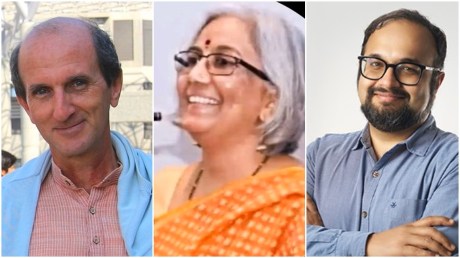
A bench headed by Chief Justice of India Surya Kant accepted the explanation given by academics Michel Danino, Suparna Diwakar and Alok Prasanna Kumar.
The bench stated that its March 11, 2026 order would now be modified. The earlier direction asking governments, universities and institutions to distance themselves from the three experts was officially withdrawn.
The court clarified that the Centre, state governments, Union Territories and academic institutions are now free to take independent decisions regarding the experts without being influenced by the earlier observations.
Background Of The NCERT Textbook Controversy
The controversy began over a Class 8 Social Science chapter titled “The Role of the Judiciary in Our Society.”
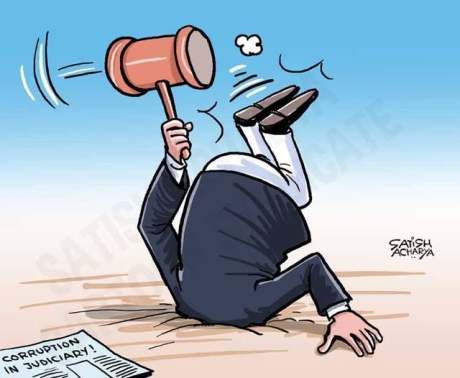
The chapter reportedly included references to corruption within the judiciary, which later sparked objections and legal scrutiny.
Following the controversy, the Centre withdrew the textbook and formed a committee to revise the content. The committee was headed by former Supreme Court judge Indu Malhotra.
The issue quickly turned into a major debate about academic freedom, textbook content and criticism of public institutions.
Court Deletes Earlier Harsh Observations
In its earlier March order, the Supreme Court had made strong remarks against the three academics, accusing them of “deliberately” and “knowingly” misrepresenting facts related to the judiciary.
However, the court has now removed those observations from the record. The bench, which also included Justices Joymalya Bagchi and Vipul M. Pancholi, clarified that the textbook chapter was prepared through a collective process and not by any single individual.
The court said the remarks against the experts were being recalled after considering their explanation.
Centre Says Experts Already Disassociated
During the hearing, Solicitor General Tushar Mehta, appearing for the Centre, informed the court that the government had already decided to disassociate the three academics from its activities.
He also argued that the process of drafting the textbook was not entirely collective, disagreeing with some of the claims made by the academics.
Academics Said Reputation Was Damaged
Senior advocates Shyam Divan, Gopal Sankaranarayanan and J. Sai Deepak appeared for the three academics during the hearing.
They argued that the earlier remarks made by the Supreme Court had caused serious harm to the professional reputation and academic careers of the experts.
According to the lawyers, the observations affected the credibility and public image of the academics despite the textbook being prepared through broader institutional processes.
Supreme Court Still Raises Concern Over Content
Even while withdrawing the remarks, the Supreme Court maintained that its concerns regarding the textbook chapter were genuine. The court stated that the chapter lacked a balanced discussion on the role of the judiciary in society.
According to the bench, the issue before the court was not about suppressing academic work, but ensuring that educational material presents a fair and balanced understanding of constitutional institutions.
Debate Over Academic Freedom Continues
The case has once again highlighted the larger debate around academic freedom, textbook writing and criticism of institutions in India.
While some experts believe textbooks should openly discuss challenges and criticism related to public institutions, others argue that such discussions must remain balanced and carefully framed for school students.
The Supreme Court’s latest order is now being viewed as an attempt to balance institutional concerns with the professional rights and reputation of academics involved in educational work. – OneIndia, 22 May 2026
› Swastika Sruti reports for OneIndia.
See also
- Michel Danino: The quiet giant of our time – Sandeep Balakrishna
- Why Michel Danino’s scholarship must be cherished and celebrated – Swarajya
- 51 Academics Write to President Murmu Over Supreme Court Ban on NCERT Textbook, Punishment of Educators – Swarajya Staff
Filed under: india | Tagged: academic freedom, judicial corruption, judicial over-reach, school textbooks, supreme court of india | Comments Off on Supreme Court withdraws harsh remarks against academics in NCERT textbook controversy – Swastika Sruti