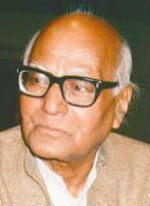













“It should be called the Boudhayan-Pythagorean theorem,” Professor Bhargava suggested, underscoring the need to recognise India’s foundational role in global mathematics. – Pallava Bagla
India invented Zero—and the numbers we use daily. Why are we still calling them Arabic numerals? In a stirring and historically grounded conversation with NDTV, Professor Manjul Bhargava, one of the world’s foremost mathematicians and a Fields Medal winner, the equivalent of a Nobel Prize in Mathematics, called for a long-overdue correction in how the world—and India itself—refers to the numerals we use every day.
“It’s about time. In fact, that’s how they used to be called by the world. The Arabs called them ‘Hindsa’—meaning they originated in India,” he said.
Professor Bhargava, who teaches at Princeton University, US, emphasised that the numerals 0 to 9 were already in use in India by the 4th century CE, as evidenced by the Bakshali manuscripts and inscriptions in temples like Chaturbhuj in Gwalior and Parshvanath in Khajuraho.
“These digits were in common use by the 4th century—not just by mathematicians, but by everyday people. It was ingrained in Indian culture,” he said.
He also highlighted India’s pioneering role in developing algebra and calculus.
“Algebra has its origins in India with the work of Brahmagupta and Bhaskara. The first exact formula for Pi was given by Madhava in the 15th century. Before that, there were only approximations,” Bhargava explained.
The professor lamented how colonial narratives led even Indians and Left-leaning historians to refer to their own numerals as “Arabic,” simply because Europe learned them via Arab scholars like Al-Khwarizmi and Al-Kindi in the 8th century.
“Let’s start correcting history. Let’s start decolonising and saying them by their true, correct historical names,” he urged.
He said “Hindu” is not referring to any religion but to the geographical region of “Hind” or “Sindhu”, which is India or Bharat.
He was speaking on the sidelines of an exhibition titled “The Mathematical Sciences, South Asia’s Contributions” in New Delhi, which also featured the works of ancient Indian mathematicians like Boudhayan, whose writings predate Pythagoras and contain the earliest known version of the Pythagorean theorem. The exhibition also showcased ancient manuscripts, temple inscriptions, and literary works that trace the evolution of Indian mathematical thought-from the invention of zero to the foundations of algebra and Pi.
“It should be called the Boudhayan-Pythagorean theorem,” Professor Bhargava suggested, underscoring the need to recognise India’s foundational role in global mathematics.
Professor Bhargava asserts it is “high time Arabic numerals be called Hindu numerals.”
From Khajuraho to Princeton, a journey through India’s mathematical soul is what Professor Bhargava embodies.
This is not just a call to rename numerals—it’s a call to reclaim a legacy. A legacy that shaped the very language of science and continues to inspire generations across the globe. – NDTV, 6 September 2025
› Pallava Bagla is an Indian science journalist at NDTV.


Filed under: arabia, europe, india | Tagged: arabic numerals, hindu culture, hindu numerals, indian history, zero | Comments Off on US scientist urges India to reclaim mathematical legacy – Pallava Bagla