












We cannot defeat tariffs by lobbying Washington; we can only defeat them by rendering them irrelevant by creating products whose desirability overwhelms every obstacle. – Ravi Shankar
Only someone in nationalist self-denial will think Donald Trump’s tariffs are taxes, not taunts. India’s historical memory is best riposte to this Wild Bill Hickok’s shooting spree by never forgetting that India was once the workshop of the ancient world. For centuries, caravans along the Silk Route were laden with the produce of India such as spices of Malabar, muslins from Bengal, indigo of Gujarat and the shawls of Kashmir. We exported spices, textiles, precious stones, and ivory to Rome which sent back glassware, wine, perfumes, and silver. We were not then an “emerging market”; we were the world’s market, not because we consumed, but because we created. The Europeans nearly bankrupted themselves importing Indian pepper; Romans bewailed that their women’s fondness for Indian cotton was draining their treasury. Arab merchants, borne by the monsoon winds across the Arabian Sea, returned home laden with cinnamon, and calicoes, so much so that Al-Beruni wrote that no corner of the known world was untouched by India’s produce. Chinese pilgrims Faxian and Xuanzang marvelled at the artistry of our looms and the abundance of our markets. India was not merely on the Silk Route; it embroidered it.
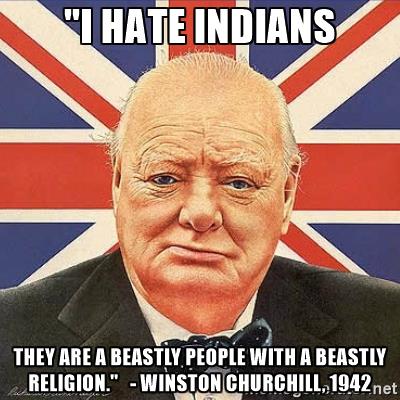
Then the British came in the 1600s bearing not civilisation but strangulation. It did not just conquer territory. It colonised taste. It destroyed Indian looms, de-skilled artisans, and imposed tariffs so vicious that muslins of Bengal were cheaper in London than in Murshidabad. India was bled not only of wealth, but of worth. A civilisation that once exported excellence became addicted to importing mediocrity. They systematically dismantled our industries to serve their own. Indian textiles, which had once clothed the globe, were throttled by punitive tariffs in London while Manchester’s mills were fattened on Indian cotton. The legendary weavers of Dhaka, who produced fabrics so fine they were called “woven wind,” were reduced to penury. In one of history’s cruel ironies, the world’s most accomplished exporters were turned, within a century, into one of its largest importers. Colonialism was the murder of Indian craftsmanship. Now two centuries later, Trump wields a subtler arsenal: tariffs and technicalities. “Quality standards,” “supply chains,” “trade compliance”. Yes, there are exceptions like pharmaceuticals that heal the world, software services that code its future, basmati rice that perfumes its kitchens and auto components that drive its highways. But these are oases in a desert of disappointment. Too often, “Made in India” is shorthand for “barely good enough.”
Self-reliance, therefore, cannot be the inward-looking autarky of yesteryear, a revival of Nehruvian import substitution dressed up in new robes. It must be a philosophy of quality, a credo of competence. The solution lies not in the bombast of boycotts or the stale sloganeering of swadeshi redux. ‘Atmanirbhar Bharat’ must not degenerate into ‘Atmasantusht Bharat’. It cannot merely mean producing what we consume but must aspire to global sufficiency, not because foreigners demand them, but because our civilisation once synonymous with excellence, demand them of ourselves. Tagore reminded us that India’s genius lay in synthesis, in absorbing ideas from elsewhere and reshaping them into something uniquely our own. That is the spirit we must summon again. We cannot defeat tariffs by lobbying Washington; we can only defeat them by rendering them irrelevant by creating products whose desirability overwhelms every obstacle. True self-reliance is not copying China’s scale, but rediscovering India’s soul. It means refusing to accept “chalta hai” as a philosophy of production. It means knowing that jugaad may solve a problem, but it rarely builds a brand. It is time to tighten our belts.
History has already shown us what happens when we fail. Trump’s tariffs should provoke introspection whether we wish to remain a bazaar for the world’s wares, or reclaim our place as the workshop of the world? Overall, 13,334 Indian products were rejected from January 2010-December 2015, says FDA data; reasons being they contained contaminants like lead, methyl yellow dye, or Salmonella bacteria. Many products fail to meet evolving and stricter regulations in importing countries, such as the EU’s General Food Law or the USDA’s zero-tolerance policy for certain errors. Inaccurate or incomplete documentation, especially for perishable goods, high moisture content, fat content, or improper labelling contribute as factors. The British stole our markets because they could not match our mastery. The challenge is quality. Do not see Trump’s tariffs as an outrage. Treat them as a provocation to remember who we once were, and to ask whether we dare become that again. I hope we can. And we will. If not, far more than any tariff, our ‘cutting corners’ philosophy should wound our pride. – The New Indian Express, 5 October 2025
› Ravi Shankar is an author, cartoonist and columnist for the New Indian Express.

Filed under: india, USA, world | Tagged: india-US relations, indian history, indian manufacturing, indian trade, trump's tariffs | Comments Off on Trump, tariffs, tradition, and the tyranny of tantrums – Ravi Shankar