














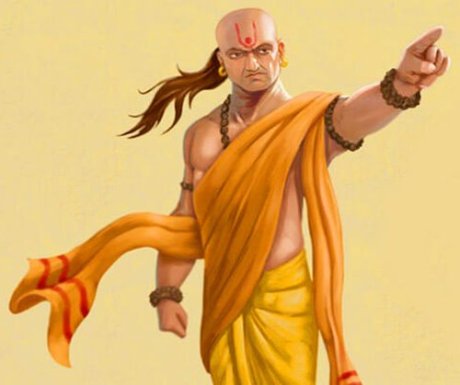
 Kautilya separated politics from religion and claimed that knowledge of the science of politics can conquer the world. A dutiful king who rules according to the law, metes out just punishment, applies the law equally and protects his people could conquer the earth, he said. Greatness, he believed, would come only with dharmic order. – Dr. Nanditha Krishna
War is a state of extreme violence, destruction and mortality. Several countries have in recent times been ravaged and destroyed by war: Iraq, Syria, Afghanistan, South Sudan, Yemen, and now Ukraine and Gaza. The toll on the people, especially women and children, is immense: displacement, economic devastation, food shortages and insecurity. As technology develops, the devastation just gets worse.
Wars in ancient India were conducted under strict rules. Fighting from sunrise to sunset only; no hitting below the belt. I am bemused by the Kurukshetra war, where, after fighting each other all day, the Pandavas and senior Kurus would fraternise in the evenings. Arjuna stopped the war to discuss the ethics of fighting with Krishna, who gave us the immortal Bhagavad Gita as a result. Bhishma lay on a bed of arrows for 41 nights, at times lecturing Yudhishthira on raj dharma. But Bhima broke the not-below-the-belt rule and hit Duryodhana’s thigh. Rama was fighting a very tribal war, yet Hanuman could fly to the Himalayas to bring back the Sanjeevani mountain.
Sun Tzu of ancient China saw war as an art. His The Art of War is a military work dating back to 500 BCE. For almost 1,500 years, it was the most influential strategy text influencing both East Asian and Western military thinking. The book contains a detailed explanation and analysis of the Chinese military, from weapons, environmental conditions and strategy to rank and discipline, the importance of intelligence operatives and espionage to the war effort. His strategies formed the basis of advanced military training throughout the world.
But Kautilya saw war as a science, adding that “a war should be avoided, for it can be lost as easily as it can be won, and is basically unpredictable and expensive”. Dharma, he said, is the root of all happiness, and the root of dharma is good economy and governance, self-restraint, humility and serving the aged. Excellent advice for any ruler to follow.
Kautilya is said to have been Chandragupta Maurya’s advisor and mentor, and the genius behind Chandragupta’s strategies in politics and war. Kautilya’s Arthashastra is an amazing doctrine on politics and the art of governance, war and diplomacy. He wanted his king to become a world conqueror and analysed which kingdoms were natural allies and which were inevitable enemies. He made treaties he would break, his secret agents killed enemy leaders and sowed discord among them. “Of war, there is open war, concealed war and silent war,” wrote Kautilya. He used religion and superstition to bolster his troops, demoralise enemy soldiers, and spread disinformation.
Pliny the Elder described Chandragupta’s army of 600,000 infantry, 30,000 calvary, 8,000 chariots and 9,000 elephants. Chandragupta defeated the Nandas, stopped the Greeks and concluded a treaty with Seleucus. He described Pataliputra as the largest city in the world at the time, 8 miles long and 1.5 miles wide, with 570 towers and 64 gates, and a moat 600 feet wide and 45 feet deep. The Nanda kings were cruel and hated, while enemies waited on India’s borders. Kautilya’s harsh measures were necessary in that situation. Kautilya believed that trusting in fate or relying on superstition was unacceptable.
Kautilya separated politics from religion and claimed that knowledge of the science of politics can conquer the world. A dutiful king who rules according to the law, metes out just punishment, applies the law equally and protects his people could conquer the earth, he said. Greatness, he believed, would come only with dharmic order. Nations act in their political, economic and military self-interest.
Artha, meaning prosperity or economic security, is one of the four aims of human life in Hinduism. The Arthasahastra says there are four necessary fields of knowledge: the Vedas, and the sciences of reasoning, government and economics—all other knowledge and wealth is derived from these. The duties of a king, selection of officials and advisors, checks on the government, the cause of poverty and public dissatisfaction, civil and criminal law and the courts, laws governing taxation, marriage, wildlife and forests, establishment of mines and factories, secret service and information collection, war and foreign policy are all discussed at length in Kautilya’s oeuvre.
He has been described as Machiavellian but, unlike the Florentine, Kautilya maintained that the security and prosperity of the people are the source of a kingdom’s wealth. He advocates the distribution of land belonging to landowners who do not cultivate and giving it to poor farmers who want to cultivate but do not own land, and the execution of public projects like the construction of waterways and forts to mitigate areas devastated by calamities.
His description is of a welfare state governed by a wise monarch, a raja-rishi or sage-king. Without governance, the strong will swallow the weak; but with good governance, the weak will resist the strong, said Kautilya. The book is a manual on statecraft and governance developed by a man who had experience to share.
Kautilya gives detailed descriptions on maintaining forests and afforestation. Arthashastra contains references to the collection of revenue from timber and non-timber forest products and describes different forest types. mriga-vana (deer sanctuaries), dravya-vana (economic forests), hasti-vana (elephant sanctuaries), pakshi-vana (bird sanctuaries) and pashu-vanandvyaala-vana (wildlife sanctuaries). Deforestation and illicit tree felling were punished by deya (levy) and atyaya (fine). The Mauryan emperors had a large forest department to maintain and exploit forests and a superintendent for each zone. The state even supported afforestation.
The Guptas were great warriors and probably the last students of Kautilya. Later Indian kings were busy fighting each other and following obscure notions of chivalry and self-immolation, leading to their defeats. Kings forgot Kautilya and his advice on good governance very soon. The rest is history. – The New Indian Express, 9 June 2024
› Dr. Nanditha Krishna is a historian, environmentalist and writer based in Chennai.

Filed under: india | Tagged: arthashastra, chanakya, indian government, indian politics, kautilya | Comments Off on Kautilya’s advice on good governance – Nanditha Krishna











