








 Bhagwat’s predicament is [that] despite public perception of being the elder brother in RSS’ intricate relationship with BJP, the association has been quietly reconfigured since Modi took charge. – Nilanjan Mukhopadhyay
Simollanghan, or crossing the frontier, is a celebratory ritual followed on Dussehra or Vijay Dashami by Hindus in several parts of the country, especially Maharashtra. With his most political Dussehra speech since the Modi government assumed office, RSS chief Mohan Bhagwat could be said to have performed this rite. Saturday’s speech underscores that uneasy lies the head that wears a crown. Bhagwat’s predicament is graver for despite public perception of being the elder brother in RSS’ intricate relationship with BJP, the association has been quietly reconfigured since Modi took charge.
It is not that Bhagwat has not spoken on the J&K situation, or on matters of cow vigilantism, government policies and its shortfalls.
Previously, he has also asserted that India’s international clout has risen since Modi assumed office. In fact, Bhagwat’s Dussehra speeches in 2014 and 2015 appeared as if victory celebrations were continuing. But last year, a veiled message was sent to the government and BJP: do not sit on your laurels because there is much to be done. This sense has deepened a year later as RSS is worried that the twin economic initiatives of demonetisation and GST are hurting its core constituency—lower middle classes, traders, SMEs and others in the informal sector.
Bhagwat referred to these groups as “our security net during the ups and downs in the global trade and economic earthquakes” and, against the official discourse, argued that corruption was low in this sector. In an unmistakable effort to placate economic hardliners within the Sangh Parivar, he said Niti Aayog was adhering to old “economic isms” and contended that economic planning must draw from “ground reality of our nation”. Though not named, his frown was also due to the recently formed Economic Advisory Council. Probably, in a first, Bhagwat accepted that he understood government’s compulsions but counterbalanced that “global policies and standards” invariably lead to “erosion of morality, environment, employment and self-reliance”.
The response of economic nationalists within the Parivar to “insist on buying swadeshi products while fulfilling their day-to-day needs and doing other purchases” will have to be tracked. Bhagwat also expressed worry over rural distress, noting loan waivers are “temporary measures and not solution”. But much of this was previously communicated to government, albeit not so emphatically.
Sections within the Parivar are bound to wonder if these will remain mere platitudes meant to strike a balance between party leaders and affiliates who are increasingly turning restive over worries about losing support to rivals in their spheres of activity.
Within the Parivar whenever disunity over economic issues rocked the boat, commonality on political issues, especially cultural nationalism, ironed creases. Bhagwat’s declaration on J&K provides such an opportunity.
His unambiguous statement that “necessary constitutional amendments will have to be made” is aimed at giving moral strength to government on its handling of the situation.
Bhagwat’s declaration that those who crossed over into India were “driven out of Myanmar mainly due to their continuous violent and criminal separatist activities and linkages with the terrorist groups”, is open to question but not within the Parivar.
On the heady issue of cow vigilantism too, Bhagwat made no departure from what he and Modi have said at different points of time. In a nutshell, RSS is not putting gau seva programmes on hold. Bhagwat said criminals were solely responsible for all violent incidents, previous or in future, and there was no need for those “piously involved” in cow protection to worry and “get distracted” with statements of people in government or the Supreme Court.
Bhagwat’s is not the easiest position. On the one hand, he presides over an edifice which staged a comeback after a decade and this cannot be jeopardised by political and economic adventurism as during Vajpayee’s tenure. On the other hand, the Parivar has diversified not just in terms of sectors of engagement but also in priorities of different groups.
This calls for collective functioning, but several affiliates, especially BJP, have witnessed a return to the ethos of ek chalak anuvartitva (follow one leader) as practised initially by RSS.
Though not stated directly, the undertone of Bhagwat’s speech was evident: hurdles can be overcome by being more inclusive, by following Balasaheb Deoras’ approach—sah chalak anuvartitva (follow many leaders) and sarva samaveshak (inclusive leadership). Internal dynamics within the Parivar will be crucial in the run up to the next polls. – The Economic Times, 2 October 2017
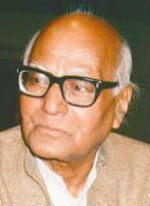
» Nilanjan Mukhopadhyay is an Indian author and journalist based in New Delhi.
Filed under: india | Tagged: india, indian government, indian politics, modi sarkar, mohan bhagwat, RSS, RSS, sangh parivar | Leave a comment »