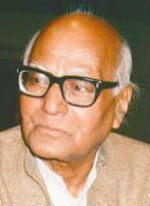











 “It is a burst of fresh air that the Supreme Court has warned the authorities against reflexively sending to jail those accused of crimes against women, such as dowry harassment. Because of the North Korea-style laws that have been passed by the NAC-certified “liberal” Manmohan Singh regime, almost the first action taken by the police is to lock up the presumed offenders, who frequently remain in jail for extended periods of time, while their innocence gets argued in court after court. The liberty of a citizen is a right which ought to be taken away only in rare circumstances, rather than routinely. Indeed, such is the case in any genuine post-colonial society.” – Prof Madhav Nalapat
 The psychic benefits of having a life partner are so varied and immense that it would be churlish to seek to get financially compensated for the privilege. The taking of dowry as a condition for marriage is a vile act, but clearly one which does not lend itself to extinction merely by the passing of legislation. Lawyers are known to bequeath lucrative cases to their offspring, after decades of having shepherded the same through the labyrinth of courts which together constitute India’s legal system. The drain on time, effort and money is relentless, and very often destroys a life.
Sadly, although in a technical sense the people of India became free on 15 August 1947, in reality, practically the entirety of the legal shackles used by Britain to ensure the servitude of the population of India has been retained. Indeed, since 2004, the two legal eagles of the UPA, Palaniappan Chidambaram and Kapil Sibal have got passed (with the sometimes tacit, often overt, acquiescence, it needs to be said, of the principal opposition party) a shipload of laws which collectively transfer huge chunks of additional authority to the state, thereby denuding the citizen of what little increments there were in his rights during the attempts at liberalisation by P.V. Narasimha Rao and Atal Behari Vajpayee.
As the jurist Aryama Sundaram said on NewsX, jail has become the rule and bail the exception. Circa UPA, the courts in several instances and the police almost invariably (except, of course, where high dignitaries are involved) consider it a bagatelle to deprive a citizen of the Republic of India of his or her liberty. The prisons of India are full of individuals who have been tossed in through dodgy evidence, which eventually may be shown to be so in a higher court. That is, if the concerned convict has the money needed to make appeal after appeal to the higher judiciary, and to afford lawyers capable of collating and exhibiting evidence ignored earlier while passing a verdict of “guilty”.
The UPA specialised in asking for more and more legislation, each framed in such a way as to give near-unlimited discretion to the arresting officer. In today’s India, a citizen can get arrested (on the basis of mere accusations) for a plethora of charges, most of which would be non-cognizable in a more fully-fleshed democracy. Once imprisoned, the effort of the authorities is to ensure that skills and knowledge get erased, for example by the denial of internet. The entire process is calculated to de-humanize the convict, so that at the end of his or her term, all that the released prisoner would be capable of would be to push around a vegetable cart. After the Emergency, and the consequent jailing of dozens of political leaders, a few efforts were made to improve prison conditions, but this impetus for reform petered out quickly. Interestingly, despite spending many years in jail, Prime Minister Jawaharlal Nehru declined to ensure an overhaul of the prison system, which in its essentials continues much the way it was in the 1930s. Indeed, recent pronouncements are reported to have averred even that “Life Imprisonment” should mean precisely that, incarceration for the entire remaining period of a human life. What the effect of such a hope-devoid destiny would be on an individual is not difficult to imagine. Clearly, punishment rather than reform remains the objective of India’s penal system.
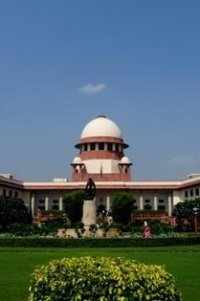
In such a dismal context, it is a burst of fresh air that the Supreme Court has warned the authorities against reflexively sending to jail those accused of crimes against women, such as dowry harassment. Because of the North Korea-style laws that have been passed by the NAC-certified “liberal” Manmohan Singh regime, almost the first action taken by the police is to lock up the presumed offenders, who frequently remain in jail for extended periods of time, while their innocence gets argued in court after court. The liberty of a citizen is a right which ought to be taken away only in rare circumstances, rather than routinely. Indeed, such is the case in any genuine post-colonial society.
Although its verdicts in matters such as homosexuality have dismayed those wishing to ensure for citizens of this country the same freedoms enjoyed by their counterparts in other countries where tens of millions speak the English language, such as the UK or Australia, in this matter the Supreme Court has come on the side of individual freedom, correctly decreeing that it ought not to be extinguished without clear and good cause. Hopefully, the Supreme Court will follow this verdict with others which enshrine the principles and values of the 21st century post-colonial society that India needs to be. To succeed in the global Knowledge Economy, what is needed is an atmosphere of freedom rather than the restrictive system left behind by the British and preserved rather than eliminated. Jail ought to become the exception rather than the first and often only recourse of the minions of the law. – The Sunday Guardian, 6 July 2014
» Prof. Madhav Das Nalapat, holds the UNESCO Peace Chair and is Director of the Department of Geopolitics at Manipal University, India. A former Coordinating Editor of the Times of India, he writes extensively on security, policy and international affairs. Prof. Nalapat has no formal role in government, although he is said to influence policy at the highest levels. He is currently the Editorial Director of The Sunday Guardian and tweets at @MDNapalat.
Filed under: india | Tagged: colonial, democracy, draconian laws, indian courts, indian democracy, indian lawyers, indian politics, justice, lawyers, post-colonial india, slow justice, supreme court of india | Leave a comment »