















 “Charging higher fees from foreigners without granting them special rights to access monuments is both exploitative and discriminatory. Such policies are opposed because they spawn in a category of people a feeling of hurt and victimisation. … Sanjay Sharma, who is the president of regional-level approved Guides Association of Agra, Ministry of Tourism … says the backpacker bunch resent the ASI’s dual pricing policy and often whisper among themselves the inherent injustice of having to pay more than Indians to visit historical sites in and around Agra.” – Ajaz Ashraf
 The idea of who is or isn’t a foreigner manifests daily in a summary assessment of the skin colour of tourists queuing outside the ticket counter of monuments of national importance. You can call this a farcical display of discrimination based on colour, but it can be bruising nevertheless – for Indians and foreigners alike.
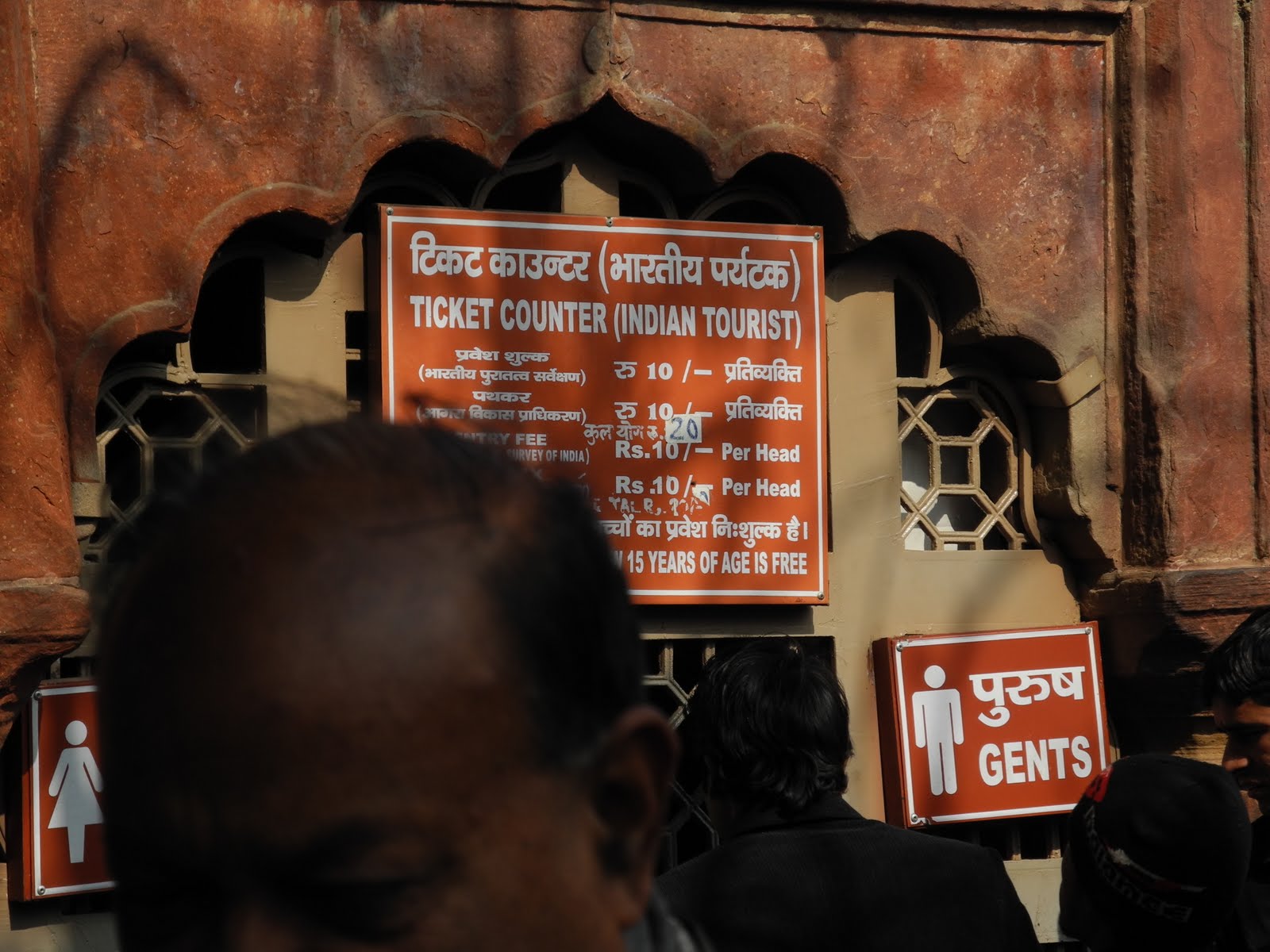
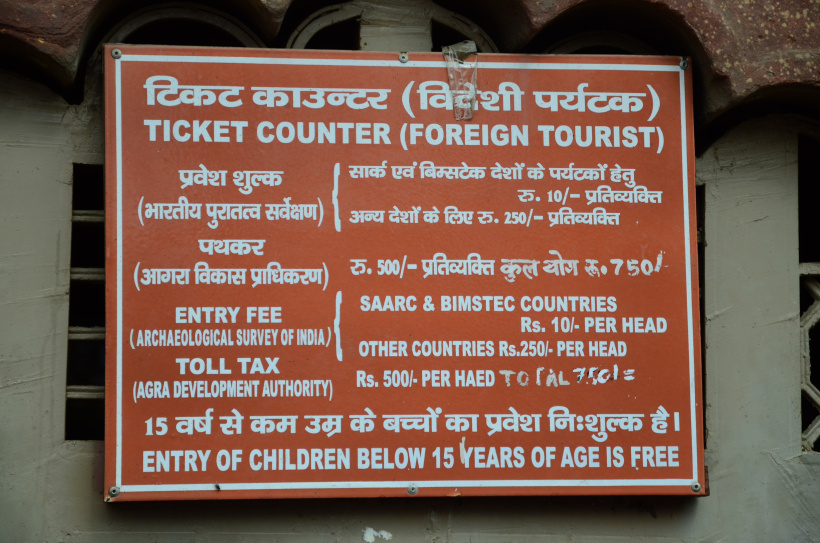
This shameful story of racism is an outcome of the Archaeological Survey of India’s policy to have dual pricing for entry tickets to the monuments. Under this the foreigners have to pay several times more than Indians. For instance, to enter the Taj Mahal, foreigners pay Rs 750, as against the Rs 20 Indians do. For visiting the Red Fort or the Humayun Tomb in Delhi, Indians pay Rs 10 and foreigners Rs 250.
The problem is that there isn’t a mechanism in place through which the citizenship of visitors can be determined. No proof of identity is asked for, and whether a tourist is foreigner is determined by the person at the ticket counter on the basis of his or her notion of who looks Indian in appearance. The colour of skin and facial features become the clinching factors in this egregiously flawed process of determining citizenship.
Thus, anyone who is white or black is asked to buy the higher-priced ticket unless he or she challenges the person at the counter and furnishes identity documents to prove that they’re Indians. Even a person such as Sonia Gandhi, who has relinquished her Italian citizenship for an Indian one, might run the risk of being declared an outsider, only because her complexion is foreign-white.
 Judging by the clothes
The legal definition of who is an Indian citizen eludes the person who mans the ticket counter. His or her perception of who is a foreigner is almost always based on colour and sartorial style. Thus, Bangladeshis or Pakistanis or Sri Lankans can swing through the gates of the Taj Mahal for Rs 20 even though they too have to pay a higher rate for entry – Rs 510 – which is Rs 240 lower than what others clubbed as Foreigners have to dish out. They could get into Delhi’s Red Fort for just Rs 10, as their appearance wouldn’t arouse suspicion that they are foreigners.
Nor are those Indians suspected who are brown in colour but are citizens of another country. Really, who would challenge the identity of a lookalike of the West Indian cricketer Shivnarine Chanderpaul unless he gives away his foreign-ness through his accent? No wonder, foreigners of Indian origin often have their relatives buy tickets at the rates applicable for Indians, evading the possibility of giving themselves away through their accented speech.
But judging the Indian citizenship of visitors from their appearance is demeaning for those who don’t have features or colour the ASI personnel consider Indian. A relative of mine was asked to pay the foreigner’s rate at Delhi’s Humayun tomb because the person at the ticket counter thought she was from the Philippines. She had to speak in Hindi to avail of the Rs 10 ticket. Some people from the North East states experience this slight whenever they are asked, “You foreigner?”
At times, Indians are classified as foreigner because of their sartorial style. For instance, wear shorts, T-shirt and a cap, and you might be gruffly asked to pay the amount charged from the foreigner. To prove his Indian-ness, one journalist uttered the choicest abuses in the local language.
This dual pricing policy is justified on the basis that tickets for visiting historical sites abroad are priced far higher than they are in India, and foreigners, therefore, are not only accustomed to paying high rates, but can also afford it. It enhances the revenue of the Archaeological Survey of India, enabling it to maintain and manage better the monuments under its charge. But this logic is flawed – tickets for visiting historical sites in Asian and African countries are not, unlike in the West, priced exorbitantly high.
 Resentment among backpackers
Charging higher fees from foreigners without granting them special rights to access monuments is both exploitative and discriminatory. Such policies are opposed because they spawn in a category of people a feeling of hurt and victimisation.
You might think tourists from the prosperous European or American or South-East Asian nations would be oblivious of the dual pricing of entry tickets. But ask Sanjay Sharma, who is the president of regional-level approved Guides Association of Agra, Ministry of Tourism. He says the backpacker bunch resent the ASI’s dual pricing policy and often whisper among themselves the inherent injustice of having to pay more than Indians to visit historical sites in and around Agra.
“The more prosperous of tourists don’t bother because their tours are organised through travel agencies which have already paid for their entry tickets,” said Sharma. “They don’t have to purchase tickets at the counter, which is where different rates for different classes of tourists are listed. Most of them are oblivious of the discriminatory policy.”
When the dual pricing for tickets was announced well over a decade ago, Sharma says Agra witnessed protests and dharnas against it. Even the Allahabad High Court was petitioned, he said, but the dual pricing policy was upheld. “The differential ticket rates speak poorly for India,” Sharma said. “Do Indian citizens have to pay a higher entry fee than the Europeans for visiting museums or historical sites in their countries?”
He says some restaurants owners have taken to printing two sets of menu cards – the costlier one is presented to the foreigners. As is the case at the monuments, the colour of skin is the principal determinant of who is a foreigner. Point to the unfairness of this practice and these restaurateurs will, in the manner of the government, shoot back: Isn’t eating out far costlier in Europe than in India? – Scroll.in, 27 April 2015
» Ajaz Ashraf is a journalist from Delhi. His novel, The Hour Before Dawn, published by HarperCollins, is available in bookstores.
Filed under: india | Tagged: ASI, exploitation, foreign tourists, india, india government policies, indian government, national monuments, racism, racism in india, tourists | 1 Comment »











