











 In counter-insurgency campaigns and counter-terror operations also, India has consciously been reducing the level of military force. … All use of violence is being reduced to the level of police forces, armed with nothing more than lathis and small arms. – Maj. Gen. G. D. Bakshi
The Westphalian system of nation-states that emerged in 1648 were premised on the monopoly of violence. Each nation-state disarmed its population, and the right to bear and use arms was confined to the armed forces and some police units. The use of force in inter-state wars reached a peak in the two World Wars. The First World War cost us 8.4 million casualties, the second 48 million and ended with the use of atomic weapons against Japan. The 50-year long Cold War that followed was not entirely cold. It cost us over 7.2 million casualties in small-scale brush fire wars.
However, in this period there was a stable balance of power between the two super powers—the USA and USSR. In fact, the balance of terror (caused by the existence of huge nuclear arsenals that threatened to wipe out the world) actually held the peace. This ushered in an era of strategic restraint, which began to wear down by the decade of the 1970s. Major conflicts broke out in South Asia, Africa and the Middle East. By 1990, the Soviet Union collapsed. The US emerged as the sole super power and brazenly used its conventional military superiority to wage wars against Iraq, Afghanistan, Libya and then Syria. Though it easily won the conventional military conflicts, it was soon bogged down by local insurgencies which wasted huge resources and drained its will power for further intervention. The two tenures of President Obama saw the outbreak of relative peace.
So will this period of peace continue? A study of our recent history indicates that the global patterns are fast undergoing major changes. The new patterns are ominously similar to the ones that prevailed before the two World Wars. We are increasingly reverting to a situation characterised by the following patterns:
• A multi-polar world order is fast emerging with America, Russia, China, India, Japan and Europe as the new poles of power. This is similar to the global power architecture before the two World Wars. Multi-polar world orders have inherently been unstable.
• We see the sharp rise of nationalism in China, Japan, India, Russia and now even Donald Trump’s America.
• We see a retreat of globalisation and an ominous rise of protectionism—precisely as it was before the two wars. Protectionism had led to trade wars and these ended in shooting wars.
• We see the rise of industrialisation and urbanisation in Asia—just as it had occurred in Europe before the two wars. Huge concentrations of human population in major cities lead to a rise in the levels of aggression.
• Asia, with China and India leading, is fast becoming the economic and military power house. Of the world’s nine nuclear powers, six are in Asia and the second, third and fourth largest economies are also located here. Asia could well become the arena of major conflicts, even as Europe was before the two World Wars.
Huge military arsenals have existed earlier. What is worrying is the new tendency to use such arsenals. The levels of the use of force are rising ominously around the globe, in terms of scale, lethality and frequency. Recently the Russians employed large scale military force in Ukraine and Syria. They used Syria as a test laboratory to demonstrate their weapons—especially bombers, cruise missiles and multi-barrelled rocket launchers.
Trump’s administration has also demonstrated its ability to use heavy fire power. It fired 60 Tomahawk cruise missiles at a Syrian airfield and then dropped a 10,000 kg Mother of All Bombs in Eastern Afghanistan. Its carrier battle groups are currently prowling around North Korea.
The only exception to this trend of increasing use of military force is India. Though the size and armament patterns of its armed forces is rising—albeit very slowly—its level of force usage has come down alarmingly. After the overt nuclearisation of South Asia, there was a school of thought that wars just won’t happen anymore. The Kargil war happened within months. It, however, was a limited tactical engagement confined to our own side of the border. In counter-insurgency (CI) campaigns and counter-terror operations also, India has consciously been reducing the level of military force. It has made the CRPF the primary CI force (despite its patent lack of capacity for these operations). All use of violence is being reduced to the level of police forces, armed with nothing more than lathis and small arms. The Supreme Court, with its latest ruling, has sought to curtail even the use of small arms by diluting the legal cover provided to the Armed Forces under AFSPA.
The result of this nanny state’s tragic unwillingness to use force to defend itself is most evident in J&K. The state has virtually retreated in the face of stone-pelters and quailed from enforcing law and order against violent mobs driven by communal frenzy. On the LoC, it is yet to react strongly to Pakistani provocations of beheading two of our soldiers. We hope this self-imposed spell of restraint will soon be overcome and the Indian State will take its cue from an international environment characterised by the increasing use of military force and violence to safeguard perceived national interests. – The New Indian Express, 21 May 2017
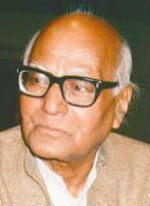
» Major General G. D. Bakshi (SM, VSM) is a retired Indian army officer. He has served at the Directorate General of Military Operations and has dealt with Information Warfare and Psychological Operations.

Filed under: india | Tagged: india, india government policies, indian armed forces, indian army, indian government, indian police service, IPS, national security | 1 Comment »