







 “For a civilisation to flower, its people need to draw deep from indigenous knowledge sources. By 1947, Indian education came to be dominated by Western sensibilities, and no government has so far attempted to bridge the gap between gurukul and IIT. Education became highly politicised, and reservation is now a pillar of that system.” – Ravi Shankar Etteth
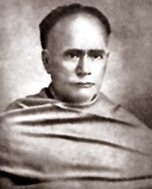 Once upon a time, there lived a man named Ishwar Chandra Vidyasagar. He is not as well known as Kapil Sibal. Vidyasagar was an illustrious member of the Indian Renaissance that began in Bengal in the mid-1800s. The story of how this educationist, philosopher and Sanskrit scholar acquired knowledge as a student used to be taught in school textbooks of the 1960s and 70s, especially in regional languages. Perhaps it still is. For those who haven’t read the story, here’s a precis: Ishwar Chandra was obsessed with books. His family was too poor to buy oil to light lamps at night. Little Ishwar, hungry to read, wasn’t deterred. He would sit on the footpath, under the street lamps at night, and read and read through the night.
Unfortunately, it’s still night in the world of Indian education. The Annual Status of Education Report (ASER) 2011 says 64.6 per cent of schools don’t have a library. Only 19.8 per cent of students use one. Half of Grade 5 students can’t read even a simple text; in 2007, 57 per cent of such students studied in government schools; in 2010 it was 50 per cent. In private schools—mostly unrecognised—the number declined from 69 per cent in 2007 to 64 per cent in 2010. The report says only 36 per cent children in Grade 5 are able to do a simple division sum, and here too, the percentage has declined from 42 per cent in 2007. According to an earlier study, 75 per cent of technical graduates and more than 85 per cent of general graduates are unemployable in high-growth global sectors such as IT and BPOs. This after India’s education budget more than doubled in the last five years, from 1,52,847 crore in 2004-05 to 3,72,813 crore in 2009-10. Ironically, our education conveyor belt spews out more than 2.3 million graduates and 7,50,000 post-graduates yearly from its 389 universities, 14,169 colleges and 1,500 research institutions.
 The 1800s that Vidyasagar lived in were interesting times for India. Colonial administrator Sir Thomas Munro observed that every Indian village had a school, whereas in England the number of poor children studying was much smaller. According to historian Dharam Pal, all records on native education date only from the 1820s and 1830s. In those days, education was pastoral: pupils learned in gurukuls and paathshaalas, an ancient way of life that were more than mere centres of instruction. They represented an ethos, the Hindu way of life, which stressed a cohesive education of body, mind and spirit.
 Things changed after the 1857 Mutiny. The Empire feared India would strike back. They realised Indian heritage had to be castrated, and a warped version of history propagated. Post-Mutiny British rule projected India as a primitive land, populated by beggars and snake charmers, tyrants and savages, who were saved from perdition by British missionaries and Western education. Aryabhata or Charaka were not part of their syllabus. For a civilisation to flower, its people need to draw deep from indigenous knowledge sources. By 1947, Indian education came to be dominated by Western sensibilities, and no government has so far attempted to bridge the gap between gurukul and IIT. Education became highly politicised, and reservation is now a pillar of that system.
Dissemination of knowledge needs clarity of vision. The ASER study states around 80 per cent of our education budget is kept for salaries of teachers, themselves a product of the same system, in which Einstein prevails over Pingala. Once, Vishwamitra, Dhanwantari, Patanjali and Dronacharya inspired India’s pedagogy. Vidyasagar’s street lamps illuminated this truth. Until our politicians abandon their cynical pedestals to study eternal India, gurukuls will remain quaint myths of an abandoned past. – The New Indian Express, Chennai, Feb. 5, 2012
» Ravi Shankar is an author and columnist. He can be contacted at Ravi@newindianexpress.com
Filed under: india | Tagged: ashrams, civilization, colonial, culture, dharam pal, education, hindu, history, india, indian civilisation, ishwar chandra vidyasagar, sanskrit literature, school textbooks, science | Leave a comment »