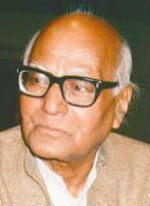






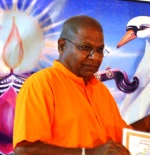





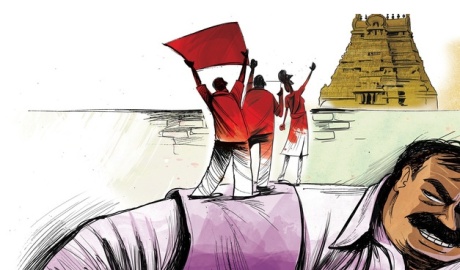
 “The demand for change in some practices, like the ban on women’s entry in Sabarimala, is politically motivated. Can practices rooted in Sanatana Dharma be altered? At a time when a few demand a ‘timely change’ in rituals and the very philosophy of Hinduism, this question is of prime importance.” – Parappanangadi Unnikrishna Panicker
Most of the Hindu practices have changed with time. We have corrected many wrong practices of the past century. Those, who were not allowed to enter temples once, enter and worship now. Bloody and gory rituals once widely practised have ceased in the last century. It must be this history that inspires a few to demand more changes, which is not a bad idea in itself. Some current practices indeed go against tradition and rituals. For example, using elephants for processions is not what the rituals demand.
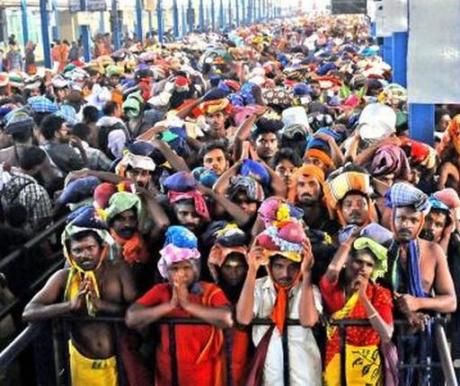
But the demand for change in some practices, like the ban on women’s entry in Sabarimala, is politically motivated. Can practices rooted in Sanatana Dharma be altered? At a time when a few demand a “timely change” in rituals and the very philosophy of Hinduism, this question is of prime importance. The temple culture practised in Kerala today is not very old. Historians say they are not older than 10th century CE. In other words, Sanatana Dharma and a proper Hindu form of temple worship started gaining popularity in Kerala after Judaism and Christianity reached here. This, however, does not mean that the rituals themselves originated in that period. The scriptures that Kerala temples follow when it comes to rituals 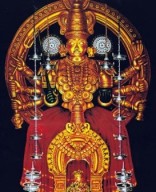 and rules originated in Kerala and quote some of the ancient Hindu texts. They have taken into consideration regional beliefs and practices and tried to accommodate them while prescribing rituals. The rituals are not as inflexible as they are made out to be.
It was the great Kalidasa who wrote that all that is old need not be good, and all that is new need not be bad. Only a moodah (fool) will follow what others say without thinking about it. Unfortunately, when it comes to rituals, we follow what others say without putting any thought into it. In the case of Hindu rituals, what makes a practice customary is not its age but whether it is in line with the method of worship and rituals mentioned in authoritative texts.
Many customs in Kerala temples have no scriptural authority. For example, there is no textual basis for the ban on women’s entry into Sabarimala. Though texts like Tantrasamuchaya discuss what makes a temple impure in detail, the fact is there is no clear rule that bans women’s entry. But it will not be wise to conclude that such practices should be stopped because there is no textual rule. Another example is the use of elephants in temples. There is no textual rule that supports this cruel practice. One of the most authoritative texts on elephants, Matangaleela, says elephants won’t be comfortable if they are taken away from their natural habitat. Yet, we keep using elephants.
Not all rituals have a textual basis. In fact, some rituals go against the text too. To make rituals and customs similar across the temples would be to go against the very essence of Hinduism, as such an attempt would undermine the multicultural practices that exist in the Hindu compendium. Some historians argue that the Shiva and Vishnu temples of Kerala were once abodes of Devi. Legendary stories about the origin of most Devi temples in Kerala have many similarities.
Something common for most of these temples existed, even before Sanatana Dharma and Hindu practices became common in Kerala. Something that is as old as the language connects these temples. Even though temple culture did not exist in those times, there would have been a similarity in religious practices and beliefs. Most rituals and customs can be directly or indirectly linked to this ancient belief system that existed here, before Shaiva/Vaishnava/Devi belief systems and a structured kshethraachaara became prevalent in South India. It is not possible to find a basis to these practices in texts and scriptures, or to bring uniformity in existing practices.
If the practices that exist today cannot be made uniform, and if scriptural authority is not the criteria to decide whether a practice is ritualistic or not, on what basis should we try to redesign them? We need to redesign the practices. This, however, does not mean we can be judgmental. Most of the rituals, even  those that are seemingly outdated, started at a different time, under a different value system. We cannot judge them using today’s value system.
A research on Kerala temples, published seven decades ago, writes about the “indecent practices” of animal sacrifice and bawdy language. Both these practices do exist today. The difference is that we have become more mature and know the historical reasons behind these practices. There was a time when elephants were ritually killed, as a sacrifice, in Kerala. We have stopped such practices. If stopping such practices is not seen as a compromise on rituals, we can surely stop using elephants in temples altogether; that will not be a compromise on rituals either.
The case of ban on women’s entry in certain temples is different. We saw that the Hindu temple culture accommodated regional beliefs while structuring temple worship. The practice of ban on women’s entry, I believe, is a remnant of those regional beliefs. So, the argument that a ban on women’s entry goes against the broadness and openness of Hinduism is misplaced. We need to think about the criteria by which the rituals are redesigned. It is difficult to answer what these criteria should be. But answering a few related questions would help us get there.
Who needs a change in rituals? Whose demand is it? If it is the demand of practising Hindus and priests, there is a further question. Why do we need a change? It should not be politically motivated. One of the fundamental characteristics of Hinduism is its openness. We should not downgrade that by bringing rituals, traditions and practices into a common framework. – The New Indian Express, 19 May 2016
» Unnikrishna Panicker of Parappanangadi in Kerala is said to be Jayalalithaa’s most trusted astrologer.
Filed under: india | Tagged: acharyas, ban on women, hindu, hindu acharyas, hindu dharma, hindu temples, hindu traditions, hinduism, india, temples | 4 Comments »