











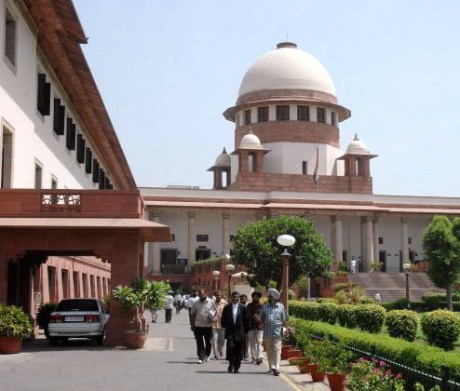
 Despite the Government’s unwillingness to take a public stand on the Supreme Court’s stay on the implementation of the farm laws, there is a sense of outrage among the supporters of the reforms. This stems from a belief that the court has clearly exceeded its constitutional mandate governing judicial review. The principle of judicial review has to be selective. If it becomes all-pervasive, the governance of the country passes to the hands of unelected representatives. – Swapan Dasgupta
The Supreme Court decision to stay the implementation of the legislation on agricultural marketing until it assesses the report of an expert committee on the subject has drawn considerable flak. Although the Government side has chosen to be reticent, many of the organisations representing farmer interests in Punjab and Haryana have been critical of the court’s order, despite the fact that it ostensibly favours them, at least momentarily. The reasons for the dissatisfaction may vary but there seems an unlikely convergence of viewpoints which should be considered.
Despite the Government’s unwillingness to take a public stand on the court’s stay, there is a sense of outrage among the supporters of the reforms. This stems from a belief that the court has clearly exceeded its constitutional mandate governing judicial review. In normal circumstances, a court assesses the legality of legislation, properly enacted by elected representatives, on two counts. First, it assesses whether or not the legislation is in accordance with the letter and, occasionally, spirit of the Constitution. Secondly, it may extend its view to take into account the adherence to natural justice. In recent times, the principle of “judicial conscience” has made an entry in the thinking of some judges. However, since this is a nebulous and totally subjective principle, it is best to disregard it as an aberration.
On the question of the Constitution, the court would have been entirely in order to examine if the Centre had the necessary constitutional mandate to undertake legislation to abolish the APMC and the existing anti-hoarding rules. It is beyond the jurisdiction of the judiciary to question the wisdom and appropriateness of the legislation. That power vests entirely with the legislature, in this case both Houses of Parliament. The debate on the merits and demerits of the new laws belongs in the realms of politics. Although there is a school of thought that believes political decision-making is too crucial to be left to elected politicians and should be vetted by a smaller group of wise people, this belief has no place in a democracy. The principle of judicial review has to be selective. If it becomes all-pervasive, the governance of the country passes to the hands of unelected representatives.
What the Indian Constitution stipulates is that governments have the absolute right to take bad decisions as long as they don’t violate the “basic structure” of the Constitution. What constitutes the “basic structure” is a matter that the courts have arrogated to themselves. It is not an idea that finds any mention in the Constitution.
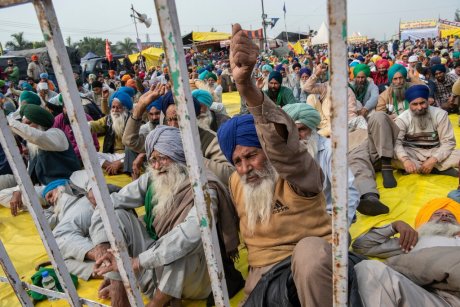
There have been a series of protests against the farm bills in northern India. However, I don’t see there anyone in their right mind has presumed to suggest that the right of farmers to sell their produce across state boundaries is unconstitutional. Nor is there any suggestion that it is constitutionally obligatory to inject the Minimum Support Price into the rules governing the relevant Act. The debate on the subject is partly grounded in economics and partly in politics. That is where the battle must be conducted, not in the courtrooms.
The highest court in the land has made some adverse observations on the paucity of public consultations prior to the passage of the Bills. Politically, this is a worthwhile objection, although it could be said that the waging pandemic didn’t allow too much scope for village councils all over India to debate its merits and demerits. At an electoral level too, the new laws don’t seem to have been a factor in influencing voting intentions in Bihar and in the series of by-elections all over the country, but notably in Madhya Pradesh and Karnataka. Nor for that matter has the apparent haste in which the bills were enacted in Parliament triggered farmer unrest in any part of the country, apart from Punjab and Haryana. The observation by economists that the big farmers who are spearheading the agitation—with a great deal of logistical support from professional, rent-a-cause agitators who have a track record of dismal failure in electoral politics—are among the top eight per cent in terms of income has also not been challenged.
India is not a plebiscitary democracy. Democracy vests the responsibility of assessing public opinion on elected representatives whose mandate is periodically renewed. It is their duty to uphold the “public interest”—often by championing change. The courts are meant to see that the rule of law is upheld. Safeguarding the public interest is a lofty concept but that is outside the purview of the judges.
It is sometimes mistakenly believed that anything pronounced by the courts is law. It is also presumed that law is absolute and written in stone. Both these ideas are often responsible for facile conclusions, particularly in the media. The reality is that the interpretation of what is law often depends on the subjective orientation and personal philosophies of the judges. A decision by one Bench can often vary dramatically from the same case heard by another Bench. This is why there is such a tussle in the United States over the appointment of “liberal” or “conservative” judges. The composition of the Bench will shape the verdict—although this is not to say that the judges are wilfully political.
The reactions to the Supreme Court order have initiated a debate which is instructive. It is time that this debate finds reflection in the deliberations of Parliament in the forthcoming Budget session. India needs a measure of juridical predictability to confront turbulent politics. – The Pioneer, 17 January 2021
› Swapan Dasgupta is a journalist and a presidential nominee to the Rajya Sabha.
Filed under: india | Tagged: democracy, farmers' protest, indian parliament, indian supreme court, kritocracy | Comments Off on The Supreme Court has exceeded its constitutional mandate governing judicial review – Swapan Dasgupta