







 The revelation that a number of minors who were abused in Dutch Roman Catholic institutions were also forcibly castrated has shocked the Netherlands. It casts grave doubt upon the recent findings of a commission set up to look into abuse in the Church. RNW’s Robert Chesal, who first brought the sex abuse scandal to light, argues that only parliament can be trusted to investigate further. – Radio Netherlands
Journalists of the Year 2010
 RNW’s Robert Chesal and Joep Dohmen of NRC Handelsblad were named journalists of the year in 2010 for their work in exposing sexual abuse in the Roman Catholic Church in the Netherlands.
Dohmen also published the book “Vrome Zondaars” (Pious Sinners) on the same subject.
We now know that former Dutch cabinet minister Wim Deetman did not meet the expectations he raised when he chaired the commission of inquiry into sexual abuse in the Roman Catholic church. He did not get to the bottom of the abuse scandal or reveal all of the horrors that took place behind church doors in the Netherlands.
Whistle blowers punished
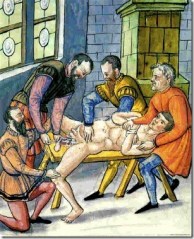 We know this thanks to investigative journalist Joep Dohmen of the newspaper NRC Handelsblad. Dohmen wrote about a boarding school student who had been sexually abused by a Dutch monk. When the former student reported the abuse to the police in 1956, he was brought to a Roman Catholic psychiatric ward, declared a homosexual and then castrated. The same surgery was probably performed on at least ten other schoolmates of his who tried to blow the whistle on abuse.
The main abuser in this case was ‘Gregorius,’ the brother superior of the Roman Catholic Harreveld boarding school in the east of the Netherlands.
We cannot yet say for sure why the Deetman Commission left all this information out of its voluminous report on sexual abuse in the Church that was published just three months ago. The commission received a clear complaint detailing the castrations in 2010, which it now says it did not investigate “for lack of sufficient leads”.
This explanation looks shaky at best, seeing as Joep Dohmen was able, in just a few months’ time, to find irrefutable evidence of one such illegal castration and strong indications of ten more.
Senior politician involved
 But Dohmen found something even more important. He discovered that the Deetman Report failed to mention a certain political figure who tried to secure a royal pardon for Gregorius and other convicted Catholic brothers from Harreveld. That was Victor Marijnen, a former Dutch prime minister and leading member of the Catholic People’s Party (KVP). The KVP later merged with Protestant parties to form the Christian Democrats (CDA) – the political party of inquiry commission chairman Wim Deetman.
Victor Marijnen was in an extraordinary position in the 1950s. Not only was he a rising star in his political party, he was also vice-chairman of the Dutch Catholic child protection agency, and – most pertinently – director of Harreveld boarding school. The Deetman Commission was aware of these connections and the potential conflicts of interest they represent. The commission was aware of Marijnen’s letter to the Queen on behalf of sexual abusers, too, but omitted these facts in its report.
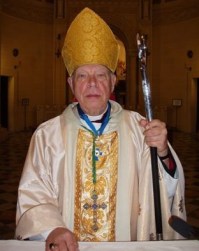
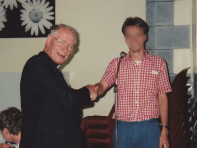 Reacting to Dohmen’s revelations, the Deetman Commission explains that it did not mention Marijnen because it did not detail any cases that could be traced back to an individual, for the sake of protecting privacy. However, elsewhere in the same report we see numerous mentions of cases that can be traced back to individuals, even highly-placed figures such as bishops Ad Simonis and Philippe Bär. The commission did not shy away from slapping these men on the wrist.
It’s not unreasonable to conclude that the Deetman Commission refrained from investigating the castration because it knew this would inevitably lead to closer scrutiny of the Harreveld situation, exposing the role of Victor Marijnen and showing Mr Deetman’s own political party in a very negative light indeed.
The big picture
 But this may be too narrow a view. The bigger picture is this: Victor Marijnen was just one member of a wider elite of Catholic notables who wielded vast power in the 1950s. They were captains of industry, chairmen of commissions, judges, high-ranking civil servants and politicians. And it was through this old boys network that abuse at Harreveld and other Roman Catholic institutions was covered up.
In short, the Harreveld castration story reveals collusion between institutions, bishops, politicians, the police and the justice system that enabled sexual abuse in the church to continue unpunished for decades on end.
Questions to answer
 It’s now clear that the critics were right when they complained that a church-installed commission of inquiry could not, or would not, get to the bottom of the abuse scandal. There must now be an impartial inquiry whose integrity is beyond doubt. Only parliament can fulfil this role. And perhaps the first witness called to testify under oath should be Wim Deetman himself. – Radio Netherlands, Hilversum, 19 March 2012
Editor’s Note: Most of the sexual abuse of boys in Holland took place in Don Bosco houses by Salesian priests. This should be of concern to Indians as the Salesians of Don Bosco have a huge presence in India and operate numerous boys homes and schools. In his biography, Here is the Heart of a Priest, former Vincentian seminarian K. P. Shibu Kalamparambil describes in detail the goings-on in Indian Catholic seminaries. His book has sent shock waves through the Indian Christian community and should be of major concern to Hindus too as their children are schooled in Catholic institutions.
See also
-
Benedict XVI: Sex abuse victims urge ICC to prosecute pope – Robert Chesal
-
Sexual depravity in God’s own church – Media Reports
Filed under: india | Tagged: castration, child abuse, child sex abuse, christian, corruption, ethics, health, human rights, india, media, paedophile priests, politics, religion, roman catholic church, salesians of don bosco, sex scandal, sexual abuse by priests, vatican | Leave a comment »





 BHARATA BHARATI