






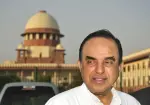



 I think most Indians would welcome a Uniform Civil Code. It does not mean that customary practices will be abolished, but any citizen who feels aggrieved by them can seek justice and redressal rather than having to put up with an oppressive practice. As to local customs in special areas, the Constitution itself provides safeguards. – Prof. Makarand R. Paranjape
No sooner than Kirodi Lal Meena, Rajasthan BJP MP, introduced the Uniform Civil Code Bill in the Rajya Sabha, the “minority-cum-secularist” lobby went into overdrive. Their purpose was clear: to discredit the bill and him. Slanted headlines appeared in national dailies and portals such as “Rajya Sabha chaos over Uniform Civil Code Bill” or “BJP Rajya Sabha MP Kirodi Lal Meena caused an uproar in the Opposition benches”. Despite three attempts to scuttle the bill, it was successfully introduced after the members voted 63 to 23 in its favour.
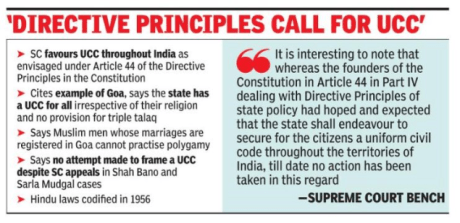
What exactly, a concerned citizen might ask, is the “uproar” about? The first thing to note is that separate personal laws are a legacy of the British empire, which based its administrative strategies on the classical principle of divide et impera or divide and rule. Paradoxically, Goa, which joined the Indian Union in December 1961, is the only state to have a UCC—that too imposed by another colonial power, the Portuguese, as far back as 1867.
Independent India tried to bring in a Uniform Civil Code, which had the backing of both Jawaharlal Nehru, our first prime minister, and B.R. Ambedkar, our first law minister. What happened instead was that the Hindu Code Bill brought about a uniform civil law on those identified as Hindus, under which term the Constitution also included Sikhs, Buddhists, and Jains. The Muslims, Christians, and Parsis were left out, much to the detriment of the women who belonged to those communities, as the Shah Bano case later proved. The abolishing of the notoriously unjust practice of “triple talaq” was only a late attempt to redress some of those ills.
This year, the clamour for the UCC has arisen, either from government quarters or from influential sections, in several states, including Uttar Pradesh, Madhya Pradesh, Uttarakhand, Gujarat, and even Kerala. In most cases, the most vociferous opposition has come from minority lobbies such as the All India Muslim Personal Law Board (AIMPLB), which dubbed it “an unconstitutional and anti-minorities move”, and the usual so-called “secular” critics. Quite expectedly, foreign media majors have also taken a stance against it as yet another Hindutva imposition.
Coming back to the just introduced bill, let it be stated on record that this is a private member’s bill, not officially backed by any political party. No wonder its detractors are immediately asking: “Who is Kirodi Lal Meena?” For those who don’t know him, this 70-year-old politician is not only a medical graduate with an MBBS, but also widely respected in his state and community, where he has also been conferred with the honorific “Baba”. What is more, this is the second time that Meena has tried to introduce the bill. He failed in March 2020, when more or less the same clutch of opposition members threatened to block it. This time, however, he has succeeded.
Meena, of course, belongs to the Bharatiya Janata Party (BJP). He is also a member of the numerically and politically powerful Meena Scheduled Tribe in Rajasthan. There is a belief that SCs and STs should “naturally” be minoritarian and therefore oppose Hindutva, Uniform Civil Code, Constitutional Amendment Act, and so on. That Kirodi Lal Meena, quite contrarily, is a proud proponent not only of Meena identity, tribal reclamation of present and past, plus an advocate of Hindutva, makes him automatically malign in the eyes of some. That he was considered a rebel against Vasundhara Raje, former BJP chief minister of his state, and spent almost a decade outside the BJP earlier, has also been used to discredit him. Those who call him a “duplicitous” pretender easily forget that he has won elections not just to the Rajasthan assembly but also to the Lok Sabha as an independent from Dausa in 2009.
Now let us see what some of the honourable members of our Upper House who opposed the bill said. Tiruchi Siva of the DMK, who also opposed the bill in 2020, reportedly said that the very idea of Uniform Civil Code is opposed to secularism. Really? Does he not know that the UCC is Article 44 of our Constitution as a part of its Directive Principles: “The State shall endeavour to secure for the citizens a uniform civil code throughout the territory of India.” In other words, according to the Constitution, it is the duty of the Indian republic to introduce and implement the UCC. Does this mean that our very Constitution is “opposed to secularism”?
In another move to block the bill, it was claimed that it “would disintegrate the country and hurt its diverse culture”. Again, the illogic of the opposition to the bill defies belief. Is the unity of the country underwritten only by differential, some would say preferential, treatment of minorities? Or that Indian diversity really means that communities are treated differently in the eyes of the law? In fact, it is the latter claim that is palpably against the very spirit of the Constitution.
What is wrong with a uniform law, applicable to all citizens regardless of religion or community, in matters such as marriage, divorce, inheritance, adoption, and so on? I think most Indians would welcome it. UCC does not mean that customary practices will be abolished, but any citizen who feels aggrieved by them can seek justice and redressal rather than having to put up with an oppressive practice. As to local customs in special areas, the Constitution itself provides safeguards, as in Nagaland, Meghalaya, or Mizoram, for example.
A private member’s bill does not easily become law. It goes into the cold storage box of “pending bills”, only taken up later for discussions if it is selected by another ballot. But there is a groundswell of opinion being mobilised in its favour across the country. And, if we go by the quotation famously attributed to Victor Hugo: “No force on earth can stop an idea whose time has come.” So, let us face it: this is an idea whose time has come. – The New Indian Express, 12 December 2022
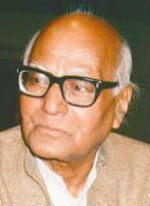
› Prof. Makarand R. Paranjape is a poet who teaches English at JNU.
Filed under: india | Tagged: article 44, BJP government, private bill, UCC, uniform civil code | Comments Off on Uniform Civil Code: An idea whose time has come – Makarand R. Paranjape