








 “My father Netaji was allowed to take along one person with him on the plane journey, a man called Habib ur Rahman, who later went to live in Pakistan. He maintained up to his death that the plane crash took place; that my father was killed and he was a witness to that. Some people said there were inconsistencies in this evidence and that if he asked Habib ur Rahman to spread the story of his death, he would do it.” – Prof. Anita Bose Pfaff
Introduction
Subhas Chandra Bose — or ‘Netaji’ as he is known to millions of Indians — was one of the most charismatic and dynamic leaders of India’s independence movement, and the issue of how the country would have fared with him at the helm is one that tantalises historians to this day.
In truth by 1939 when Netaji was elected president of the Indian National Congress party for the second time, over the objections of M K Gandhi, Jawaharlal Nehru was being groomed as the Mahatma’s chosen successor.
Had Netaji lived, his Forward Bloc party may have posed a continuing challenge to the Congress party under Nehru and after independence the two rivals would almost certainly have gone their ways.
 At the very least with Netaji alive, India’s experience of multi-party politics, in which the Congress party was the only dominant political force for the first 30 years after Independence, would have started much earlier.
In the pre-Independence era both Netaji and Nehru were identified with the Left wing of the Congress party, well to the Left of other respected freedom fighters as Chakravarti Rajagopalachari, Vallabhbhai Patel and Rajendra Prasad.
But where Netaji parted company with Nehru and Gandhi was his strongly held conviction, which he voiced from 1939 onwards, that armed resistance was a perfectly legitimate tactic for India to use in the struggle for its independence.
It was this belief — the British would only yield to force — that led him to seek help from the Axis powers during World War II. He met Adolf Hitler and Benito Mussolini and was befriended by their Japanese allies in the lead-up to the 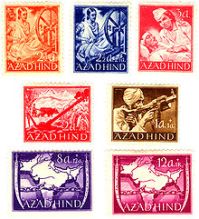 formation of the Provisional Government of Free India that was recognised by the Axis powers and their Southeast Asian allies on October 21, 1943.
During his stay in Berlin in 1943, Netaji founded the Free India Center and the Azad Hind Radio station. It was also in Berlin that the foundation was laid for what later became known as the Indian National Army or INA.
Indian prisoners of war captured in North Africa by Field Marshal Erwin Rommel’s Afrika Korps were released into Netaji’s custody and went on to form the India Legion that fought against Allied forces on the Western front.
The idea taken up by the Japanese high command led to the release of some 30,000 Indian prisoners of war in South-east Asia. The resulting INA force travelled as far as Kohima, now in Nagaland in northeast India, in 1944. Then, as the tide started to turn against the Axis forces, the INA was forced to retreat into the jungles of Burma.
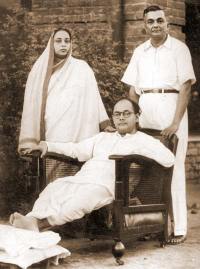 Netaji was born on January 23, 1897 in Cuttack, Orissa, one of the 14 children of a successful lawyer, Janakinath Bose, and his wife, Prabhavati Devi. A graduate of Kolkata’s Presidency College, he was subsequently sent by his father to England to prepare for entry into the prestigious Indian Civil Service.
Although he passed his ICS exam with flying colors, Netaji’s heart was in politics. Strongly influenced by Gandhi, Chittaranjan Das and the teachings of Swami Vivekananda, he joined the Indian National Congress and was jailed 11 times by the British between 1920 and 1941.
Like many Indians of his generation the turning point in Netaji’s political education was the Jallianwalla Bagh massacre of April 1919 when hundreds of unarmed Indian civilians were shot dead at point-blank range on the orders of a British general.
Unlike Gandhi who formulated his peaceful non co-operation movement as the preferred strategy for evicting the British from India, Netaji was increasingly of the view that a more direct and militant approach was required before India could gain its freedom.
Convinced that his enemy’s enemy was India’s natural ally, he escaped from house arrest in 1941 and made his way to the Afghan capital of Kabul. From there, assisted by German diplomats he travelled under an assumed name, Signor Orlando Mazzitto, to Samarkand, Moscow and eventually Berlin.
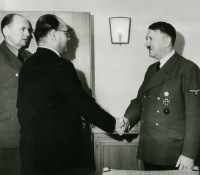 British analysts have vilified his subsequent meetings with Hitler, Mussolini and the Japanese government as evidence of Netaji’s so-called fascist leanings. Quite the opposite was true. A Left wing activist to the end of his days, he held no brief for Hitler and Mussolini’s racist and fascist ideologies and viewed his relationship with them purely in the context of India’s freedom struggle.
Although he failed to win Hitler’s unqualified endorsement for a free and independent Indian state, Netaji secured the freedom of Indian prisoners of war in German custody. The story of how some Germans and Indians subsequently fought side by side in the India Legion against British forces on the Western front has remained one of the best kept secrets of the Second World War.
Netaji died in a plane crash on the island of Taiwan in August 1945. At the time US troops were only two days away from occupying Japan and Netaji, on his way from Saigon to Tokyo, was trying to make contact with remnants of the Imperial Japanese government. What remained of the INA had started to disintegrate after Germany’s surrender in April 1945, followed soon after by Japan’s. Netaji’s death accelerated the process.
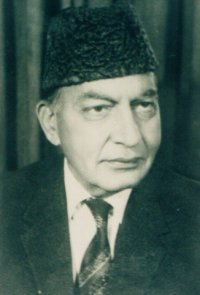 Anxious to reassert their control over India the British attempted to try Netaji’s senior commanding officers for treason. But the trial of commanders like Shah Nawaz Khan, Gurbaksh Singh Dhillon and Prem Sehgal in Delhi’s Red Fort soon collapsed and a general amnesty for all INA soldiers was declared.
In life as in death Netaji acquired a cult following among millions of Indians who saw him as an authentic hero and the only political leader with the necessary legitimacy to lead India following the departure of the British. For years after his death stories continued to circulate about how he had gone into hiding and was only biding his time before he reappeared to claim his rightful place as head of a free Indian state.
Critics have questioned his belief in a more authoritarian system of government for the sake of India’s development, but even they concede that his views on workers and women’s rights and population control were considered far ahead of their time and are still relevant today. How India would have developed with Netaji in charge remains one of the great ‘What Ifs’ of 20th century history and politics.
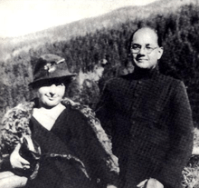
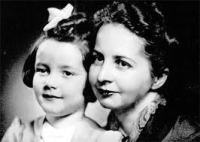 Anita Bose Pfaff, Netaji’s only child, was born in Vienna, her mother’s city, which her father visited in 1934 for medical treatment. During his stay Netaji asked an Indian friend to locate an English-speaking secretary to help him with a book he was planning to write.
The friend, who ran an English conversation course, introduced him to Emilie Schenkl in June 1934. Emilie was the daughter of a prominent veterinary surgeon. They soon fell in love and married in December 1937 in Bad Gastein. Anita, who was born in 1942, is married to Professor Martin Pfaff, formerly a Green Party member of the Bundestag, the German parliament. They have three children: Peter Arun, Thomas Krishna and Maya Carina.
 The Rediff Interview with Anita Pfaff
• How old were you when your father saw you last?
• I was only four weeks old when he saw me last. I was born in 1942 and he left Germany by submarine for Southeast Asia in early 1943. So he saw me when I was very little. When he most likely died in an air-crash in what is now Taiwan — in August 1945 — I was about two and three-quarters [years old].
• How did your parents meet?
• It was in 1934 when my father was in Vienna to seek medical treatment (he had been in jail in Mandalay, Burma, because of his struggle for India’s independence). He was sick and getting quite weak and was released on condition that he would leave the country to get medical treatment.
Vienna at that time was quite a famous centre for medicine. So he came there during the period when he had his treatment. At the same time he was working on a book. He looked for a secretary to type his manuscripts and approached an Indian student to ask if he knew a lady who might do this for him.
The student was running a discussion course in which my mother was a member. So he recommended her and this is how they met.
• After that, was your father in and out of Europe between 1934 and 1943?
• You could extend that period that far; in and out during the 1930s. Then he had more extensive stays in India. First of all, he was Congress (party) president in 1938 and got re-elected in 1939 against the wishes of Mahatma Gandhi who had set up another candidate. After that, the Second World War started in Europe and during that period there was not that much travelling back and forth.
In 1941 my father returned to Germany by an adventurous route. He had been interned at home in Kolkata (by the British) but made an escape from there, travelling in disguise as a Pathan from northern India to the North West Frontier Province (now in Pakistan), and up to Kabul. There he had the support of the German and Italian embassies to give him an Italian passport. Accompanied by a German diplomat he travelled across the Soviet Union, which had not entered the war and allowed him to pass through to Berlin.
• What do you know of your father’s role in forming the Indian National Army that fought the British?
• Actually, the INA had existed before his reaching Southeast Asia, but it had not picked up so well. One of the persons actively involved in it — Rash Behari Bose — wanted my father to take over. Rash Behari had lived in the region for some time and was married to a Japanese lady.
The INA wasn’t just made up of former prisoners of war released by the Japanese. There were also many Indian plantation workers in Malaya who joined up; some of the recruits were prisoners of war and the Japanese handed them over to the INA. Quite a few joined up because they wanted to do something for their country.
What was unusual for those days was that the INA had a women’s corps. My father was quite modern in his views and he had always felt that India had under-utilised resources. One was women and the other was the downtrodden, the workers, who were not recognised as a human resource.
So the INA had a women’s corps of 1,000 women; its commander was Dr (later Colonel) Lakshmi Sehgal. At that time she was Dr Swaminathan from south India who had gone to Southeast Asia. She is still alive. In fact, she was one of the contenders for the Presidency of India (Colonel Sehgal was the Communist parties’ candidate for President against A P J Abdul Kalam in July 2002. She lost the election).
• The INA then saw action on the Burma Front.
• The INA reached Indian soil in what is now called the Northeast provinces. There was a battle of Kohima and Imphal where they were defeated (by the British) and had to retreat. Quite a few died. Politically they were more successful as subsequently released documents have shown.
In post-Independent India the INA’s role was played down. The official evaluation was that its activities had little effect. Militarily speaking that was true because the army was not that well equipped, but the British made a great political mistake by putting three INA officers on trial at the Red Fort (in Delhi), expecting that people would look down on them as traitors. The opposite happened and the trial publicized the efforts of the INA, which had previously been censored.
Until the trial little had been known of the INA or the Government of India in exile in 1943 when they tried to send food to Bengal during the Great Famine. All of a sudden this trial made everything known and it revived the struggle for independence in India, which had been lagging because the leadership of the Congress party and other groups mostly had been imprisoned. Their efforts like the Quit India Movement had not been successful and so this gave a new dawn to the movement.
As a consequence of the INA’s efforts, large numbers within the British Indian Army — which was not just British but for the most part Indian — became unreliable. There was a mutiny in Bombay (by the Royal Indian Navy), which showed the armed forces could not be depended on. The administrative system was what had controlled India and with the army unreliable the British realised India could not be held as a colony any more. This led to the transfer of power. It was meant to have taken place a few months later, but it was brought forward to August 1947.
You could therefore say the INA had this effect of destabilising the British hold on the Indian army and reviving the independence movement within India.
• The INA certainly has its place in Indian history.
• When the first few INA soldiers returned to India they were treated as heroes, but I must say in the later stages India has not treated them very well. The INA veterans were not recognised as army veterans and for a very long time they were not even recognised as freedom fighters, which meant that certain benefits such as a pension and free rail travel were denied to them. Many members of the INA were reduced to poverty and some of them died in hunger. These were simple people and could not find their way that easily in the country to which they returned.
India has not behaved towards this group in an honourable or fair way.
• How often have you visited India?
• Oh, 12 or 15 times, starting in the 1960s. I first visited (India) in 1960-1961 and during that stay Pandit Jawaharlal Nehru invited me to stay with him for some time, which I did for about a week. We talked about my father, about other things in India. It was a long time ago and I don’t remember what it was all about.
• What would India have been like if your father had been prime minister?
• It is conceivable that at an earlier stage there would have been a bipartisan system or a multi-party system in India. As it was, the Congress party ruled India from 1947 to the late 1970s. For a spell there was a Janata Party movement, but that was an alliance of parties welded in a very short period of time with rather diverse interests. It did not retain power for very long and the Congress returned (to power).
The forces favoured everyone flocking to the Congress party, which had positive and negative consequences. The positive side is it created a period of stability. On the other hand, if you have a political system that is democratic, then if you have one party that is very dominant this is not in favour of strengthening democracy.
The competition for better ideas is a useful thing in a democratic system. A system dominated by one party tends to become sluggish and also corrupt.
If my father had been there, there would have been dissenting opinions, a rallying point for alternative forces. Nehru — if you look at him as the leading figure of post-Independent India — used to be part of the Left wing of the Congress. So was my father.
Both would have come with a Left-wing approach. In spite of this India at the national level did not have a very Left-wing party. There is no Social Democratic Party, there is no Socialist Party. There are Communist parties in India who might be regionally strong, as in Bengal and Kerala, but there are no socialist parties that are strong at the center like you have in Europe. My father and Nehru might have posed alternatives, but on the Left wing. Whether this would have strengthened the system, it depends.
Some things my father recognised very early may have been brought to the forefront if he had been there.
• Could you give us some examples?
• For example, even in the 1930s he recognised that population expansion would pose a problem in India. Education as one of the key necessities of the country was one he recognized. He would have pushed very strongly in the direction of spreading education and improving education. Whether he could have abolished illiteracy totally now, one can only speculate. He would have been a very strong proponent of that.
He would have been one to strongly advocate the active participation of women. Of course, India today is a very heterogeneous country with regard to that.
On the one hand you have a country that was one of the first to have a woman as a prime minister. On the other hand in many areas of social life women are downtrodden. You still have wife burning and abuse of women. My father certainly would have been one to stand up for women’s rights.
• Why did Mahatma Gandhi not support him?
• In some ways they were of (the same) opinion. In other ways they were not. In the 1930s Gandhi clearly worked against him. Very often Gandhi is portrayed as a saint, which he was not at all. In my opinion he was a very shrewd politician. He was a lawyer who really knew how to work the system and manipulate people in a positive sense. He certainly made my father resign as Congress president.
My father respected him very highly in spite of that and was always anxious to hear Gandhi’s reaction to what he did and what he said. It was my father who called Gandhi ‘Father of the Nation.’
The INA slogan ‘Jai Hind‘ is still the greeting used in the Indian Army today; my father picked the Indian national anthem. It was first played in Hamburg at a gathering. So there are still a few symbolic remains from his activities in India which people tend to forget.
Gandhi and my father were of the same opinion regarding the partitioning of the country. Both of them were dead set against it and in some context my father said, “The British will try to partition the country.” He and Gandhi were very much against this.
• What do you know of how your father died?
• It seems quite plausible that he was killed in a plane crash in what is now Taiwan at the end of the Second World War. In Europe the war ended in May 1945; in Southeast Asia it only ended in August. The Americans tried to end the war faster by bombing Hiroshima and Nagasaki with a nuclear bomb.
At that time when the Japanese decided to capitulate he was on his way to Tokyo. At that time planes could not cover very long distances, so he flew from Saigon to Taiwan — where he had a stopover — and then took off from Taiwan. The plane caught fire. He was injured and died as a consequence. This was August 18, 1945.
 Later he was cremated and his remains were taken to Tokyo and placed in a temple there. The idea was that his Japanese associates would keep his remains for a few months until they were transferred to India. This has never happened for the simple reason that there were a number of people who did not believe my father had died in that plane crash.
There were all sorts of stories that he had shown up as a sanyasi in some part of the Himalayas, that he was a prisoner of war in Russia. The only story that is consistent and is backed up by eyewitnesses is the plane crash.
My father was allowed to take along one person with him on this journey, a man called Habib ur Rahman, who later went to live in Pakistan. He maintained up to his death that the plane crash took place; that my father was killed and he was a witness to that. Some people said there were inconsistencies in this evidence and that if he asked Habib ur Rahman to spread the story of his death, he would do it.
It makes sense until independence, but as nothing was heard from my father after independence, Habibur Rahman would not have been bound by any such commitment.
• Could British agents have sabotaged your father’s plane?
• I doubt it. This was after capitulation. One day after this happened the Americans moved into Taiwan. If anyone sabotaged it would be more [likely the] Americans than the British at the time. I very much doubt it because it would have been a question of trying to infiltrate at the end of the Second World War when it was clear that Japan was going to capitulate.
It does not make a lot of sense. It would have been a question of spite, maybe, or trying to remove someone who would have been a pain in the neck for the British, but I doubt it.
The Japanese feel rather strange about the whole situation. They feel it is a matter of honour that India should take the remains of one of their greatest independence fighters back to India.
Gandhi and my father were not tainted by corruption. They were not tainted by things people did not like. So some people in India now say, “If they were alive, things would be different.” This is an emotional reaction. – Rediff.com, May 11-13, 2005
» Shyam Bhatia is an author and journalist. He won the British International Journalist of the Year award in 1994.
Filed under: india | Tagged: anita pfaff, azad hind fauj, indian history, indian national army, subhas chandra bose | 23 Comments »





 BHARATA BHARATI