







 Western prejudice is deeply entrenched against India and its rising global influence. This explains why the West has very rarely celebrated India’s dance with democracy in the past seven decades. This despite the fact that India since Independence has been a democratic miracle—the only genuine democracy in the region between Israel and South Korea. – Utpal Kumar
In 2021, The New York Times posted an online advertisement for the job of a South Asia business correspondent based in New Delhi. One of the requirements sought for the position even startled the staunchest of NYT supporters. For, the American newspaper, quite categorically, sought the candidate to be critical of Prime Minister Narendra Modi and his “muscular nationalism”.
Explaining its stand, the newspaper wrote, “India’s future now stands at a crossroads. Mr (Narendra) Modi is advocating a self-sufficient, muscular nationalism centred on the country’s Hindu majority. That vision puts him at odds with the interfaith, multicultural goals of modern India’s founders.”
Interestingly, the NYT has never put such preconditions for postings in Hong Kong or in mainland China. It has never asked the applicants to prove their pro-democratic credentials for a position in Hong Kong, or to publicly criticise Emperor Xi Jinping for a job in Beijing.
If one thought the problem was NYT-centric, then hang on. Others in the West, too, aren’t behind in targeting Prime Minister Modi and India. The Time magazine, for instance, just when Prime Minister Modi landed in Washington, DC, for his first official state visit in June 2023, questioned the very idea of India being an American ally. “India is not a US ally, and has not wanted to become one,” a Time article thundered on 21 June. Interestingly, an even more scathing article appeared in the magazine a day earlier—on 20 June: “India’s Worsening Democracy Makes It an Unreliable Ally.”
The Economist isn’t behind either. It has often reproached Prime Minister Modi for stoking “divisions in the world’s biggest democracy”. It has singled out the Modi government for its “flagrantly biased approach to citizenship” and delivering “collective punishment” for the people of the Kashmir Valley. It goes on to say that the “electoral nectar for the BJP” has become “political poison for India”.
It would, however, be wrong to assume that Western prejudice is only Modi-centric. Although it is today largely influenced and inspired by anti-Modism, prejudice is deeply entrenched against India and its rising global influence. This explains why the West has very rarely celebrated India’s dance with democracy in the past seven decades. This despite the fact that India since Independence has been a democratic miracle—the only genuine democracy in the region between Israel and South Korea.
It was only after the advent of Atal Bihari Vajpayee that India’s relations with the West, especially the US, normalised. Manmohan Singh, his successor, took the process further in the company of US President George W Bush. But this didn’t mean the rough edges of the American foreign policy against India were all gone; they appeared with reinforced vindication after the coming of Narendra Modi as prime minister in 2014.
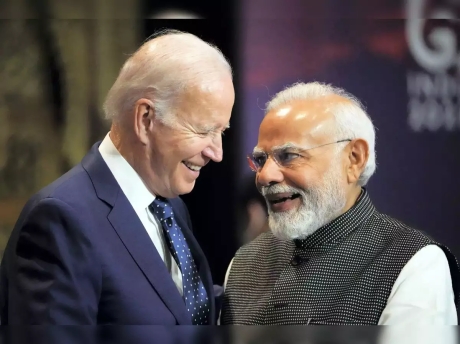
The West, thus, had always had reservations about India. But with Modi’s arrival in Delhi, while India has never been closer to the West, especially the US, it has never faced the level of hostility from American academia, think tanks, and media in recent years. It may sound contradictory, but while the two administrations are always on the lookout to increase cooperation, the American academia, think tanks, and media remain largely hostile to India.
Why do the Western ‘liberal’ institutions, including the media, pursue illiberal agenda, especially vis-à-vis India?
The reasons can be two-fold: One, the Western academia, media, and campuses, especially the American, are today the hub of Far Left-inspired woke culture. India, especially Hinduism, has been their obvious target. However, Left-wing wokeism is a double-edged sword. If it cuts Indian interest today, it has all the wherewithal to turn up against American interest too. This was seen last week when Google fired 28 of its employees who had barged into its Sunnyvale and New York offices and staged a sit-in protesting against Google Cloud’s $1.2 billion deal with the Israeli government. They regard Israel’s ongoing operations against Hamas as a genocide, and have vehemently opposed Washington DC’s support to Israel.
The second reason is historical and institutional. The West, especially the US, since the Cold War era, has nurtured institutions and mindsets that have traditionally seen India with some sort of distrust, if not animosity. Indo-American ties are often on a rollercoaster ride, partly because of the curse of history as well as the innate Indian tendency to be a deliberative, argumentative nation. To add to them is the Indian diplomatic obsession to be autonomous in nature, and the Americans see them all as a sign of Indian fickle-mindedness and also strategic unscrupulousness to run with the hare and hunt with the hounds.
What has made the West further wary of India is its stupendous rise, especially since 2014. The IMF forecast that came early this week would make the West cagier: India will now be set to displace Japan to become the third largest economy in 2025 and overtake Germany to become the third largest by 2027—much faster than what the earlier estimates suggested.
India has not just become the “only bright spot” economically, as the IMF wants us to believe, but also diplomatically and geostrategically, the country has started behaving like a global power—whether it was during the Covid-19 pandemic, which saw India not just get an indigenous vaccine for its own citizens but the world at large, especially the neighbourhood, or the emergency SOS call emanating from the Red Sea and the Arabian Sea. Whether it’s responding to Pakistani terrorism with a Balakot-like response or rebuffing the Chinese misadventure at the LAC with a resolute Indian military response. The Indian message has been loud and clear: That India’s time has come.
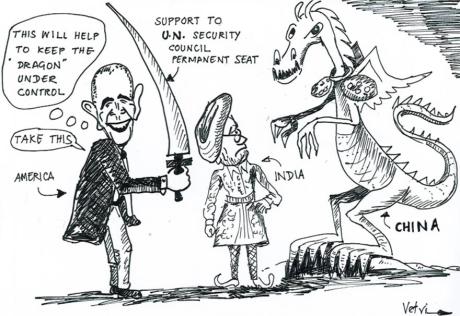
This is where the West gets edgy. India has its uses, especially while playing the Chinese checkers, but the West is also well aware that if allowed to grow unfettered, Delhi will soon propel out of the American axis of influence. The West is no doubt concerned about China’s rise, but it is equally uneasy with India’s growth. It’s a devil and deep sea kind of situation for the US-led West. After all, if China threatens Pax Americana, so does India.
India and the US need each other for their own interests and also for the sustenance of the liberal world order, which is currently under threat from China. Even if their friendship is premised on benefits, as Seema Sirohi argues in her book, it is in the interest of the two nations to be together.
This is where the American system, including its media, think tanks, and academia, needs to fix its anti-India mindset. The US needs India as much, if not more, as India needs the US — for dealing with the Dragon and for strengthening the Western, liberal global order. It’s time America stopped running with the pro-India hare and hunting with the anti-India hounds. – Firstpost, 24 April 2024
› Utpal Kumar is the Opinion Editor at Firstpost and News 18.
Filed under: india, UK, USA | Tagged: anti-india politics, indian democracy, left-liberal media, US-india relations, US-UK media | Comments Off on America must stop running with the pro-India hare and hunting with the anti-India hounds – Utpal Kumar