Because of her tremendous naval power, Britain spread its net of exploration quite wide in South Asia and Africa. In India, the British came in as traders established the East India Company and then gradually started flexing their arms and took control of administration and became the rulers of the country. Though they allowed some pockets to be “ruled” by rajas, maharajas, nizams and nawabs, these provinces were not independent in the real sense of the term but were virtually servile to the British, if not their minions, in many ways. That is how the genesis of exploitation took shape in India. Subsequently, there were myriad ways in which colonial exploitation occurred—physical exploitation of the people including sexual abuse and exploitation of labour was one of the forms of that
Other ways of exploitation were the draining of different kinds of agricultural and forest resources; these included: jute, cotton, sugar, tea, coffee and wheat. The goods developed in British factories were sold back in India for rich benefits. Also, commercial crops like tea, coffee, indigo, opium, cotton, jute, sugarcane and oilseed were introduced and these had impacted their profits tremendously but had different environmental implications in different regions of the country, as plantations always do, due the exercise of clear felling of the forests in almost all cases of extensive plantation activities.
Repatriating The Kohinoor
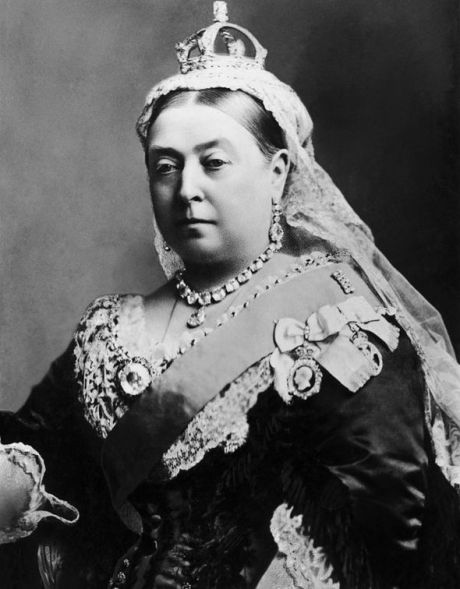
To top it all, regarding exploitation, was the brazen way in which India’s heritage wealth, antiquities and artefacts, were exported to their home bases, by the colonials, to unabashedly adorn their own museums and galleries. Many of these artefacts were stolen without any hesitation. Today it is being argued that one of the most famous diamonds in the world, the Kohinoor, was not necessarily snatched from the people of India but was offered on a platter to the British as part of the peace treaty of Lahore by the king of Punjab Maharaja Dalip Singh. Arm-twisting gets another name in diplomatic parlance—offer. And the British have the temerity to continue to adorn their crown with the Kohinoor though they refrained from its display on the head of the recently crowned queen, the wife of King Charles III during the latter’s coronation, in a rare diplomatic courtesy, apparently not to provoke the sensibility of the Indian delegation attending the coronation.
As Rishi Sunak is more loyal than the queen, there is no chance of him taking the initiative in repatriating to India the Kohinoor or the innumerable other artefacts that were stolen/snatched from India and today adorn the British Museum and many other of their galleries.
Last week the Standing Committee on Transport, Tourism and Culture headed by YSR Congress MP Vijay Sai Reddy, adopted the report “Heritage Theft: The Illegal Trade in Indian Antiquities and the Challenges of Retrieving and Safeguarding Our Tangible Cultural Heritage” [See UNESCO report]. The Committee conferred with the Culture Ministry officials who apparently think that while efforts were being made to bring back the stolen antiquities from different foreign locations, the case of Kohinoor diamond is “contentious since it was surrendered by Maharaja Dalip Singh as part of the 1849 peace treaty with the British”.
Reversing Colonial Exploitation
To recapitulate and also to highlight the way in which different forms of exploitation occurred, we can argue that in the first instance, it was human exploitation wherein there was sexual abuse, killings and decimation of populations. The second way was the exploitation of the agricultural and natural resources which can be conceived of as resources that were “consumables” and “non-durables”. The third was the exploitation of the heritage wealth that falls in the realm of non-consumables and durables.
So, today, when we explore measures that could be thought of in terms of “getting back” things and reversing the impact that colonial exploitation had on India, we can think of some strategies: in the case of the first two, that is human exploitation and the draining of consumables, there can only be reparations if the Britishers’ conscience pricks them enough; or at least unqualified apologies. But in the case of the third, that is the loss of heritage wealth, there can, and should indeed be repatriation of the stolen antiquities.
Now, talking about the loss of heritage wealth, we also have to bring into the picture the fact that it is happening, quite rampantly, even today though the colonials left the shores years back on India becoming independent. A host of “art dealers” (read thieves) in different parts of the country are smuggling out artefacts and antiquities from India, particularly from ancient temples, and at times from museums, on a large scale. Only a fraction of this comes to light when these items are exhibited in galleries and museums in different parts of the world; often times these are hidden in private collections. India is trying to regain some of this heritage wealth but there seem to be obstacles, at times quite unsurmountable, of the diplomatic and other kinds. Let us hope the Standing Committee on Transport, Tourism and Culture succeeds in its exertions. – MoneyControl, 22 may 2023
› Dr. M.A. Kalam is a social anthropologist and visiting professor at the Centre for Economic and Social Studies, Hyderabad.
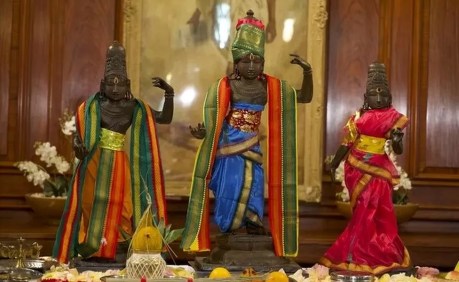
The three 15th century ‘panchaloga’ idols of Sri Rama, Sita, and Laxman were stolen in 1978 from a Vijaynagara era temple (15th Century) in Anandamangalam village in Tamilnadu, India. These were identified and finally restored to India by the UK government in 2020. – BBC















 A host of “art dealers” in different parts of the country are smuggling out artefacts and antiquities from India, particularly from ancient temples, and at times from museums, on a large scale. Only a fraction of this theft comes to light. – Dr. M.A. Kalam










