














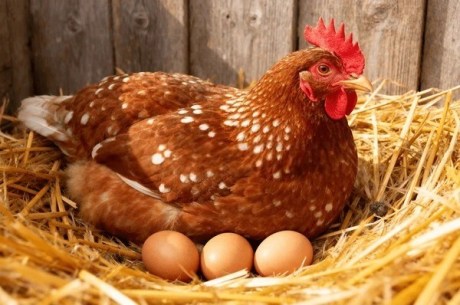
Classic chicken-and-egg reasoning is perfectly circular: the chicken hatches from the egg, but the egg comes from a chicken—so we’re caught going round and round. But here’s the catch: this logic makes a fundamental mistake. It ignores the fact that no species appears out of thin air. – Futura Team
A riddle older than chickens themselves
If you thought this was just about breakfast, think again: according to current paleontological evidence, the first animals capable of laying eggs appeared around 540 million years ago. In other words, the chicken-or-egg debate is a lot older—and much bigger—than anything happening inside a chicken coop.
This philosophical dilemma, already pondered as an impossible paradox by Aristotle and other ancient Greeks, has only recently begun to receive a partial but compelling answer from evolutionary science. That answer is worth exploring with some seriousness—even if it sounds like a setup for a joke over Sunday lunch.
Cracking the circular logic
Classic chicken-and-egg reasoning is perfectly circular: the chicken hatches from the egg, but the egg comes from a chicken—so we’re caught going round and round. But here’s the catch: this logic makes a fundamental mistake. It ignores the fact that no species appears out of thin air.
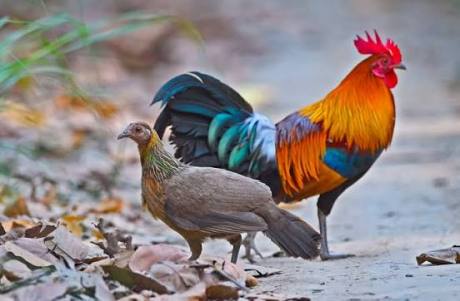
Evolution works through gradual transformations. Our familiar barnyard chicken (Gallus gallus domesticus) traces its roots back to the red junglefowl, a still-wild bird roaming Southeast Asia today. The earliest domestication began about 8,000 years ago. Generations and generations have passed, each altering the genetic blueprint, but never at any point did a “first chicken” magically pop into existence.
So when you get right down to it, the egg containing the first true chicken necessarily came before the chicken itself. This is where the debate decisively pivots toward the egg side of things.
The Egg: An evolutionary inheritance
If you roll the evolutionary clock back even further, the conclusion grows clearer. Eggs, simply as a reproductive strategy, appeared long before birds ever existed. Fish, reptiles, dinosaurs—species were laying eggs millions of years before the first chickens strutted onto the scene. The egg isn’t a chicken invention; it’s an ancient biological mechanism, handed down over vast stretches of evolutionary time.
Recent developmental biology research shows that some molecular mechanisms involved in forming an embryo inside an egg occur in organisms far simpler than modern animals. In fact, these mechanisms date back long before any egg-laying species we know today.
Plot twist: Recent research reveals the egg truly did exist before the chicken! Embryogenesis—in other words, creating a complex organism from a single egg cell. Did it first appear with the earliest animals, 600 million years ago? Or was it already latent within primitive single-celled organisms? This crucial evolutionary puzzle has perhaps finally found its answer thanks to a recently discovered microscopic alga.
What this means, in plain terms, is that the “principle of the egg”—the protective membrane that allows embryos to develop safely—is older than all the modern species that use it. The chicken didn’t invent the egg. She inherited it, after an astonishingly long evolutionary relay race.
Life lessons from a simple question
The key takeaway? The “chicken or the egg” question, which so often gets reduced to a punchline, actually points us to something much deeper: our struggle to grasp evolution as a continuous process, without a neat beginning or an obvious end. So, next time someone fires this classic at you across the dinner table, you’ll know your answer: the egg—without hesitation, and for reasons firmly rooted in evolutionary biology. – Futura, 29 June 2026
Filed under: india, world | Tagged: animal domestication, barnyard chicken, chicken or egg, evolution, red junglefowl |











