










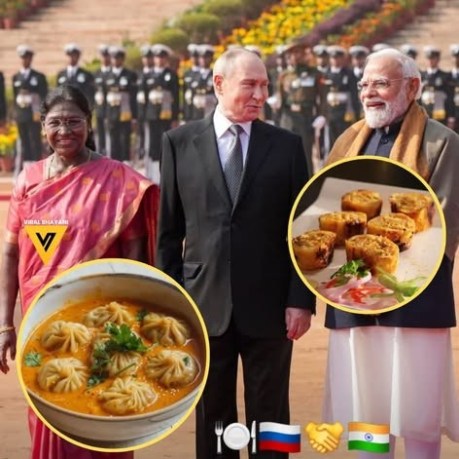
It is illogical to suggest that since the whole world is not vegetarian, foreign guests in India should be served hearty meals of roasts, steaks and pies. The simple fact is that non-vegetarians can and do eat vegetarian food, but not the other way around. – Sujan Chinoy
Senior journalist Coomi Kapoor’s comments in “Food for Thought”, part of her “Inside Track” column in the Indian Express of 22 February, are disparaging of Rashtrapati Bhavan for serving “sparse vegetarian fare only”. The author states that “confirming a senior journalist’s claim that visiting dignitaries routinely return from banquets at Rashtrapati Bhavan and Hyderabad House and order food at their hotels, Mahua Moitra claimed that French President Emmanuel Macron requested bread, cheese and cold cuts in his room after a G20 summit banquet highlighting millets (bajra)”. Two consecutive claims amount to anecdotal reasoning, without credibility.
The senior journalist laments that “those accustomed to hearty meals of roasts, steaks, pies and a succession of succulent dishes find the airy-fairy, nouvelle cuisine vegetarian fare served of late at our official banquets hard to swallow”. The author’s reference to “potatoes cooked Gujarati style, roasted brinjals, spiced paneer and mushrooms” appears condescending.
As someone who has spent a lifetime in the diplomatic service, I can vouch for the fact that foreign governments do not serve “familiar” Indian dishes, vegetarian or otherwise, at official banquets during the visits of the Indian Head of State or Government. Well-known chefs are appointed to curate the menus, and they are often unbridled experiments in improvisation and fusion. As a rule of thumb, it is always local cuisine, based on local ingredients, that is served. Indeed, since the whole world does not eat non-vegetarian food, an effort is made by hosts to serve vegetarian dishes to those who cannot partake of fish, flesh or fowl.
In fact, an extra effort is always made by Indian Heads of Mission to ensure that vegetarians from India are not served non-vegetarian food in any form, and that includes the unacceptable use of beef stock in soups and lard for cooking vegetarian dishes. Such risks are not uncommon, given that the definition of vegetarianism differs from country to country, and there are places where fish and eggs are considered vegetarian fare. In the US, UK and much of Europe, most vegetarians eat eggs. In parts of South Asia, Bangladesh, or coastal communities, fish may culturally be seen as separate from “meat”. In urban Japan, many “vegetarian” dishes still include eggs (tamago, used in sushi and omelettes) and dashi stock (often made from bonito/fish flakes).
It is perhaps illogical to suggest that since the whole world is not vegetarian, foreign guests in India should be served “hearty meals of roasts, steaks and pies”. The simple fact is that non-vegetarians can and do eat vegetarian food, but not the other way around.
It is also quite common for Indian leaders and members of the entourage to eat something before or after banquets in foreign lands at which exotic local or fusion food is served, but not necessarily consumed with relish. While attending lavish official banquets abroad, Prime Minister Narasimha Rao would eat very little, preferring to stick to his own simple diet of upma, idlis or yoghurt with rice back at the hotel. Chinese leaders, likewise, are known to eat Chinese food in their suites according to Chinese dinner time, well ahead of the relatively late-hour banquets in foreign countries. Such practices should be respected, without any judgement being cast on the ability of the host country to match the peculiar culinary preferences of each and every global palate.
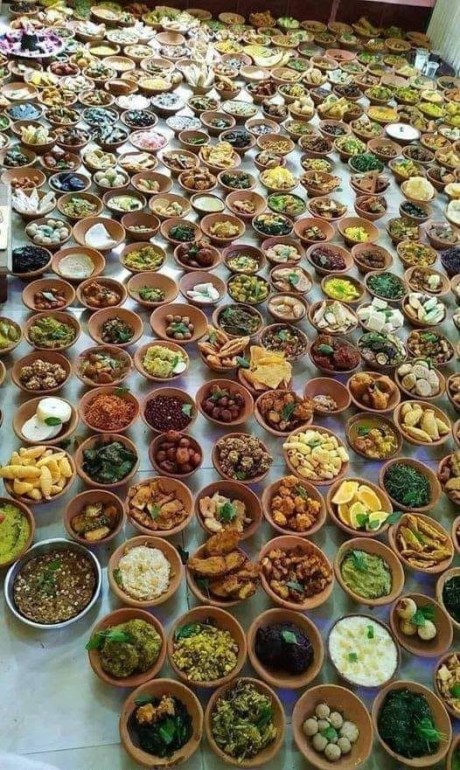
The main point to be appreciated is that hosts generally offer menus that represent their nation’s culinary traditions. In India, these are not expected to be restricted to narrow definitions of Indian cuisine—such as Punjabi, Mughlai or South Indian fare. There is much more to India’s myriad culinary traditions than the food consumed by the elite or even the urban population. Every incumbent President or Prime Minister of India has the right—indeed, the duty—to introduce lesser-known cuisines from other parts of India to visiting foreign dignitaries.
The items served at the Rashtrapati Bhavan reception on 26 January 2026 received high praise for showcasing the diverse culinary heritage of India’s Himalayan belt. The menu featured ingredients and dishes from Kashmir, Ladakh, Himachal Pradesh, Uttarakhand and the Northeast, meticulously prepared by local chefs. EU leaders partook of these with relish.
Banquets and luncheons are protocol-bound affairs, with formal speeches, often followed by cultural performances after the formalities are dispensed with. In the Indian tradition, alcoholic beverages are not served at state banquets and luncheons. Instead, a variety of fresh fruit juices is on the menu. The purpose of these stately events is not to replicate wedding feasts. They are graceful occasions to meet and greet in a sombre and dignified ambience, with a cross-section of society in attendance.
If Rashtrapati Bhavan and Hyderabad House were to serve mutton, fish, veal and pork at state banquets, it could well result in hurting the sentiments of visiting delegations or sections of Indian society, depending on personal or religious beliefs. The change in menus, veering towards cuisine from different parts of India, including rural dishes, is for the better. More than the foreign dignitary, it is perhaps the Indian elite that may find it harder to accept that the food consumed by the vast majority of our people—such as lentils, vegetables and millets—can also be presented in a variety of dishes, and relished. – News18, 14 February 2026
› Sujan Chinoy, a former ambassador, is the Director General of MP-IDSA.
Filed under: india, russia, world | Tagged: indian government, rashtrapati bhavan, state banquets, veg vs non-veg, vegetarian fare |