











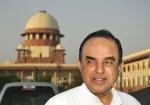



 “Those who want this Act to be implemented should not [be] denied its benefits because a few States, principally Punjab, do not want its implementation whether for good reasons or bad.” – Dr Subramanian Swamy
The three contentious agricultural reform laws should only be implemented in the States which wish to do so, Rajya Sabha member Subramanian Swamy said in a letter to Prime Minister Narendra Modi on Friday. He also made suggestions to resolve the current impasse between the farmers and the government.
Noting that the protest by farmers demanding a repeal of the three laws had now crossed 70 days, Mr. Swamy suggested a compromise solution. “Those who want this Act to be implemented should not [be] denied its benefits because a few States, principally Punjab, do not want its implementation whether for good reasons or bad,” Mr. Swamy said, adding that he himself was in favour of the reforms, and had voted for the enactment of the laws in Parliament last year.
He suggested that rules should be framed for the Acts, and that three specific rules should be included.
The first rule “should restrict the implementation of the Act to those States which in writing inform its willingness to implement the Act and thus those who do not inform its willingness to implement may be given the freedom not to benefit from the salutary aspects of these Agricultural Reforms Acts”, the letter said.
“The second rule should state that every state would be eligible for a Minimum Support Price (MSP) in perpetuity. The third rule should limit the buying of the food-grains by only those who have no other major business or commercial interests other than in agricultural trade.”
These measures, Mr. Swamy said, would take care of the concerns of the protesting farm unions. He added that their agitation should end once these rules are added to the Acts.
He also noted that the protests had been “largely and mostly peaceful” with a clear cut single demand of scrapping the laws.
“No doubt there are elements in the agitation who are troublemakers and anti-national elements. When masses assemble anywhere and have to sit peacefully in dharna for so many months such things happen and of course have to be dealt with strictly,” he added. – The Hindu, 5 February 2021

Filed under: india | Tagged: agricultural reforms, farm laws, farmers' protest, modi sarkar |










Agri Reforms Explained – Swarajya Staff – Swarajya – 28 Jan. 2021
Q: What are the agricultural reforms of the Narendra Modi government which are being opposed by some farmer groups and parties?
A: Specifically, these are the following:
1. The Farmers’ Produce Trade and Commerce (Promotion and Facilitation) Ordinance, 2020, gives power to the grower to sell his produce to the buyer of his choice anywhere across the country.
Up till now, there were restrictions on farmers selling their produce outside of the Agricultural Produce Marketing Committee (APMC) markets or mandis. A farmer had to mandatorily sell his/her produce only at the nearest APMC market where he/she is registered.
However, after this ordinance, such restrictions have been lifted. The growers can now sell their produce outside the APMCs as well, if they so wish.
2. In the Farmers (Empowerment and Protection) Agreement on Price Assurance and Farm Services Ordinance, 2020, the government has allowed farmers to enter into a written farming agreement for any agricultural produce. This would ensure the growers a fixed return on their produce even before sowing.
3. The Essential Commodities (Amendment) Ordinance, 2020, will help the farmers to sell their produce during peak harvest period without any worry. Till now, buyers might not buy all of the produce that the farmers brought to the market in view of the stock limit prescribed under the previous Essential Commodities Act.
This amendment ensures that the sale of edible oilseeds, cereals, pulses, potatoes and onions can be regulated only under “extraordinary circumstances such as war, famine, extraordinary price rise and natural calamity of grave nature”.
Q: It appears that ordinances are in the direct interest of the farmers. Why are they being opposed?
A: The opposition is primarily to the first of the ordinances, the one related to APMCs.
In many states, politicians control the APMCs or draw their power from it. This is more so in a state like Punjab.
Even in rural areas of Maharashtra, most of the villages have two power structures — one, the sarpanch and the other, the cooperative bodies that run the APMC. APMC elections in these villages are critical for politicians as whoever is elected the president emerges stronger than the sarpanch.
The ordinance brought by the government effectively ends the monopoly of APMCs in the agriculture market. In fact, for the first time farmers would have a market to consider to sell to. Till now, they only had the APMCs.
Q: So, now APMCs would stop existing altogether and farmers would have to directly go to the market?
A: No, not at all. The APMCs would continue to run. Farmers would be free to sell their produce to them if they so wish. Only now, they will not be forced to.
If however farmers need immediate money for their produce, they can go to the nearest APMC mandi and sell as before.
LikeLike