












A country’s system of government is the biggest single factor behind its rise or fall. A good system provides a people with lofty vision and strong character; a bad one does the opposite. – Bhanu Dhamija
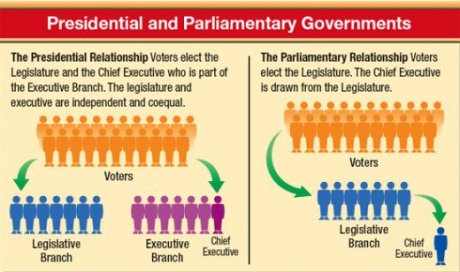
Shashi Tharoor has been a big proponent of a US style presidential system for India. He said so nearly two decades ago in his book India: From Midnight to the Millennium. Soon after coming on the country’s political scene he again began speaking and writing in its favour. Some of his recent statements that our current parliamentary system is ill-suited have rattled some in our political establishment. Last week B. Vinod Kumar, a Lok Sabha MP from Telangana, wrote that “Shashi Tharoor is Wrong. Parliamentary System is Best Suited for India” (The New Indian Express, 28 January 2016).
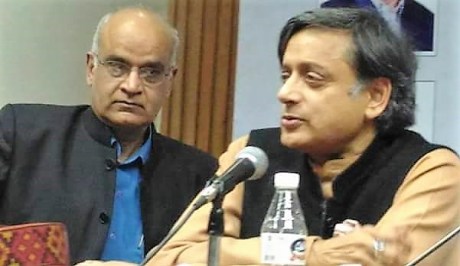
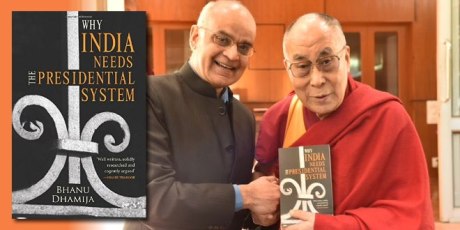
I applaud Kumar for joining this all-important debate. It actually began to be revived with the launching of my book Why India Needs the Presidential System last December [2016], where Tharoor, Shanta Kumar (BJP) and Kuldip Nayar were the featured speakers. They all spoke of the urgent need to fix India’s political system. This would be the best service we can provide to our nation and future generations. For a country’s system of government is the biggest single factor behind its rise or fall. A good system provides a people with lofty vision and strong character; a bad one does the opposite.
Accordingly, Tharoor, myself, and others have given the matter careful thought. Tharoor’s writings in favor of the presidential system started reappearing in Indian media as early as 2007. He argues that the parliamentary system, ill-suited to Indian conditions to begin with, has outlived any utility. It has created a “unique breed of legislator, largely unqualified to legislate”, who is interested in politics “only to wield executive power”. It forces governments to “concentrate less on governing than on staying in office”. And it has “spawned parties that are shifting alliances of individual interests rather than vehicles of coherent set of ideas”. India’s current system “introduces instability and uncertainty” he says. But worse, due to its lack of proper separation of the three branches of government, it “fails to deliver responsible government”.
The failure of India’s system is more profound than it appears because it does its biggest harm in not fostering a national vision. Without a nationwide election for the topmost government official, a national agenda doesn’t emerge from the bottom up. This system also harms people’s character because it is inherently unfair. When in a system a faction “rules”, everything becomes political, and only the politically connected benefit. Unfettered power in the hands of the majority corrupts its leaders, and when the leaders are corrupt, all of society becomes corrupt. Furthermore this system doesn’t offer equal opportunity. The oligarchs at the top render the entire system in the hands of a few. The masses don’t participate, beyond just voting in frustration.
There are practical drawbacks, particularly of India’s version of the parliamentary system. Its single center of power risks monocracy; as we saw during the Emergency and as some see in a lighter version today. It hands power to parties encouraging fragmentation; this is why the number of parties in India has mushroomed. It lacks separate institutions making it impossible to have legislative oversight; this is the main reason behind India’s rampant corruption. It allows a majority to run amok; this results in bad laws. But worst of all, it produces poor leaders because politicians have only to win over party bosses and small constituencies; this creates dynasties, and leaders who are deal-makers, not visionaries.
The US presidential system not only avoids these pitfalls, it provides additional benefits. It relies more on state governments in keeping with genuine federalism; this delivers seriously responsible local governance. It repels authoritarian tendencies because of literal separation of institutions and their famous checks and balances. Its institutions provide more direct representation; this provides people more say in every branch and every level of government. It relies on institutions rather than individuals; this produces stability and maturity in policy. It is a system of participation, not rule; this allows the minority view a real chance to enact laws rather than just question or disrupt proceedings. And of course its system of primaries in state and nationwide elections gives outsiders a chance, producing less dynastic, more competent leaders.
Unfortunately in criticising Tharoor, Kumar fails to grasp the import of all these points. Instead of advancing arguments he chose to exploit people’s nationalist emotions about India’s glorious past. There is nothing about the Indian character or history that precludes us from having either system of government. It’s the system that both reflects and shapes the character of the people. A system of government is about balancing of powers, not character traits. Had Kumar relied on research rather than just press reports he would know what Tharoor meant in saying that the parliamentary system is unsuited to the Indian character. In his 2011 column Tharoor refers to the “natural boisterousness” of the Indian people in their increasingly disruptive “bad behaviour” in Parliament.
But what gets my goat is how patently misinformed Kumar is about the presidential system. His contention that it risks dictatorship couldn’t be farther from the truth. Why is it that he cites Egypt and Burundi of all places in making his point, and not the archetype and inventor of the presidential system, the US? The fact is, history has shown that it is the Indian system that is prone to dictatorship. In 225 years a US president has never even been accused of autocratic behaviour; while within 25 years of its adoption the Indian system turned into a brazen dictatorship. The American system, due to its proper federalism and separation of powers, makes it impossible for a single centre of power to take control. India should do the same, with directly elected CMs in the states and Mayors in the towns. As one of America’s Founding Fathers, Thomas Jefferson, said, “to have a good and safe government … divide it among the many.”
Kumar’s point that there is no single party in India that can represent the entire country in Parliament, also betrays his lack of understanding of the American system. Two major political parties in the U.S. is an outcome of that system, not its prerequisite. India can have multiple parties, but a president would have to appeal to people beyond a narrow electoral base. He or she would truly have to lead the whole country. – The Presidential System, 12 February 2016
» Bhanu Dhamija is the Founder and CMD of the Divya Himachal newspaper group and author of Why India Needs the Presidential System (buy Amazon). Contact him @BhanuDhamija.
Filed under: india | Tagged: bad governance, bhanu dhamija, democracy, good governance, india, parliamentary system, presidential system, shashi tharoor |








Leave a Reply