










 “Politicians embrace Islamic leaders because they realise Muslim societies are conflicted in Islamic legal archaism. Reasoned thinking, the motor of human progress, is besieged by religious leaders like Syed Ahmed Bukhari, Tauqeer Raza Khan and Nurur Rahman Barkati. The Indian media is reporting these issues in a critical perspective, indicating that Indian society is unprepared to accept religion in politics.” – Dr Tufail Ahmad
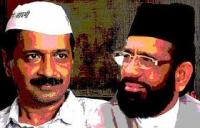 The current elections in India have seen political parties courting Islamic clerics to win votes, undermining the democratic ethos of the Indian republic. On November 1, Aam Aadmi Party leader Arvind Kejriwal met Barelvi cleric Tauqeer Raza Khan, seeking his support for the Delhi Assembly elections. Earlier, Khan had called for “beheading” Bangladeshi feminist writer Taslima Nasreen and he represents a school of Islam that feeds religious orthodoxies among Muslims. On March 28, ahead of the parliamentary elections, Khan switched his loyalty in favour of Bahujan Samajwadi Party leader Mayawati, saying only she could defeat the BJP.
On March 30, Maulana Nurur Rahman Barkati, the Shahi Imam of Tipu Sultan Mosque in Kolkata, warned that if a Narendra Modi-led government enacted a uniform civil code, Islamic clerics will “proclaim jihad”. Earlier, in December 2013, Barkati had campaigned successfully to prevent the telecast of a television serial scripted by Taslima Nasreen that portrayed women in powerful roles and defined their rights. Barkati’s position as the mosque’s hereditary imam is against the tenets of Islam, democracy and common sense, but he enjoys the support of Trinamool Congress’s Mamata Banerjee.
On April 1, Sonia Gandhi met Syed Ahmed Bukhari, the Shahi Imam of Delhi’s Jama Masjid who endorsed Congress as “the best party” to lead India and care for the minorities. Like Barkati, Bukhari too occupies his position as a hereditary imam for which there is no justification. Later, Bukhari was criticised by his brother Syed Yahya Bukhari for degrading the status of Jama Masjid by visiting Sonia Gandhi, unlike in the past when politicians visited the mosque. Also, Yahya Bukhari accused the Congress of betraying Muslims, saying “no political party has worked more against the interests of Muslims in India than Congress”.
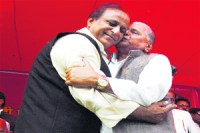 On April 12, Azam Khan, not strictly a cleric but nevertheless a powerful minister in Uttar Pradesh, told Muslim voters that former prime minister Rajiv Gandhi and his brother Sanjay Gandhi were killed by the “wrath of Allah”. He enjoys the support of the Samajwadi Party (SP) of Mulayam Singh. On April 25, Abu Azmi, another SP leader, appearing before the Maharashtra State Commission for Women, defended his advocacy of “death” for women over extra-marital sex, stating: “Our religion does not allow women to have sexual relationships with anyone except husbands.”
The BJP, which criticised Kejriwal and Sonia Gandhi for coddling Islamic leaders, wasn’t behind. On April 15, BJP president Rajnath Singh met Muslim religious leaders, including Shi’ite cleric Kalbe Jawwad, to seek their support in the elections. While Sonia Gandhi had urged Bukhari to ensure secular votes are not split, Singh, running from Lucknow, argued: “I feel that if India has to become a strong nation then all the castes, religions and their followers have to be assimilated and this is what the BJP believes in.” These are noble ideals, but these parties are embracing orthodox clerics who have absolutely no vision on vital issues like public health or digital literacy and economic development of Muslims.
With the advancement of democratic ideas associated with the European Enlightenment, religions have more or less retreated from politics, spawning an enlightened state that protects its citizens irrespective of their beliefs. Judaism, Christianity, Buddhism and Hinduism—while influencing everyday lives of followers—cannot influence policies of states. This trend is countered by Islam, with Muslims generally approving its role in political systems. Current sharia movements in Indonesia, Malaysia and Brunei are retrogressive; and not long ago hopes for democratic change generated by the Arab Spring were lost due to concerted efforts by Islamists to insert Islam into those countries’ governance.
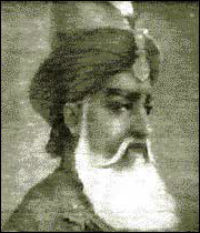 In his book Democratic Enlightenment, Jonathan Israel argues that the Enlightenment was not only an intellectual movement, observing: “There was a great deal of social grievance and legal archaism in the eighteenth century, and the Enlightenment precisely by establishing new principles, understood intellectually, set up a powerful process of social and political innovation, reformism, and change which profoundly affected the whole of society.” The reformism had begun in 1517 when Martin Luther challenged the Pope’s authority by nailing his Theses to a church door in Wittenberg. In the 18th century, Shah Waliullah of Delhi argued that many former verses of the Koran were cancelled by verses revealed afterwards but Islamic scholars like him, succumbing to pragmatism, argued against deleting those irrelevant verses, an intellectual work that must be done.
In 1950, the people of India gave themselves the Constitution, a legally enforceable document of revolutionary ideas that instituted a framework of Enlightenment for India at the level of ideas and practical life, heralding an era of unprecedented socio-political change. It is within the constitution’s framework that reform among Indian Muslims can be ensured, and is indeed occurring as more Muslim women go to schools and enter panchayats. Some clerics are joining this movement of ideas. In Urdu daily Roznama Inquilab of April 18, Islamic scholar Maulana Khalid Saifullah Rahmani wrote an enlightening article, arguing that to vote is a national and religious duty for Muslims, and while women cannot contest election as per Islamic law, Muslim women cannot escape this duty under the special conditions of India.
Politicians embrace Islamic leaders because they realise Muslim societies are conflicted in Islamic legal archaism. Reasoned thinking, the motor of human progress, is besieged by religious leaders like Syed Ahmed Bukhari, Tauqeer Raza Khan and Nurur Rahman Barkati. The Indian media is reporting these issues in a critical perspective, indicating that Indian society is unprepared to accept religion in politics. However, nurturing the ethos of an open society also means that legislation alone cannot lead to reform or prevent mixing of religion with politics. Fortunately, India has a vibrant civil society and NGOs are inculcating the rule-of-law concepts among people. The media, too, has emerged as the defender of the Indian republic and its democratic ethos. It should now be the task for younger Indians to reject politicians who support religious leaders. – The New Indian Express, 1 May 2014
» Tufail Ahmad is director of South Asia Studies Project at the Middle East Media Research Institute, Washington DC. Email: tufailelif@yahoo.co.uk
Filed under: india | Tagged: india, india elections 2014, islam, islam in india, muslims in india, nurur rahman barkati, politics, politics and religion, religion, sonia gandhi, syed ahmed bukhari, tauqeer raza khan |






 BHARATA BHARATI
And follow Islam !!
LikeLike
“In the 18th century, Shah Waliullah of Delhi argued that many former verses of the Koran were cancelled by verses revealed afterwards but Islamic scholars like him, succumbing to pragmatism, argued against deleting those irrelevant verses, an intellectual work that must be done.”
This is an extraordinary statement and Shah Waliullah must have been an extraordinary man. He had suggested that the Koran—Allah’s revealed word—could be edited by human beings!
Such an idea must have been considered heresy by Sunni clerics at least, if not all orthodox clerics!
But editing the Koran is a really good idea!
On 29 March 1985, Chandmal Chopra filed a petition in the Calcutta High Court asking for the Koran to be banned in India as it incites violence, disturbs public tranquility, promotes, on ground of religion, feelings of enmity, hatred and ill-will between different religious communities, and insults other religions or religious beliefs of other communities in India.
Chopra’s petition put the Government into a panic, and it failed as it was bound to do in “secular, socialist” India. But it was a good idea too—though banning books of any kind is generally not a good idea.
Read the story of Chopra’s famous petition here on Voice of Dharma.
LikeLike
You paint everybody with the same brush, Mr Singh!
Hindus have never formed a vote bank for any leader, political or religious! In fact it is the fear that Hindus may agree to join together and vote in their own interest, that causes Leftist politicians and intellectuals to vociferously malign a politician they perceive to be a strong Hindu leader.
LikeLike
It is a common perception that elected politicians control the country, However it may be observed that many political parties and the politicians may just be proxys for the real powers behind the elected politicians.
Under the capitalist system of Government the rulers are selected though election process which process is an extremely expensive process. Thus the elected politicians can only succeed if there is some one to pay the costs and finance the elections and these financiers have to be paid later with public funds. Thus the elected politicians may thus be under the control of the financiers.
The second group who controls the politicians are the religious leaders who control the vote power through the followers of their respective religions. Thus the elected politicians have to play to the wants of the religions.
Consequent to this the elected politicians make sure that no laws are passed that can adversely effect the wealth of the financiers and the religious organizations. The suspected MISMANAGEMENT-FRAUD-CORRUPT [and IMMORAL] practices by them is generally overlooked or ignored by the political powers and their enforcement authorities.
This is common not only in India but also in many countries throughout the world and the religious leaders are becoming more and more involved in politics and corporate sector. Just look at the wealth accumulated by religious organizations and the lifestyles of their leaders.
Greed corrupts all regardless of religion or race or nationality or eduction status or society.
LikeLike