





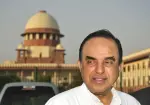
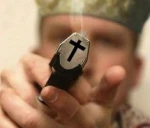
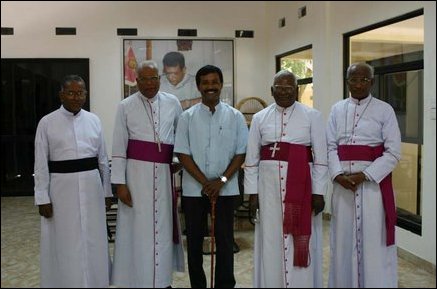
 “The invocation of human rights to a [Tamil Tiger] dispensation that combined brutality with unwavering fanaticism and which controlled the Tamil areas through intimidation seems … out of place. … There has been a brutalisation of Sri Lanka ever since the civil war began in 1983. But the hardening of the Sri Lankan military — which used to be a ceremonial force — is in direct proportion to the bloodthirstiness of the LTTE. The efficacy and wisdom of Tamil separatism in Sri Lanka may occasion legitimate debate. But there can be no debate over the fact that the LTTE personified evil.” – Swapan Dasgupta
 Since issues and “causes” are most often a fig leaf for other hard-nosed calculations, there is an understandable reluctance to take the formal pronouncements of political parties at their face value. This is particularly true of the Dravidian parties of Tamil Nadu.
Although the main Dravidian parties trace their political ancestry to the pre-Independence Justice Party and the anti-Brahmin social movement launched by E.V. Ramaswamy Naicker, there is precious little in their present-day actions to suggest that they are guided by lofty ideas. Having control of the state government alternately since 1967 and having become stakeholders at the Centre since 1996, Dravidian politics has conveyed an unmistakable impression of being guided by venality alone.
Given this backdrop, it is hard to completely discount the suggestion that the Dravida Munnetra Kazhagam’s dramatic withdrawal from the United Progressive Alliance last Tuesday morning — a move that has left the Congress completely at the mercy of two Uttar Pradesh-based parties who can barely tolerate the sight of each other — was guided by a touching concern for the plight of the Tamils of Sri Lanka.
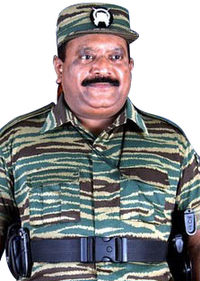
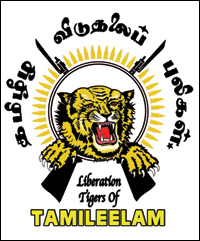 Had that indeed been the case, the DMK (which always had a soft corner for the separatist Eelam movement) would have exercised its clout to force India to join other Western countries in 2009 and press for a ceasefire across the Palk Straits. True, DMK chief M. Karunanidhi did go on a symbolic fast to highlight his concern over the military elimination of the dreaded LTTE. But it is an open secret that despite nominal appeals for restraint, New Delhi was not unhappy that the LTTE was roundly vanquished and its leader V. Prabhakaran eliminated.
Yes, there was some concern at the high civilian casualties during the final stages of the civil war. At the same time, New Delhi, through its bitter experience of the Indian Peace Keeping Force misadventure, knew very well that the LTTE showed scant respect for the Geneva Convention and other rules. The use of civilians and particularly children as a human shield was a recurring feature of the LTTE’s strategy.
Indeed, the reason Prabhakaran’s last stand turned out to be such a bloody affair was precisely because the LTTE had gambled on the fear of collateral damage forcing the Sri Lankan Army to stall. If Colombo refused to blink, it was due to a corresponding realisation that it was confronting one of the most brutal armies ever raised. Those familiar with Ian Kershaw’s The End, a masterly study of the final five months of the war against Nazi Germany in 1945, will see parallels with what happened in northern Sri Lanka four years ago.
 Of course, the term “human rights” hadn’t entered the vocabulary of international politics in 1945 — a reason why the expulsion of ethnic Germans from Poland and erstwhile Czechoslovakia has been erased from Europe’s collective memory. In any case, the application of human rights to a regime that organised the Holocaust would have been laughable.
Likewise, the invocation of human rights to a dispensation that combined brutality with unwavering fanaticism and which controlled the Tamil areas through intimidation seems as out of place today as it would have in Germany 1945. There has been a brutalisation of Sri Lanka ever since the civil war began in 1983. But the hardening of the Sri Lankan military — which used to be a ceremonial force — is in direct proportion to the bloodthirstiness of the LTTE. The efficacy and wisdom of Tamil separatism in Sri Lanka may occasion legitimate debate. But there can be no debate over the fact that the LTTE personified evil.
The irony is that the pundits in New Delhi and the political class in Tamil Nadu are fully aware of the real face of the LTTE and the danger it posed to India. It is relevant to recall the LTTE’s calculated, cold-blooded murder of Rajiv Gandhi during the election campaign of 1991. It is also pertinent to refresh public memory of the Congress party’s dissociation from the United Front government of I.K. Gujral in 1998 after the Jain Commission reported the cosy relationship between the DMK and the LTTE.
True, the imperatives of coalition politics may have forced the Congress to enter into an alliance with Mr Karunanidhi’s party after 2004. But domestic expediency is no reason to forget the past entirely, particularly the unhappy chapters relating to the manner in which Prabhakaran did a Bhindranwale on a cynical regime.
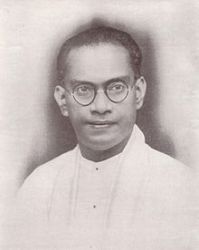 There are a lot of forces and individuals who were responsible for Sri Lanka’s nightmare years. The Bandaranaike family cannot escape responsibility for triggering the ethnic polarisation in 1956; other Sinhala politicians cannot disown their roles in the marginalisation of moderate Tamil politicians; and even the Buddhist clergy had a role in stoking a majoritarian outlook. But among those responsible was also India. Would the LTTE have emerged as a force had it not been for New Delhi’s covert support?
Finance minister P. Chidambaram has sought to send a “resolute” message to Colombo. Perhaps President Rajapakse could do with some softening. But will New Delhi show the same resolve in attacking China for its treatment of Tibetan minorities? Is Colombo being targeted because it is a small player? Are the principles of “constructive engagement” determined by the electoral calculations of Tamil Nadu? Let’s not make Sri Lanka a scapegoat for the political games we play at home. – Deccan Chronicle, 22 March 2013
» Swapan Dasgupta is a senior journalist based in New Delhi.
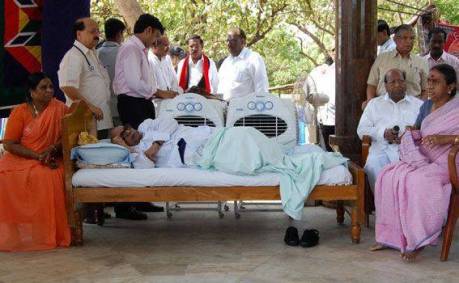
“Karunanidhi held fast after breakfast, ended before lunch,” says Ramadoss
Filed under: india, sri lanka | Tagged: christian terrorism, church support for LTTE, civil war, DMK, geopolitics, human rights, india, indian national congress, indian politicians, indian politics, LTTE, politics, protestant church, psychological warfare, rajiv gandhi, roman catholic church, sessionism, sri lanka, tamil eelam, tamil nadu, tamil tigers, tamils, terrorism, UN, UN human rights council, UPA-2 |



 BHARATA BHARATI
I entirely agree with IS on his foregoing Post of March 24. By and large the SriLankan Bhikhus are far removed from Buddhist teachings. Like Muslims everywhere and particularly in India, they are more of a political force than a community of religious faith.The SriLankan Tamil Hindus have suffered enormously over the last 40 years and very steeply so since the LTTE violence became a serious internal security problem. Who will come to the rescue of Tamil Hindus in SriLanka other than India? However, Govt. of India run predominantly by non-Tamil, non-South Indian political parties and politicians, has never empathized with the Tamil Hindu problem in its neighborhood. I say this based on my personal experience. Of course internal politics in Tamilnadu has moved into the vacuum and taken over the Tamil cause. But Tamilnadu politics can not think on national scale nor tend to the whole country’s interest. This is the conundrum. It can be resolved only if Congress comes to power in TN (God forbid!) or BJP alone or with allies. The latter is a pie in the sky. Is there any wonder why the Hindu Tamils have been suffering so grievously over decades?
LikeLike
No doubt the Srilankan Tamils have been treated very badly by the Sinhalese since independence. Buddhism in the island nation is also very decadent and the bhikkhus have been completely politicised. As with many nationalist movements there is a strong racial prejudice at work. Hindu temples have been encroached and sometimes taken over completely by the Buddhist clergy on false premises. But all this only complicates the issue as it is mixed up with LTTE terrorism and its attempt to create an independent Tamil Christian state. Srilankan Tamil Hindus are the victims. Somehow it has to be sorted out and the Tamils given their rightful place in Srilankan civil life with due recognition of their culture and language. At the same time no concession should be made to the absolute evil the LTTE represented and the remnants of this evil that is manifested in Tamil Nadu politics today.
LikeLike
What IS says above in his post of March 23 represents a substantial and solid point of view particularly in Tamil Nadu. There is another point of view namely that however astray LTTE might have gone, the struggle was between Hindu minority and Sinhalese majority and right from SWRD Banadaranayake the Sinhalese have been trying to weaken the Hindu (Tamil) minority which was economically, educationally and professionally strong in Srilanka. At the time of SriLankan Independence the Tamils had to apply under stringent conditions for “citizenship” in the island where they were living for several centuries! In detroying the LTTE the Srilankan Govt. has not only subdued but almost finished the meaningful existence with dignity of Tamils in SriLanka. Christian Missionaries are certainly involved in shenanigans in Taminadu in the LTTE matter. A thorough research into the history of Tamils in Sri Lanka, the Christian conversion in the island, the LTTE and the role of Sinhalese leadership will bring to surface much information currently little known. But will the Sinhalese government allow such research work?
LikeLike
This is for NS Rajaram and his reference to Caldwell
http://tamilnation.co/forum/sivaram/920801lg.htm
The extract form the above web site.
The writings of Bishop Caldwell presuppose a teleological project which was not uncommon to what were conceived as great intellectual undertakings in that era of empire building. The assumptions of the project formed the basis of his Dravidian theory. They were,
Bishop Caldwell
1814 – 1891
(a) That the British empire was destined to finally bring order amongst Tamils, a large portion of whom had been more prone to the habit of war than to the arts of peace from the dawn of history in south India,
(b) That this order would be the one in which the imminent protestant ethos of the Dravidian civilization would reach its full expressional ethos which the English administrator saw as the virtue of those classes which “contrasted favourably with the Maravar”, and whom the Bishop considered the legitimate Tamilians,
(c) That the rediscovery of Dravidian linguistic and cultural uniqueness would help consolidate the position of the ‘lower classes’ among the Tamils who had played an important role in the military expansion of British rule in the subcontinent – the Tamil Christian soldiers who were the Empire’s alternative to the traditional Tamil military castes.
In the concluding remarks of his ‘A History of Tinnevely’(1888), Caldwell says,
“A mixed government…came thus to an end and was succeeded by a government purely English, at unity with itself, and as just as it was powerful. The results of this change have been most important and valuable. Professor Wilson…places in a striking light the course things would have taken if the English Government had not been enabled to interpose its authority.”
“It may be concluded,” he says, “that had not a wise and powerful policy interfered to enforce the habits of social life, the fine districts to the south of Kaveri…would have reverted to the state in which tradition describes them long anterior to Christianity, and would have once more have become a suitable domicile for the goblins of Ravana.”
The marvars are present day thevars referted to as goblins of Ravana.by Caldwell. One will find very few in Sri Lanka , but quite large in number in Singapore and Malaysia as they went with INA there.
They were enrolled in large number with INA ( Subhash Bose).
They Maravars were trained by the Raya dynasty to be Poligars , To name a few , Puli thevar, Kattabomman and in recent times Pasumpon Muthu Thevar.
LikeLike
What a bunch of hypocrites! DMK bigwigs felicitating Srilankan President Rajapaksa!
See Former Srilankan Army Chief Sets Record Straight, Defends Rajapaksa
LikeLike
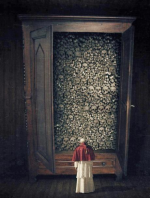
The Vatican is struggling to survive — deserted by Europeans, eroded by Islam within Europe and under attack by Evangelicals in Latin America.
This shifting has happened before. Christianity started as a Brown religion of Palestine, the Levant and Egypt. It was high-jacked first by Eusebius (for Constantine) and later by the Latin Church when Europe became its home.
LikeLike
In India local Church leadership from the bottom up to the Cardinal has allegiance to the Pope or the overseas Christian Missionary leadership in the case of non-Catholics. Indian Christian missionaries are deeply involved in political machinations for several decades now. Mrs Indira Gandhi was well aware of this and kept a check on them. Now things are very different. Tamil Nadu politicians will always try to placate Christian missionaries because of their very strong position (in numbers as well as in financial clout). For example it will be an eye opener if data is sought on the number and % of converted staunch Christians in the Tamil Nadu Police, lower Judiciary and the State Civil Services. I therefore agree with the view that Hindus should worry a lot about the brown and black Church within the shores of India.
Swapan however is perfectly right to point out that Karunanidhi is much less interested in anything other than in recovering and keeping Tamil Nadu as the privately owned company of his many wives and his children and grand children.
LikeLike
Hindu intellectuals do not understand the power structure within the Catholic Church.
A bishop is virtually an independent entity, a king as it were, after he has been appointed by the pope.
A proposed candidate for bishop is vetted by the Vatican and appointed primarily because he is doctrinally in accord with the pope of the day, because he reigns over a large, influential congregation, and because he has control of large amounts of money and property which the Vatican can access through tithes, etc.
The Vatican has less interest in the local politics of the countries its bishops are located in. When the Vatican makes a statement about a country, it does so at the behest of the local bishop or bishops’ council.
This is also true about the making of Catholic saints. This is always done at the local parish level where the proposed saint’s hagiography is concocted and the story manipulated and refined and made public. The parish members themselves make the saint and start praying to him or her. The proposal for beatification then goes to the local bishop who, under pressure from the parishioners, decides whether or not to forward it to Rome. If it goes to Rome, eventually Rome will put its rubber stamp on the beautification proposal and the local saint becomes an official saint within the Catholic Church.
Hindu intellectuals think it is all done in the Vatican, that it is a top down process. They are mistaken. It is always a bottom up process with the Vatican acting as official stamp at the end of the process.
Hindus must learn to pay attention to the local Church and the bishops in their area. There are some 35 plus Catholic bishops in Tamil Nadu, and as many or more Protestant bishops. These “kings” are immensely wealthy and in control of huge properties in the cities including schools and hospitals. They can exert tremendous political pressure on local and state governments when they want to, without any reference to the Vatican. They have their own council where political decisions are made and where they agree to act in unison on matters of interest to themselves.
The Catholic Church and the Syrian Churches in communion with it are a virtual state within a state in the Indian Republic. They are the most dangerous political institutions in the country because they operate under the innocent guise of religion. They should have the full attention of all Indians and especially Hindus who have the Indian nation’s best interests at heart.
LikeLike
[The Hindu did not publish the letter above.- IS]
The Hindu is complicit in the ‘Human Rights’ charade. Military experts tell me that the ‘evidence’ of Prabhakaran’s son killed in the bunker is dubious. The ‘bunker’ looks more like a studio photo than the shot of a war bunker. There is none of the chaos and destruction that one expects to see in a war ravaged area.
No evidence of this kind should be accepted. Has the world forgotten the fabricated U.S. evidence against Iraq? Where are the WMDs? It was just a pretext for military occupation. What was the result? Instability not just in Iraq, but all the way to West Asia. Iran is holding fast, but there are people in the U.S. establishment who want to intervene in Iran also.
Dravidian politics has its in the political ideology and ‘history’ of the pseudo scholar Bishop Robert Caldwell. Swapan has left out the Church inspiration behind both LTTE and the DMK. It has been a long time dream of Church outfits to carve out a Christian Tamil state straddling Tamil Nadu and Sri Lanka.
Karunanidhi and DMK are little more than stooges of Christian outfits. As you [IS] perceptively observe, the expansion today is of Brown Christianity not White Christianity. White Christianity is rent and impotent. Brown Christian leaders have placed themselves in the service of some Western powers because of their military might, but as has happened before they may soon come to control them. The Human Rights movements are dominated by Brown Christians often with non-Christian sounding names. These are professionals making a living out of human rights.
I wrote an article on the Church influence a couple of years ago. I should perhaps look at this White-to-Brown metamorphosis of Christianity and its implications. It is a very profound change. White Christianity is like the Moghul Empire in the 18-19th century. The real struggle was between the British and the Marathas.
LikeLike
In response to The Hindu opinion piece “Why India needs to vote for U.N. resolution on Sri Lanka” by Alan Keenan the International Crisis Group‘s Sri Lanka Project Director and Senior Analyst, Dr Rajaram sent the following letter to the editor:
“It looks like ‘Human Rights’ has become a convenient imperial doctrine to interfere in the affairs of other nations. The British did it in the name of White Man’s Burden, Catholic powers from Spain to Belgium did it in the name of saving the heathen, but all brought untold misery. (Just read THE HEART OF DARKNESS by Joseph Conrad and THE DEVASTATION OF THE INDIES by Bartolomeo de Las Casas.)
Are Iraq and Afghanistan better today for U.S. interference? So the author is being disngenous to talk of ‘risks of instability’. Again are Iraq and Afghanistan more stable today? Even in fighting terrorism these experts have no trouble at all sleeping with Pakistan. There is no moral high road here.
U.S. doesn’t have the resources to engage foreign nations single-handedly, so these ‘human rightists’ want countries like India to serve as stooges. Where next? Syria, Egypt?
We don’t need these secular fanatics stirring up trouble everywhere. India should work with neighbors without these busybodies.”
LikeLike
The Church hand and pressure on Karunanidhi are clearly evident. The defeat of LTTE was a major defeat for the Churches’ expansionist agenda in Asia. They want to to carve out a Christian Eelam along the lines of East Timor out of Indonesia.
‘Human Rights’ has replaced the ‘White Man’s Burden’ as the new imperial doctrine. Only it is much more missionary dominated than the British colonialism — more like the Spanish and the Portuguese.
LikeLike
The LTTE was a Christian terrorist organisation.
Swapan Dasgupta has neglected to mention the prime, if covert, role the Brown Church has played in supporting the LTTE financially and politically.
The Church plan was to create a Christian Tamil state out of Northern Sri Lanka and the Southern Tamil Nadu coastline in the same manner that a Christian East Timor was created out of Indonesia.
Hindu nationalists who spend their time railing against the White Church which they imagine controls all aspects of world Church activity, had better pay closer attention to the Brown Church in their own backyard. This Church is far more wealthy, politically active, and independent of Rome than they believe and is the real danger to the national sovereignty of secular, culturally non-Christian states.
LikeLike