














 “The interplay of faith and loyalty to Rome in this particular case became more apparent when two Italian priests flew down to Kerala on a secret visit to meet the families of the victims in the first week of March. … Strangely, the Indian church feigned ignorance about the visit and even went to the extent of saying that it is common for a Catholic priest to pray for the deceased. Later, it denied any deals being brokered and said that the priests were as a ‘spiritual exercise.'” – Cithara Paul
 It is learnt that ‘Catholic diplomacy’ might have played a decisive role in the ‘home delivery’ of the two Italian marines the first time and is now engaged in bringing out an amicable end to the contested issue that has affected diplomatic relations between both countries.
It may have been a sheer coincidence that Syro-Malabar Church Major Archbishop Cardinal George Alencherry was in Rome on February 25 when the Italian Government went back on its ambassador’s promise to the Indian Government on the return of the marines for trial. He was there to select the new Pope, but his presence there brought some old memories back—ones that the Catholic Church would prefer to forget.
It was Alencherry, head of Kerala-based Syro-Malabar Church—India’s largest and richest Catholic Church—who had made the controversial statement that he would try his best to “pacify the situation’’. “I am and will remain in close contact with the Catholic ministers of Kerala and I hope that they will help to pacify the situation… I guarantee, in the next few days, my constant involvement with the Indian authorities on the matter,” Agenzia Fides, a Vatican News agency, had quoted him on February 18.
 Agenzia Fides subsequently withdrew its report without giving any explanation. However, Alencherry’s words generated a storm and the Indian Catholic establishment was initially at sea to suppress the backlash. After denying Alencherry’s statement outright—though he was on record—the Indian Catholic Church did its best to prove that its loyalty to Rome was “merely spiritual’’.
Despite its best efforts, the interplay of faith and loyalty to Rome in this particular case became more apparent when two Italian priests flew down to Kerala on a secret visit to meet the families of the victims in the first week of March. Details of the visit became public, when one of the family members accidentally blurted out the details to regional media. Strangely, the Indian church feigned ignorance about the visit and even went to the extent of saying that it is common for a Catholic priest to pray for the deceased. Later, it denied any deals being brokered and said that the priests were as a “spiritual exercise.”
 The Catholic Bishops Council of India (CBCI), the decision-making body of the Indian Catholics, denies that it has any role to play in the case. “The Indian Catholic Church has no way got involved in this case. How can we, since both the killed and the accused are Catholics? It is wrong to suspect our loyalty just because our spiritual head belongs to Rome,’’ said a senior priest with the CBCI.
Yet, the family of the victims signed an agreement with the Italian government and settled the case for compensation following the visit of the curates. They even wrote a separate legal letter addressed to the Italian Consul General saying they do not want the Italian marines, whom they have addressed as “brothers’’ to be prosecuted. The letter also says that they are forgiving the Italian brothers in the name of Jesus Christ.
 A report dated April 30 in an Italian website called Italy Defence [see report below], and titled ‘Italian marines to be freed soon’, says that “the situation changed for the better, when Catholic priests arrived in Kerala from Rome, to mediate with the slain fishermen’s families (Both the fishermen belonged to Roman Catholic congregations). Mar George Alencherry, the Cardinal of the Catholic Church in Kerala, also agreed to mediate between the two sides. Finally, on April 24, 2012 the Italian government agreed to pay a compensation of €150,000 to each of the two families and the Indian side agreed to drop all the charges against the marines.’’
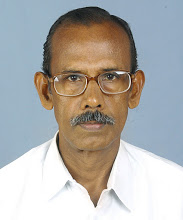 Strangely, the Catholic community in Kerala is largely silent on the issue except for some lone voices like the Left-leaning Kerala Catholic Federation, which has urged the Union Government to view Italy’s decision not to send back the two Italian marines “seriously’’. V. K. Joy, federation general secretary, had alleged that Alencherry and Latin Catholic Church Major Archbishop M. Susaipakiam had worked in favour of the Italian marines. The organisation has also demanded that the activities of the Major Archbishop and the Cardinal should be investigated.
The repercussions of this case on Kerala’s political terrain are yet to be seen. The Latin Catholic Community is a traditional solid vote base of Congress, and the Left parties led by the CPI(M) are trying their best to fish in the troubled waters. – Sunday Standard, 17 March 2013
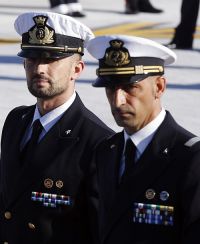 Italy Defence Report of 30 April 2012: Jailed Italian marines to be freed soon
Reports indicate that Latorre Massimiliano and Salvatore Girone, the two Italian marines who were imprisoned in the Indian state of Kerala for accidentally shooting two local fishermen, will be freed soon.
A senior police officer informed the press today that the Italian vessel, Enrica Lexie, will also be released within a few days.
The shooting incident occurred on February 15th, when the two marines mistook the fishermen for pirates, and shot at them. Two of the fishermen, Ajesh Pink and Gelastine died on the spot. The Indian Coast Guard immediately arrested the two marines responsible for the incident. The Italian side argues that the shots were fired on self-defense and that the incident occurred in international waters, where the Indian Coast Guard does not have the jurisdiction powers. According to the Indians, the firing was unprovoked and indiscriminate, and occurred within the territorial waters of India. The vessel, MV Enrica Lexie, was travelling from Singapore to Egypt, with a crew of 34, which included 19 Indians and six Italian marines.
 The incident worsened the diplomatic relations between India and Italy. Sonia Gandhi (born Antonia Edvige Albina Maino), the leader of the ruling Indian National Congress and an ethnic Italian, had to step in to resolve the diplomatic standoff. The relatives of the two slain fishermen demanded a compensation of Rs.1 crore from the owners of Enrica Lexie. The state government had announced a compensation of Rs. 500, 000 to each of the victims’ families.
The situation changed for the better, when Catholic priests arrived in Kerala from Rome, to mediate with the slain fishermen’s families (Both the fishermen belonged to Roman Catholic congregations). Mar George Alencherry, the Cardinal of the Catholic Church in Kerala also agreed to mediate between the two sides. Finally, on April 24, the Italian government agreed to pay a compensation of €150,000 to each of the two families and the Indian side agreed to drop all the charges against the marines.
As the charges are dropped, it is expected that the two Italian marines will arrive in their home country within a matter of few days. But some confusion still remains whether the gunshots which killed the fishermen came from Enrica Lexie or from some other vessel which was cruising nearby. Olympic Flair, the Greek tanker was also involved in a shooting incident on February 15, but the Indian Coast Guard never bothered to enquire the Greek crewmen about that incident. – Italy Defence, 30 April 2013

 Bereaved fishermen families got only money, justice still awaits them – John Mary
Justice eludes the bereaved families and survivors of the ill-fated fishing boat, St Antony, which came under ‘unprovoked’ firing from Italian marines on board the oil tanker, Enrica Lexie, off the Kerala shores on February 15 last year.
The most visible commiseration came in the form of a quick relief by the shipping company, which paid Rs 1 crore each to families of Jelestine, 50, and Ajish Pinky, 21, who were killed in the firing. Jelestine’s family lives in Kollam in Kerala while the unmarried Pinky’s siblings live at Thuthur near Kaliyikkavila in Tamil Nadu. With parents dead, the siblings are under the care of their aunt, Ms Jennet Mary.
The kin of the slain fisherme n have no doubt that the marines deserve deterrent punishment. More, every fishing boat on the Indian coast is at the potential risk of being hit by trigger-happy marshals on foreign merchant vessels.
“You can’t buy our honour for Rs 1 crore; even if you give us several crores, I will still demand that the marines be brought back and tried by the law of the land. Or, they would do this again. Need not be Italians, some others on different foreign vessels that pass by their hundreds along the Arabian coast”, said Jennet Mary.
J. Freddy, skipper of the ill-fated fishing boat, St Antony, and Ms Dora, widow of Jelestine (Valentine), feel they have been short-changed by the system, apathetic towards a social outlier community. The apathy raises questions on the commitment of the State in prosecuting the killers.
 “Letting off the marines to vote in Italy has turned out to be a cruel joke. The trial should have started already, by which India could display its resolve to ensure justice for victims” said Ms Dora.
Said Ms Dora’s brother and director of Quilon Social Service Society, Fr Rajesh Martin: “We are ignorant of the Vienna Convention on diplomatic immunity and the UN Convention on the Law of the Sea. But we follow the local political discourse very much, which sadly hasn’t hastened the process of justice”.
True, the political debate is quite strident in Kerala. Tamil Nadu is relatively calm though Ajish Pinky belonged there. “If the Italian ambassador can’t bring back the marines, put him in jail”, shouts CPM politburo member and former Kerala Home Minister Kodiyeri Balakrishnan in front of the Government Secretariat.
Chief Minister Oommen Chandy couldn’t be seen any less combative: “The onus of bringing back the marines is on the Centre”.
 But now it’s as if the living seek livelihood options from the dead. When the apathetic system threw him and the eight other surviving crewmen to the vagaries of fate and the law, rustic wisdom drew the skipper Freddy to the widows, wondering whether they could spare some funds for the rest of the survivors.
“Are we the arbiters of the fund in the name of our children; it’s been on account of death the breadwinner?” Freddy quoted Dora’s reaction.
“I used to steer my vessel from its wheelhouse. What a tragedy is this? No job. I can’t be a deckhand”, rues Freddy, whose debts far exceed his Rs 17 lakh settlement with the shipping company.
“After paying the lawyer’s fee and allied expenses, I have just `8 lakh left. Though I urged Kerala Government to give me a boat, the authorities came up with impossible conditions”, said Mr Freddy, who has a large family to support. – Deccan Chronicle, 17 March 2013
See also
-
Indian cardinal intervenes on behalf of Italian Catholic shooters – AsiaOne
-
Italy vs India: Marines will not return to India to stand trial for murder – Rediff News
-
Italy shoots, Norway abducts, India bleeds – T.J.S. George
Filed under: india, italy | Tagged: catholic bishops' conference of india, christian, church, civil rights, diplomatic row, enrica lexie, geopolitics, human rights, indian authorities, indian fishermen, indian politics, indian supreme court, italian marines, italian navy shooters, italian politics, italy, jumping bail, justice, kerala fishermen, media, murder, nationalism, nehru-gandhi family, pirates, police, politics, psychological warfare, religion, roman catholic church, sonia gandhi, syro-malabar church, tamil nadu |










 BHARATA BHARATI
Italy will send back marines – Associated Press – Rome – Fri Mar 22 2013
Reversing its earlier decision, the Italian government said late on Thursday that it would return to India the two marines facing murder charges in the shooting of two fishermen.
The Italian foreign ministry had earlier said the marines, Salvatore Girone and Massimiliano Latorre, would not return to face trial in India. The Supreme Court had granted them bail till March 22.
An upset Supreme Court had later said Italian envoy Daniele Mancini could not leave India.
LikeLike
Under the Vienna Convention, India cannot legally restrain the Italian ambassador from leaving the country.
The GOI and the court have been extraordinarily naive in allowing the shooters to go to Italy to vote. Now they are trying to save face by blowing hot air!
If the GOI is serious about dealing with Italy’s Machiavellian deceit, then it will have to break all economic and other ties with Italy (which are quite considerable).
But it is very doubtful that the GOI is serious about this matter. It is only doing drama in order to save face in front of its citizens.
LikeLike
European Union warns India over restaining on Italian envoy’s movements – PTI – Brussels – March 20, 2013
A day after the European Union asked India to respect the Vienna convention, the bloc on Tuesday warned New Delhi against preventing the Italy’s Ambassador from leaving the country over refusal by Rome to allow the Italian marines charged with killing two Indian fishermen stand trial for homicide.
EU foreign policy chief Catherine Ashton noted the Indian court’s ruling about the Ambassador “with concern”, Ashton’s spokesman said.
The EU stressed that the 1961 Vienna Convention, which sets rules for diplomatic relations, as a cornerstone of the international legal order that should be respected at all times.
“Any limitations to the freedom of movement of the Ambassador of Italy to India would be contrary to the international obligations established under this convention,” the spokesman added.
“(Ashton) continues to hope that a mutually acceptable solution can be found through dialogue and in respect of international rules and encourages the parties to explore all avenues to that effect,” the statement said.
The statement was the bloc’s most forceful intervention yet in the festering dispute over the marines which has soured relations between India and EU member Italy.
Yesterday, EU spokesman Michael Mann said EU had taken cognizance of the Supreme Court ruling and was observing the situation.
Importantly, Mann said that India will have to respect the Vienna convention and the diplomatic immunity granted to Italian envoy Daniele Mancini.
It is imperative that India respects the Vienna convention, he said.
Also, Italy’s foreign ministry on Monday had asserted that the Indian court’s decision violated diplomatic immunity law.
The Supreme Court last week temporarily barred the envoy, Daniele Mancini, from leaving after Rome refused to send the marines back to India to face trial following a home visit.
The marines Massimiliano Latorre and Salvatore Girone, part of a security team protecting a tanker from pirates, are accused of shooting the two Indian fishermen off the coast of Kerala in February last year.
The Supreme Court of India, yesterday, ruled that the Italian ambassador Daniele Mancini will not leave India till further orders.
The action follows Rome’s refusal to send back the two Italian marines Massimiliano Latorre and Salvatore Girone to face trial for killing two Indian fishermen, Ajesh Binki and Valentine, off the Kerala coast Feb 15, 2012, mistaking them for pirates.
The court will hear the case next April 2. India and Italy are locked in a huge diplomatic row over the issue.
The court while extending its earlier order restraining Mancini from leaving the country said the Italian envoy has lost its trust and does not have diplomatic immunity.
LikeLike
The GOI and the court lawyers are blowing hot air because they have been duped by the Italians!
Aside from physically restraining the ambassador, which is probably illegal under the Vienna Convention, the GOI can do nothing to him except expel him.
If he is put in jail, there will be an uproar in the diplomatic community as all foreign officials and representatives will feel vulnerable.
India cannot afford to alienate the diplomatic community or breach the Vienna Convention on Diplomatic Relations. Article 29 says: Diplomats must not be liable to any form of arrest or detention. They are immune from civil or criminal prosecution, though the sending country may waive this right under Article 32.
LikeLike
Italian envoy has no diplomatic immunity, can’t leave India till April 2: SC – Dhananjay Mahapatra – Times of India – Mar 18, 2013
NEW DELHI: The Supreme Court on Monday pulled up Italian ambassador Daniele Mancini for breaching an undertaking given to the apex court and restrained him from leaving India till April 2, when it will hear the matter again.
The SC said a contempt of court charge would be made out only if the ambassador fails to bring back the marines by March 22.
Meanwhile, Italy has written to India saying no authority can restrict movement of its ambassador as such conditions will violate the Vienna Convention immunity to diplomats.
When the counsel for ambassador said the apex court could trust him not to run away from India, the SC bench said it no longer trusted him.
“You have lost our trust,” the apex court said.
The SC also refused to buy the diplomatic immunity claimed by the Italian ambassador, who said he had given the undertaking on behalf of the Italy government.
The apex court said it had permitted the marines to go home on sovereign guarantee after the Italy government and its ambassador submitted to the SC jurisdiction.
The SC said it would be unacceptable to argue diplomatic immunity after voluntarily subjecting to court’s jurisdiction.
The Union government told the court that it has rejected March 15 note verbale from Italian embassy seeking full freedom of movement for its ambassador, who had been restrained by apex court from leaving India.
Referring to Italian note verbale telling India that no authority in India should impede movement of the ambassador in violation of diplomatic immunity, the Centre said the Italy government appears unaware of the constitutional scheme under which the government functions in India.
Italian ambassador Daniele Mancini had personally negotiated the release on bail of the two marines last month, enabling them to return to Italy to vote in the country’s general election.
After a year of disagreement over their fate between Rome and New Delhi, the Italian government announced last Monday that it would renege on its commitment to send the men back and they would remain at home.
A furious Indian government has warned of “consequences” and is reviewing its ties with Italy, while the Supreme Court ordered that Mancini should remain in the country and explain himself in court on Monday.
Orders were issued to Indian airports last Friday asking them to prevent Mancini from leaving if he tried to board a plane without permission.
The marines shot dead two fishermen off India’s southwestern coast in February last year when a fishing boat sailed close to the Italian oil tanker they were guarding. They say they mistook the fishermen for pirates.
Italy insists the marines should be prosecuted in their home country because the shootings involved an Italian-flagged vessel in international waters, but India says the killings took place in waters under its jurisdiction.
Relations between the two countries have also been soured by corruption allegations surrounding a $748 million deal for the purchase of 12 Italian helicopters which the Indian government is now threatening to scrap.
Italian ambassador can be sent to jail, Harish Salve says – PTI – Times of India – Mar 17, 2013
NEW DELHI: Harish Salve, who quit as Italian government’s counsel after it refused to send back two naval guards accused of killing fishermen, feels the Italian ambassador breached a solemn undertaking given to Supreme Court which can take action against the envoy including sending him to jail.
“It is said in the law that even an injunction or undertaking to a court which has no jurisdiction, if breached, you are in contempt,” the senior Supreme Court lawyer said.
Asked whether Italian ambassador Daniel Mancini breached the solemn undertaking on ensuring return of the two naval guards to face trial in India and if he is in contempt of the court, Salve said, “Absolutely”.
On if he felt that the court will take action against him, Salve said, “… The question is what … we have to wait and see.”
To a question whether the Italian ambassador could end up in jail, Salve told Karan Thapar in Devil’s Advocate programme on CNN-IBN, “Theoretically, yes”.
About its practical likelihood, he said, “Depends on how they want to deal with him. But they can if they want to send him to jail.”
Unhappy over the Italian government’s refusal to send back the naval guards charged with the killing of two Indian fishermen, the Supreme Court has restrained Italian ambassador from leaving India without its permission.
A bench headed by the Chief Justice of India has also issued notices to the ambassador and the two naval guards — Massimiliano Lattore and Salvatore Girone — asking them to file their response by March 18.
Salve said he feels that the ambassador will find it “very hard” to explain in the court why he breached a solemn undertaking.
Responding to a query on enforcing action against a person enjoying diplomatic immunity, the senior lawyer said, “Our Constitution commands everybody will act in aid and according to directions of the Supreme Court.”
The two naval guards were allowed by the apex court to go to Italy to cast their vote in the elections there after the Italian envoy had given an assurance to send them back.
“Insulted” and “shocked” by Italy’s stand on the issue, Salve had quit as counsel for the Italian government.
LikeLike
Sri Soli Sorabji, a judicial authority of world repute has given his views in this string of comments. One can add little to it. Three things, however, remain to be mentioned. One is how will the Indian SC get its decision when taken implemented by the GOI, now that the men are in Italy and their Govt. considers that it is an international dispute. Secondly one should not take seriously all the protestations and denials of the Catholic church and its functionaries when they say that they do not know any thing and that their loyalty to Indian State should not be suspect. The Church is well known for its mischief and machinations over several centuries. Most recently who can deny or forget the role played by John Paul II in pulling down the Soviet Union, joining hands with Ronald Reagon & co? The newly elected Pope has his role already cut out–South American leftist Govts. to be brought to their knees. Lastly the Indian converts in the Church hierarchy are appointees of the Church in Rome and how will they be sincere or loyal to the Indian Constitution and laws?
LikeLike
My view is that of a layman but I do not think India can take away the diplomatic immunity of the Italian ambassador as it did not give him the immunity in the first place. Italy gave its ambassador diplomatic immunity and can take it away from him if India requests them to and they agree that the circumstances merit it.
Of course Italy will not take away its ambassador’s immunity as they will not agree that the circumstances merit it.
Italy may claim that India is holding the ambassador hostage illegally.
Indian officials really ought to get their act together soon!
The court can declare the shooters absconders and ask Interpol to arrest them. Italy will have to comply with Interpol’s arrest warrant. If it does not, then it will be in conflict with Interpol as well as with India.
LikeLike
Italy must comply with undertaking given to SC – Soli J. Sorabjee – TNIE – 17 March 2013
Certain facts must be noted about the raging controversy about the Italian government’s refusal to send back to India two Italian marines. The marines are facing criminal proceedings in Indian courts for murder of Indian fishermen. The Italian government has disputed the jurisdiction of Indian courts on certain grounds. Neither Indian law nor international law casts any obligation on the Indian government to allow the marines to leave India for a temporary period pending their criminal trial. Hence, the Italian government approached the Supreme Court seeking its permission to allow the marines to go to Italy in order to exercise their franchise in the forthcoming Italian elections. A solemn unconditional undertaking was given to the Supreme Court by the affidavit dated February 9, 2013, of the Italian ambassador on behalf of the Republic of Italy to ensure the production of the marines on dates prescribed by the Supreme Court despite Italy’s contention about jurisdiction.
An undertaking by a party is qualitatively different from a party’s agreement or assurance to do certain acts. An undertaking is a commitment, a promise made by a party to the court for obtaining some concession from the court on the faith of its undertaking. The Supreme Court granted the concession of permitting the Italian marines to leave India for a temporary period. Therefore, if a party, after obtaining benefit from the court, fails to honour its undertaking it is tantamount to playing a serious fraud on the court itself and is guilty of contempt. Court in contempt proceedings is not concerned with determining the rights of the rival parties. The matter is between the court and the contemnor.
Breach of an unconditional undertaking given to the Supreme Court is a sui generis offence viz. playing a fraud on the Supreme Court. It is extremely doubtful if such an offence is covered under the Vienna Convention. It is inconceivable that diplomatic immunity is granted for playing fraud on a court of law and thereby committing the offence of obstructing the course of justice. Assuming that the Vienna Convention confers diplomatic immunity in respect of such an offence, the same can be waived. Requirement of express waiver under the Vienna Convention does mean there cannot be a waiver by necessary implication. It is settled law that a person can waive any benefit or advantage conferred upon it by any statutory provision. The Italian ambassador surely understood the implications of giving an undertaking to the Supreme Court and the consequences of its breach. He voluntarily approached the court without any reservation, pleaded for and obtained concession for the marines of his country and gave a solemn undertaking about their return. In these circumstances, there has been a waiver of diplomatic immunity by necessary implication.
In any view of the matter, the Italian ambassador is precluded from taking the plea of diplomatic immunity by virtue of the doctrine of equitable estoppel which is not a mere technicality but is based on the principle of justice, equity and good conscience as laid down by the Privy Council and our Supreme Court judgments. Having obtained benefit from the Supreme Court because of his undertaking, the ambassador cannot turn around and now be permitted to raise contention about the jurisdiction of the court on any ground. In plain language, the ambassador cannot blow hot and cold and be permitted to have his cake and eat it too.
The contention that the undertaking was given to a court which has allegedly no jurisdiction is no ground for not complying with the undertaking because “such a course would seriously erode the dignity and the authority of the courts” and bring into disrepute judicial institutions. Undertakings solemnly given to the Supreme Court should not be reduced to the level of a waste paper. Our Supreme Court cannot be trifled with by any person, however high he may be. The bottom line is: Act honourably and comply with the undertaking as behoves a civilised government.
>> Contact email solisorabjee@gmail.com
>> Sorabjee is a former Attorney General of India
LikeLike
The Syro Malabar Catholic Church is acting as a state within a state. If not that, its cardinal archbishop Alencherry is a fifth columnist within the Indian state whose allegiance is elsewhere than with his native country and people.
The Catholic Church in India is immensely rich with the ownership of vast properties (second only to the government). It probably has more ready cash in hand than the Vatican. Hindu intellectuals with their outdated colonial pre-Independence mindset and fanciful belief that the White Church is the origin and cause of all things evil in India, are ignoring the fact of the more dangerous enemy in their own back yard, the Brown Church, which acts quite independently of Rome and is the real church they should be concerned about.
Hindu nationalists, who believe that Hindus are born not made, have a problem confronting the Indian Church as it is made up of ethnic Indians whom they wishfully think of as their ‘Hindu’ brothers. They are very much self-deceived. The Indian Church and its alienated, anti-Hindu priesthood and self-righteous congregations are far more dangerous to Hindu India and Indians than the Church in Rome (which is primarily concerned with doctrinal purity and collecting tithes from rich Indian bishops, then in meddling in Indian politics).
LikeLike