








 “The Muslims entered Indian history with a naval attack north of present-day Mumbai in 636, only four years after Mohammed’s death. It was repelled. Then for half a century they sent a number of expeditions from Mesopotamia to Sindh. Each expedition was defeated. While conquering North Africa was a cakewalk, there was a Caliph who expressed his reluctance to send another army to Sindh, because those expeditions only cost the lives of so many good Muslims. But of course, if you keep trying, you will break through one day, so eventually, Mohammed bin Qasim occupied Sindh in 712. But even then, his successor was soon defeated. ” – Dr. Koenraad Elst
 One hears it all too often: ‘Hindus are cowards, they only deserve what they are suffering.’ Mahatma Gandhi said it clearly enough: ‘The Muslim is a bully, the Hindu a coward.’
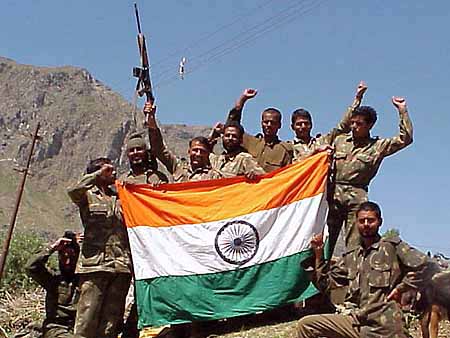
But Hindus are by no means cowards. Hindus as such have their problems, but lack of bravery is not one of them. Look at the Bangladesh war of 1971. The Pakistani Army was brave enough as long as its job consisted in raping Bengali women, but as soon as the Indian Army appeared on the scene, all they could do was to flee and to surrender. The Hindu-Sikh Army liberated the oppressed Muslims and the persecuted Hindus of Bangladesh. Or look at the Kargil war of 1999. Though the politicians forbade the Indian soldiers from taking the war into enemy territory by crossing the Pak border, the Indian Army besieged the Kargil mountain which the Pak invaders had taken, and reconquered it.
Let us look at the historical record. First off, the Vedas and the Hindu epics, like most ancient writings, extolled bravery. The Bhagavad-Gita also underpins its plea for bravery on the battlefield with a typically Hindu (at least very un-Christian and un-Islamic) philosophy, namely the belief in reincarnation. Cicero and Caesar had noted the Gallic men’s battlefield bravery and its connection to their belief in reincarnation. This was equally true of the Hindu warriors: they were not afraid of death.

Then, Hindus stopped Alexander the Great. To be sure, this is old history, we have a paucity of reliable sources about what really happened, and the map shows that Alexander’s soldiers were uniquely far from home and understandably unwilling to go farther even if they could. But fact is: the great Alexander was satisfied with the Iranian provinces of India’s frontier and declined to enter India proper. That was no mean achievement of the Hindus.
Then the Shakas, Kushanas and Hunas managed to gain a foothold in India’s Northwest. The Shakas were defeated, the Vikram calendar begins with this victory. These conquering foreigners were not fully expelled, but at least they were absorbed. There is no distinct Shaka, Kushana or Huna community today, much less do they demand minority privileges.
The Muslims entered Indian history with a naval attack north of present-day Mumbai in 636, only four years after Mohammed’s death. It was repelled. Then for half a century they sent a number of expeditions from Mesopotamia to Sindh. Each expedition was defeated. While conquering North Africa was a cakewalk, there was a Caliph who expressed his reluctance to send another army to Sindh, because those expeditions only cost the lives of so many good Muslims. But of course, if you keep trying, you will break through one day, so eventually, Mohammed bin Qasim occupied Sindh in 712. But even then, his successor was soon defeated.
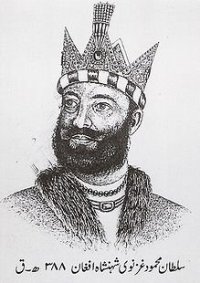
Meanwhile, the Muslim armies conquered Central Asia and their next attack was through Afghanistan and the Khyber pass. Afghanistan was ruled by the Hindu Shahiya dynasty, which gave them a long-drawn-out fight. But towards the year 1000 the Muslims finally won through, and the Shahiya king killed himself when he found himself unable to defend his subjects. From Afghanistan, Mahmud Ghaznavi entered India proper for what his court chroniclers described as raids. In fact, he would have been happy enough to occupy India permanently, but the Hindus were still too strong for that.
 But what the Hindus had in bravery, they lacked in alertness. They didn’t realize that Islam was a new type of enemy, much more difficult to digest than the earlier invaders. In the peripheral Kashmir region, the king acted “secular” and gave Muslims positions of power and confidence, which gave them the opportunity to take steps towards the Islamization of the region. This would be repeated many times, down to the present. Thus, the kings of the Vijayanagar empire showed off their broad-mindedness (now mistermed “secularism”) by hiring Muslim troops, only to find in the battle of Talikota that their Muslim armies defected to the Muslim opponent camp and inflicted defeat on their erstwhile Hindu overlord.
Meanwhile, Mahmud’s nephew Salar Mahmud Ghaznavi made a successful foray into the Ganga basin. The Hindu kings in the neighbourhood got together to stop him. Led by Sukhadeva and including the famous philosopher-king Raja Bhoja, they defeated Ghaznavi in the battle of Bahraich near Ayodhya in 1033. (It is a different matter that sentimental Hindu sleepwalkers of later years joined their Muslim neighbours in worshipping at Salar Masud Ghaznavi’s grave, not appreciating the bravery and foresight of the Hindu kings and soldiers who defeated him; there are certain things very wrong with the Hindu mentality, but again, lack of bravery is not among them.) For more than a century and a half, the people of the Ganga basin considered Islamic invasion a thing of the past.
But then, the breakthrough came. It was not due to Hindu cowardice, but to Hindu magnanimity and overconfidence. A year after being defeated by Prithviraj Chauhan, who spared him, Mohammed Ghori did battle again and took his erstwhile victor captive. After blinding and executing Prithviraj, he and his generals conquered the entire Ganga plain, using newer battlefield strategies. From there, they would extend their power southwards to cover almost the whole subcontinent in due course. But for five centuries and a half, the Hindus had prevented this, while West Asia, North Africa and Spain had fallen within eighty years.
 The age of Muslim expansion was again marked by endless Hindu resistance. Wise Muslim rulers opted for a compromise with this unbeatable foe (misinterpreted by secularists as “secularism”), but more zealous rulers depleted their forces in endless wars. In this endeavour, they were helped by a stream of West-Asian adventurers and African slave-soldiers who came to India to increase the Delhi Sultanate’s large standing armies. The Muslim states were totally geared to warfare, something unseen in Hindu history. For this reason, we can say with the comfort of hindsight that the Muslims could finally have conquered all of the subcontinent had they remained united. Even Hindu bravery could not have prevented it, any more than the brief acts of North-African bravery could stop the Islamization of North Africa. But fortunately, Muslim states or Muslim ethnic lobbies within a state also fought each other, which gave Hindus a chance to regroup and to mount another attack.
Also, some Hindu kings did what they thought best under the circumstances, viz. they surrendered without war, paid tribute, and retained sufficient autonomy to house rebels from other areas (like Guru Govind Singh’s asylum with the Hill Rajas) or become rebellious themselves once circumstances allowed this. It was important for a come-back to have these free territories (just like the reconquista of Spain was only possible because its Asturian region had managed to remain free since the beginning). Their collaboration was not cowardice but a ruse to gain time.
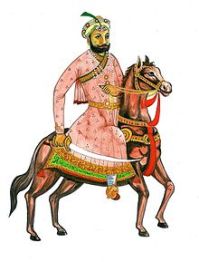 All the same, this meant that Hindus enlisted in the armed force of sagacious Muslim rulers. Akbar, who had consolidated his power by defeating the Hindu ruler Hemu, was smart enough to keep enough of the Hindus on his side to overpower rival Muslim claimants and to fight Hindu freedom fighters. Famously, the rebellious Pratap Singh was countered by Man Singh, who wielded the sword of the Moghul empire. Hindu bravery was employed by Muslim rulers.
Finally, in the 17th century, a rebellious Shivaji, born in a family of collaborators, would arise and restore Hindu sovereignty. Where his Maratha army appeared, defeat of their enemies was a certainty. The Moghul empire became a mere shadow of its former self, while the military power rested with the Marathas. In 1817, the Peshwas, who had taken over the Maratha confederacy, were terminally defeated by the British. But again this was not for Hindus’ lack of bravery. They fought like lions, and on the other side, other Hindu divisions fought like lions for the British, who could conquer and rule India without doing too much fighting themselves.
If something can be held against the Marathas and their Peshwa successors, it is not a lack of bravery or military prowess, but lack of proper ideological motivation. This is why they spilled their energies in predatory raids against other Hindu populations, it is why their leader prostrated before the powerless Moghul emperor in 1771, it is why some Peshwa descendents could be enticed into a Hindu-Muslim or Moghul-Maratha cooperation (which was really a case of mutual deception) in the Mutiny of 1857. They lapsed from Shivaji’s sense of mission as the liberator of the Hindus.
One constant for at least 8 centuries was that Hindus didn’t use their brains to update their warfare. They didn’t learn from their enemies’ successes. Also, they were sentimental and too overly attached to the person of their leader. They could bravely fight all they wanted, but if the leader was killed, there was no second person, much less a collective plan, to take his place. When you look at today’s Hindu politicians and internet warriors, you find exactly the same defects.
 In a hostile sense too, Hindus are too focused on persons. They have wasted their energies attacking Sonia Gandhi and her family, and failed to dismantle the secularist dispensation established by her grandfather-in-law, Jawaharlal Nehru, and given a Marxist slant by her mother-in-law, Indira Gandhi. They haven’t emulated the techniques by which the secularists, like the British of yore, exercise power totally out of proportion to their numbers. They haven’t figured out how to stop the phenomenon of “Hindus wielding the sword of Islam”, in which Akbar exulted, but which has become so commonplace under the guise of secularism. For that, an analysis of all the factors in the field is necessary. This is not too difficult, it only takes a normal degree of involvement and will. But so far, Hindus have not mustered the will to win. – Koenraad Elst, 27 October 2012
» Dr. Koenraad Elst (°Leuven 1959) is an independent researcher who earned laurels and ostracism with his findings on hot items like Islam, multiculturalism and the secular state, the roots of Indo-European, the Ayodhya temple/mosque dispute and Mahatma Gandhi’s legacy.
Filed under: india | Tagged: bravery, civil rights, courage, delhi sultanate, hindu, hindus, hindutva, history, imperialism, india, indian army, indian politics, indian rajas, islam, islam in india, jihad, koenraad elst, mughals, muslim invasion, nehruism, politics, reincarnation, religion, secularism, sikh army, somnath temple, sonia gandhi, temple demolition, terrorism, vikram calendar, war |






 BHARATA BHARATI
Man Singh fought Maharana Pratap, who happened to be Maharana Sanga’s grandson. Maharana Pratap’s stubborn resistance till the end ensured that Mewar was the only Rajput state not to submit to the Moghul court (especially by giving away women in ‘marriage alliances’) until the last.
Maharana Sanga himself fought Babur (Akbar’s grandfather) at the battle of Khanwa, that ended in a defeat for the Rajputs because of treachery. He was brave too, and in spite of having only one good eye and arm (lost, ironically, in internecine warfare).
By the way, Man Singh, Akbar’s general entrusted with the task of subduing Maharana Pratap, was no pushover either. Abdul Qadir Badayuni, no admirer or friend of Hindus, records with some awe that in the war with Maharana Pratap “through the generalship of Man Singh the true meaning of this line of mullA shIrI became known, ‘A Hindu wields the Sword of Islam’.” Ironical and somewhat prejudiced, but quite accurate, and has a sadly contemporaneous ring to it.
LikeLike
Very timely.Modern Hindus have to be repeatedly reminded of this fact.British taught us that we were cowards,if they did not, they would not have ruled over us with few thousand guys.British also undertook [ for the first time in 10,000 years old Hindu history] the disarming of the nation, especially Hindu peasantry.
You are very right about present day secularist mischief mongers.Hindus don’t have to be taught secularism.If 85 crore Hindus learn to speak in one voice, world can become truly secular.
LikeLike
Why we have not consolidated? Why we did not have Subhash or Patel as 1st PM to really regroup? Why we have to give our land, properties and in return receive burden of alien culture at the cost of natives of rest of India? Is it all accidental or a super conspiracy against only culture which can in strength give the world prosperity, civilizational contribution and united humanity?
LikeLike
@ avantivarman: Thank you for the comment. It has been moved here as a more appropriate place for it to appear. – IS
LikeLike
It is time somebody or some organisation writes true history of Bharat for adults and for children.
LikeLike
It has been some time since I read Integral Humanism. The phrase itself (though not the content) is borrowed from Jacques Maritain. Today, Dr. Shrinivas Tilak’s ‘Reawakening to a secular Hindu nation’ is an important sequel. Tilak focuses on Golwalkar at the outset, but then moves into a general discussion of Hindu dharma etc. in the political arena. Unlike Deen Dayal, though, he does not talk about a matching Hindu economy. People like Gurumurthy do talk about it.
But all these insights are scattered around and perhaps they should be brought under one roof as it were.
There is some ambiguity here too. I have just been reading Sandhya Jain’s critique of the judiciary’s role in the Reliance scam. Good article as far as exposing corruption goes. But she does in passing speak approvingly of a publicly managed economy.
Whereas the Gurumurthy model is more akin to a Hindu model (sans corruption, ofcourse). His 1993 critique of Gatt is, I believe, a foundational document.
LikeLike
Hemu Vikramaditya‘s rise to power in the 16th century is a fascinating story. He is the very last Hindu ruler of Delhi till today!
That Hindu thinkers have not been able to formulate a comprehensive Hindu political ideology that represents Hindu values, is a fact. It seems never to have been seriously considered except by Deendayal Upadhyaya who formulated a political philosophy called Integral Humanism.
Had Hindus been able to formulate a political ideology, Marxism would not have seduced so many Indian thinkers who still identify themselves as Hindus.
LikeLike