












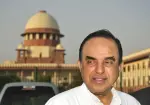


 “Of course the US may discover a modicum of common sense instead of US think-tank gobbledygook and make a deal with the bankrupt Pakistanis, poised to best it in Afghanistan. This would be a rational policy, since Pakistan alone can ensure a quarantine of terror against the West from the country, a probable political way out I have anticipated since 2005.” – Dr. Gautam Sen
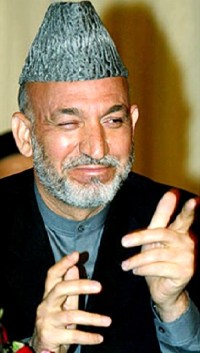 The end of the disastrous Western intervention in Afghanistan poses potentially sombre military and political dangers for India. India’s seemingly isolated Afghan problem could well become the precursor to a severe security challenge that would dwarf the military setback it suffered in the Himalayas in 1962. The effective rout of NATO will surely presage the resumption of ISI-Taliban control of Afghanistan. The US has never learnt that relentless bombardment of civilian populations does not secure military and political victory on the ground. However, some perverse racial gratification seems to be gained by the US from pummelling presumed barbarians, since it resorts to it repeatedly. Hamid Karzai and his hapless retinue will end up in Lutyens Delhi, with the nonentity ruminating ruefully with retired middling diplomats and the tea-sipping chatterati at Delhi’s India International Centre.
Indubitably, the magnitude and mindless cost of US military power is only matched by its capacity for delusion and hubris. As far as the future of Afghanistan is concerned, projected US policy will apparently attempt to maintain Hamid Karzai, or some other similar bankrupt successor in power. This diffident goal, after all the witless grandiosity of the past decade, is to be achieved by continuing to deploy air power and undertake drone decapitations. In fact, this clever wheeze, like all the other failed ones, is also guaranteed to end in tears. But it has the huge allure of a typically post-modernist short-cut and the reassuringly familiar cultural trappings of a computer game instead of vexatious reality. In addition, the US military might seek to sustain its preferred regime by placing enough troops on the ground to train local forces and engage with the Taliban and Pakistani proxies in critical encounters. This too will prove futile if a pliant Afghan regime ceases to exercise real control on the ground. Such a prospect is almost guaranteed as Afghan national forces melt away into a drug-fuelled evening mist. Any incumbent US administration will quickly retreat from commitments as the American public wearies of an endless drain on taxes that assures little tangible gain.
 Of course the US may discover a modicum of common sense instead of US think-tank gobbledygook and make a deal with the bankrupt Pakistanis, poised to best it in Afghanistan. This would be a rational policy, since Pakistan alone can ensure a quarantine of terror against the West from the country, a probable political way out I have anticipated since 2005. This also happens to be the best-case scenario for India. Why India sought to involve itself in the lost cause of Afghanistan in the first place, when its implacable enemy held its prerogatives there as vital, is a mystery. Undermining the vital perceived interests of a rival is equivalent to seeking its elimination altogether, which provoked the retaliatory Mumbai assault of 26/11 by Pakistan. India’s policy had not been thought through except to forlornly anticipate gaining brownie points from the US for latching on to its fraying coat tails. India’s Afghan adventure was clearly foolhardy as the impending curtailment of India’s presence there will soon underline.
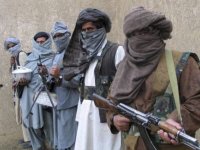 It is possible that regaining control over Afghanistan may satisfy Pakistan’s marauding ghazis and refocus their attention on an extraordinary catalogue of domestic socio-economic, political and allied problems at home. It would nevertheless lead to an inevitable significant upsurge in Pakistani state-sponsored terror. Hopefully, it would be mainly limited to Kashmir with only an occasional sortie to commit mass murder in the rest of India. Indian politicians could live with such an outcome. Indeed it offers some political advantage to the medley of political parties who try to galvanize Muslim votes. These terror attacks alarm Muslim voters because of possible retaliation for them and allow India’s visionless political parties to engage in competitive pledges to enhance security for them at elections. But the comprehensive expulsion of India from Afghanistan, a near certainty if Pakistan is back in the saddle, may signal the beginning of more serious woes for India.
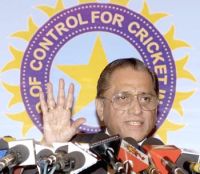 Pakistan does not, contrary to the lucre-besotted Jagmohan Dalmiya and the BCCI now making vital diplomatic decisions, seek peace with India. It may decide a periodic breather from intense confrontation is unavoidable, but its goal is to cut India down to size by harming it. The fact that this ardent aspiration has been difficult of achievement is neither here nor there. Pakistan’s very existential raison d’etre has always been war with Hindustan, as numerous memoirs by its civilian and military leaders affirm. Pakistani society and economy are organised for war with India. Indian commentators may believe romance, broadcast on NDTV, will conqueror all, but this is a chimera refuted by periodic body counts across India. India’s highly strung celebrity anchors would have been in for a rude shock had the Pakistanis taken Delhi in 1965, which could have happened reminisced one senior general, who fought in the war, had it not been for General J. N. Chaudhuri’s far-reaching, post-1962 military reforms. These saved India though Zulfikar Ali Bhutto had assured Ayub Khan that India could be humbled in short order after its 1962 debacle. The heroine daughter, doted on by the world and Indian media publicly promised, in her turn, to continue the father’s quest, unleashing a fresh wave of terror against India.
 Afghanistan is likely to become a cauldron of fire once the Taliban regain power. The ancient rivalry between Shia Iran and the usual Saudi dollar diplomacy, to prompt its sectarian Pakistani counterparts to do their dirty work, will renew the bloody Afghan civil war and restore the reign of vicious warlords. The Taliban imprint might then reach into Central Asia and China’s disaffected Uighurs, with a bevy of Jihadis vying to create their own Caliphate. They may well find sanctuary in Afghanistan’s inaccessible redoubts, armed and fuelled by enraged sentiments for martyrdom. It will hardly be in form for Pakistan and its own ghazi rulers to ignore these ready weapons at hand to unleash horror against India. The Afghan and Pakistan Taliban have become a potent and significantly autonomous regional force whom the military would be well-advised to mobilise and re-direct to continue their thousand-year war against India. An unlimited supply of unemployed teenage martyrs has become available in the Punjab, rendered irate by Saudi-funded seminaries and cynical Pakistan elites fabricating serial allegations of rape and torture by Hindu India. These are dutifully reported and legitimated by Indian and British journalists. The venal calibre of the Pakistani officer corps is on record in the murderous blow-by-blow directions given to the teenage killers in Mumbai during 26/11. Worse still, Chinese ambitions to create a rail link to Iran through Pakistan, and occupied Indian territories, will contribute another dimension of instability.
 The most critical factor in the equation in any decision to target India will be China’s perception of the serious economic setback unfolding in it, with the burgeoning fiscal crisis because of massive corruption and the populist misspending of the UPA. The existence of an unprecedentedly weak national coalition and parochial regional allies will make it appear opportune to strike a dramatic blow against India. Chinese military officials have been openly discussing the right moment for teaching India a lesson. The possibility of serious economic crisis in China itself will only encourage foreign adventure, especially one that is construed as a solution to its Tibetan impasse. Chinese officials infer that without alleged Indian facilitation Tibetan discontent would evaporate. They also seem to believe that a military blow against India will force a policy re-think, ending the Dalai Lama’s sojourn in India and the expulsion of its political cadre. Major diplomatic implications for attacking India should concern China, but its belligerent indifference to international opinion has already been demonstrated.
 A weak Indian central government, already suffering spectacular policy paralysis and regional satraps with no interest in long-term issues, make India an inviting target for observant adversaries. In addition, financial crisis has denuded budgetary resources and worsened the fierce political competition to plunder the national purse. It will eventually provoke populist agitation once resources to bribe all and sundry are no longer available. More worryingly, recent events surrounding the Indian armed forces make one wonder how deep the discernible rot has penetrated since some senior officers appear to be emulating the ambition and greed of India’s venal political class and the rest of the country. Are India’s fighting men being led by senior officers who have begun to share the self-serving instincts of its corrupt administrative class and a political dispensation beyond redemption? The UPA and Prime Minister, Manmohan Singh, presiding over this astonishing debacle will surely be remembered contemptuously as the worse thing that happened to India after independence. Their epitaph will be the absurd resolve to surrender Indian retail to foreign investors, whose international conduct bears more than a passing resemblance to marauding by the East India Company. – News Insight, 23 July 2012, has published this article in an abridged form. The article published here is complete. – Editor
» Dr. Gautam Sen taught international political economy to graduate students for two decades at the London School of Economics & Political Science. He has published widely on the political economy of development, international trade issues, defence economics and India in scholarly journals and newspapers.
Filed under: india, pakistan | Tagged: afghanistan, civil war, geopolitics, imperialism, indian foreign policy, indian politics, international politics, ISI, islam, jihad, neo-colonialism, pakistan, politics, religion, state-sponsored terrorism, taliban, terrorism, US politics, USA |







 BHARATA BHARATI
It is a very candid and bold review of the situation which would be unfolding post US withdrawal.Seeing Indian functioning of the present setup we are indeed very much worried of future engulfing our country.We do not feel safe of the ensuing happenings very soon. Right now we are ill prepared to meet the onslaught of the forces prevailing in Afghanistan,Pakistan and China.
This article should have been written in simple prose for an average reader; it could then have served the purpose much better.
LikeLike