











 “It suddenly struck me that hardly anyone in the west has the chance to sing loudly and clap hands to joyful songs that are directed to the Divine. In fact, most Germans probably don’t know the text of even a single song which they could sing, if given a chance. And aren’t singing and clapping most basic expressions of joy? Even if there is no joy felt at the outset of a bhajan, doesn’t it come at least to some extent in the wake of it? Worries have no space to intrude; one is present in the now and enjoys it.” – Maria Wirth
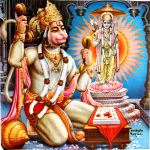 During Navaratri season, there are many opportunities to attend a bhajan session in India. Yet did you ever wonder about the value of bhajan? Some of the great spiritual masters value it highly. Especially in Kali Yuga, it is said that bhajans are an easy way to connect with the Divine that permeates everything. Somehow I took it for granted, that there is no monetary charge for attending a bhajan session. After all, the lead singer benefits as much, if not more, as those who follow him or her. Everyone simply expresses his devotion in a joyful manner.
When I went to Germany some time ago, a magazine, for which I write, invited me to a ‘Concert of Indian Music’ in Munich. The artist was an American. I had no idea what to expect but happily accepted the invitation.
On the evening of the concert, some two hundred people had gathered at the auditorium in Munich – some of them obviously old Indian hands, yet the majority just ‘normal’ Germans, who were not happy when they were asked to remove their shoes. Before entering the hall, we filed past a table where the tickets were sold and a sheet of paper was handed out. The price of the ticket was 35 Euro, which equals roughly 3000 Rupees. I was glad that I had an invitation.
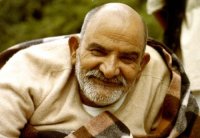 Then the artist came, accompanied by a tabla player. He seemed likeable and started by telling us about his time in India in the seventies, when he met his guru Neem Karoli Baba in Kainchi near Nainital and used to live with an Indian family. This family, he said, sang bhajan every evening and he enjoyed it. The grandfather would occasionally stop singing and go straight into samadhi, the American said, while lifting his head to the ceiling and stretching out his arms, probably indicating the state of samadhi. That’s the power of bhajan, if it is sung with full devotion and just for the joy of it, he added.
After his short talk the concert started. It turned out to be a bhajan session, with the American leading the way and we full throatily joining in, thanks to the sheet of paper, where ‘Om Namah Shivaya’, ‘Hare Rama, Hare Krishna’, ‘Jai Durga’ and so on was typed for the benefit of those who were not familiar with the Indian tradition. The American was a good singer with a pleasant voice. Soon the atmosphere got charged, with most of us singing loudly and clapping our hands with the rhythm.
When it was over, there were happy faces all around. Nobody seemed to mind that, actually, they had performed half of the time of the ‘concert’, faithfully following whatever the artist sang, and nobody seemed to mind that they had paid quite a lot, whereas the lead singer got quite a lot. The friend, who had come with me and who had never been at a bhajan session  before, also said that she really enjoyed it and straightaway headed for the counter where CDs of the artist were sold. It was only my small mind which started calculating and came to a sum of about Rs. 6 lakhs which must have been collected for one and a half hour of bhajan.
It suddenly struck me that hardly anyone in the west has the chance to sing loudly and clap hands to joyful songs that are directed to the Divine. In fact, most Germans probably don’t know the text of even a single song which they could sing, if given a chance. And aren’t singing and clapping most basic expressions of joy? Even if there is no joy felt at the outset of a bhajan, doesn’t it come at least to some extent in the wake of it? Worries have no space to intrude; one is present in the now and enjoys it.
I guess those Germans felt this joy and preferred it to being recipients of some ‘performance’ by an artist. They willingly paid 35 Euros to be able to sing.
 Now, since the value of bhajan is known even in monetary terms, aren’t we lucky in India? Most of us not only have a big repertoire of songs but also many chances to go for a free bhajan session where we can sing wholeheartedly and express our devotion in the company of others. Maybe this is one of the reasons why the atmosphere generally feels light in India and a smile comes easily to Indians is spite of the many difficult circumstances, they have to face. – Maria Wirth, 1 October 2013
» Maria Wirth came to India for a holiday after finishing her psychology studies at Hamburg University. She visited the Ardha Kumbha Mela in Haridwar in April 1980 where she met Sri Anandamayi Ma and Devaraha Baba, two renowned Hindu saints. With their blessing she continues to live in India and dive deep into India’s spiritual tradition, sharing her insights with readers through articles and books. Her articles are available on the Maria Wirth Blog
Filed under: india | Tagged: bhajans, bhakti movement, culture, festivals, german bhahan concert, hindu, hinduism, india, navaratri, spiritual perspective, values | Leave a comment »