










 “There can be little doubt that whistle-blower par excellence, Julian Assange, and his Wikileaks revelations triggered America’s determination to have totalitarian control over the Internet. In Australia, Assange’s native country with which Washington recently deepened strategic ties, Attorney-General Nicola Roxon announced … that she wanted to give law enforcement agencies the power to bug phones and intercept emails … the same day she … announced a series of agreements on data sharing with US secretary of homeland security, Janet Napolitano.” – Sandhya Jain
 India’s proposal that the United Nations appoint a 50-member watchdog body to regulate the internet has elicited some sharply divergent opinions. One side maintains that the proposed Committee for Internet Related Polices (CIRP), which would oversee all Internet standards bodies and rule on all Internet-related disputes, is a draconian measure that puts India in the same bracket as regimes that restrict or oppose Internet freedom.
Critics, however, say this view is being sponsored by America and countries at the receiving end of Wikileaks’ exposés via the Internet. Within India, this view is being supported by those sections of the mainstream print and electronic media that have conformed so much to corporate or political pressures that the absence of real news coverage has had to be made up with an overdose of ‘expert’ opinions. Usually the same panel of experts pontificate on every subject under the sun, day after day. Exasperated readers/viewers vent ire and sarcasm on Facebook and Twitter.
The critics charge that the mainstream media has been effectively challenged by the social media on issues it has ignored, underplayed, or overplayed. One powerful example is the resignation of a high-profile politician from the chairmanship of a parliamentary standing committee after the ‘internet rangers’ went after him for an alleged misdemeanour. On another occasion, the media was subjected to ‘virtual bashing’ for its criticism of the SIT report on the Gujarat riots.
A more mature view states that India’s proposal, first articulated at the General Assembly in 2011, will democratize control of the Internet by releasing it from unilateral American control. Currently, the critical root zone server and Internet names and addresses system is managed by a body under contract with the US Department of Commerce, and functions completely under American laws. This single point control has become a matter of concern for many nations, especially in the wake of American plans for an Internet kill switch legislation, which will have a worldwide impact. Hence India favours a body with equal representation of all nations as a safeguard against monopoly power.
 There can be little doubt that whistle-blower par excellence, Julian Assange, and his Wikileaks revelations triggered America’s determination to have totalitarian control over the Internet. In Australia, Assange’s native country with which Washington recently deepened strategic ties, Attorney-General Nicola Roxon announced on 4 May 2012 that she wanted to give law enforcement agencies the power to bug phones and intercept emails for up to six months; the same day she and junior minister Jason Clare announced a series of agreements on data sharing with US secretary of homeland security, Janet Napolitano.
Unless resisted, Australians will soon have to put up with such privacy intrusions and erosion of liberties. Ms Roxon also wants to give government the power to impose a heavy hand on telecommunications providers. Under such laws, warns Greg Barns, a barrister and National President of the Australian Lawyers Alliance, it would be ridiculously easy for the authorities to interrogate every device used by Julian Assange (mobile phone, laptop, iPad), and capture any leaks which the government did not want revealed. There would be no court scrutiny for six months.
 More unnerving is the fact that the Attorney General wants telecommunications companies to keep data for two years, so that if the law enforcement agencies want, they can trawl through every email, text message and phone number of a person who catches their eye for any reason whatever. Eyebrows have been raised over a joint statement by Ms Roxon and Ms Napolitano on countering transnational crime, terrorism and violent extremism “which commits Australia and the US to share law-enforcement data to combat crime and expand information sharing to counter violent extremism”. Citizens question if the Australian government should give Washington data on its own citizens without putting judicial safeguards in place. They wonder if “violent extremism” covers the activities of environmental groups and people’s movements like Occupy Wall Street.
Australia has also committed to “working more closely with the US on information and intelligence sharing, in particular, targeting and risk assessments to combat transnational organised crime, including terrorism”. Greg Barns points out that the Australian Prime Minister believes that Wikileaks is covered by the term “transnational organised crime”.
 In an interview to New International in April 2012, Assange expressed concern over the burgeoning power and expansion of national intelligence agencies which are now monitoring almost every border and every internet traffic flow. Governments around the world are buying equipment worth $10 million annually in order to record every single telephone call, email and SMS going in and out of a country.
This is not random scrutiny, but a permanent record. In this way, whenever a government wants to check someone out, it has a complete archive of his/her life; the intercepts will show who the subject’s friends are, their communications and so on. It’s the totalitarian surveillance of George Orwell’s 1984. In fact, governments can do bulk surveillance from anywhere. Försvarets Radioanstalt, Sweden’s spy agency, intercepts 80 per cent of Russian internet traffic and sells it to America.
For individuals and small groups, hope comes from groups known as crypto-anarchists, who are trying to develop programmes to encrypt communications and make them anonymous. Meanwhile, one way for the individual or group to resist the totalitarian state – whether a democracy or a dictatorship – is by promptly disseminating information received and sharing insights. Such a worldwide bush telegraph will erode the ability of governments to manufacture consent among the people by controlling the mainstream media, as the Internet will not allow free opinions to be muffled. In this way, the spread of knowledge will produce its own impact.
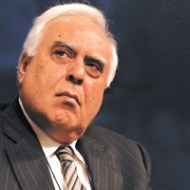 Ironically, though India favours multilateral control of the Internet, all is not honky-dory here. Communications Minister Kapil Sibal tried to introduce some controls after material defamatory to the Congress president was pasted on Facebook. When service providers told him that pre-censorship was impossible, he suggested they “self-regulate”. In fact, India has frequently made internet companies remove content or block a webpage, often without good reason. Facebook removes content desired by the government, without informing users. Google often removes content at government demand, but recently refused to remove a blog and YouTube videos critical of some chief ministers and senior officials of different states. Clearly, the urge to curb political dissent is universal. – Vijayvaani, New Delhi, 22 May 2012
» The author is Editor, www.vijayvaani.com
Filed under: india, USA | Tagged: australia, censorship, digital spying, ethics, free speech, geopolitics, globalisation, government, hegemony, human rights, india, international finance, internet, internet censorship, internet security, julian assage, media, militaristic, patriotism, politics, psychological warfare, US imperialism, US politics, USA, watchdog body | Leave a comment »