










The UK and Saudi Arabia struck a dodgy deal to get on the UN human rights council – Frida Garza
The United Kingdom and Saudi Arabia both serve on the United Nations’ human rights council (HRC), an influential watchdog group for abuses around the world, but the two nations may have achieved that status by unlawful means. Leaked documents obtained by the Australian (paywall) show that the UK and Saudi Arabia exchanged money and votes to get each other elected to the HRC in 2013.
Saudi Arabia’s ambassador was recently appointed to lead the human rights council, despite fierce opposition from critics who say the kingdom’s atrocious human rights record—including its recent verdict to behead and crucify a 21-year-old activist.
The alleged vote-trading happened in November 2013 in New York, during the session to elect states for 2014-16 membership to the HRC. Discussion of the vote-trading scheme happened over diplomatic cables between the two nations, dated January and February 2013.
The Australian and the UN Watch, a non-governmental body that monitors the UN, translated the Saudi cables, and found that the UK asked the Arab state to support its candidacy to join the human rights group. Saudi officials responded, by offering their support, in return for the UK’s.
“The ministry might find it an opportunity,” the cable read, “to exchange support with the United Kingdom, where the Kingdom of Saudi Arabia would support the candidacy of the United Kingdom… in exchange for the support of the United Kingdom to the candidacy of the Kingdom of Saudi Arabia.”
In another cable, Saudi Arabia paid $100,000 USD ($66,099 GBP) to the UK for unspecified “expenditures” related to nominating the Arab state to the HRC. – Quartz, 30 September 2015

This is what happens when you make Saudi Arabia head of the UN Human Rights Council – Svati Kirsten Narula
Leaked documents recently showed that Saudi Arabia struck a dodgy deal with the UK to obtain its seat on the United Nations’ 47-member human rights council (HRC). The Middle Eastern kingdom has an awful human rights record—though to be fair the same can be said of other HRC members.
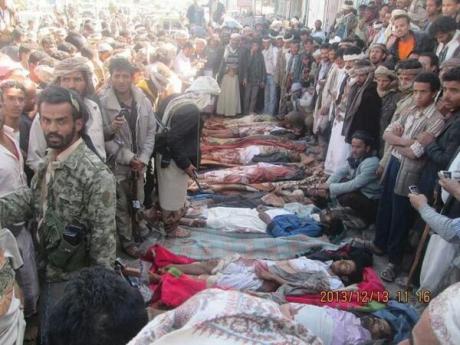
But if Saudi Arabia’s inclusion in the HRC—and its ambassador’s chairmanship of a key HRC panel—was lamented by global human rights defenders, its actual impact there has been downright scandalous. This week, Saudi Arabia reportedly pressured the council into dropping an inquiry it was planning to launch into human rights abuses in Yemen’s ongoing civil war, in which a Saudi-led coalition has been accused of indiscriminate bombings of rebel-held areas. On Monday, according to Doctors Without Borders, Saudi forces bombed a wedding near the western port city of Mokha and killed at least 130 civilians, mostly women and children.
According to the New York Times, the Netherlands yesterday (Sept. 30) withdrew a draft resolution—due largely to Saudi pushback—which would have instructed the UN high commissioner for human rights to send investigators to Yemen and to ask the warring parties to allow humanitarian deliveries of food and aid.
“In the face of stiff resistance from Saudi Arabia and its coalition partners, and to the dismay of human rights groups, Western governments have accepted a resolution based on a Saudi text that lacks any reference to an independent, international inquiry,” the Times reported. The new resolution asks the HRC only for “technical assistance.”
Philippe Dam, deputy director of Human Rights Watch, told the Times that this is “a lost opportunity” for the HRC “and a huge victory for Saudi Arabia, protecting it from scrutiny over laws of war violations which will probably continue to be committed in Yemen.”
Saudi Arabia supports the exiled Yemeni president Abdu Rabbu Mansour Hadi, and the Saudi-led coalition fighting Yemen’s Houthi rebels has instituted a blockade at the country’s ports. It is meant to stop the Houthis from obtaining supplies from Iran, but is also blocking access to sorely needed aid for civilians. – Quartz, 2 October 2015
Filed under: UK | Tagged: human rights, saudi arabia, UK, UN, UNHRC, women's rights | 5 Comments »






 BHARATA BHARATI