










 “Under the guise of providing an alternative history, the real nefarious agenda of The Hindus: An Alternative History is to drive a wedge between Hindus and non-Hindus in India and elsewhere. In order to show how Hindus are so utterly unlike others, Doniger engages in denigrating, distorting, and demeaning all Hindus (low or high caste, men or women) and what is worse, “defrocking” (both theologically and sexually) their Gods and Goddesses.” – Shrinivas Tilak
 Let me begin with a clarification of the title, which was suggested by an “adult” film that had gained certain notoriety back in the 1970s. Called, “Debbie Does Dallas,” the film depicted exploits of a sex worker named Debbie with members of a professional sports team based in Dallas, Texas. I did not see the film but recollect from the newspaper accounts of the time that colloquially, the “doggie” trick alludes to one of the more popular “positions” in the sex act.
“Doniger” in the title refers to Wendy Doniger, who is the Mircea Eliade Distinguished Service Professor of the History of Religion at the University of Chicago. The connection between “Debbie” of the film and Professor Wendy Doniger (hereafter Doniger) is that they both are in the business of providing entertainment involving sex. Both employ bodies: Debbie her own; and Doniger the bodies of Hindu Gods and Goddesses.
Dogs (along with horses and cows) loom large in Doniger’s latest work. The index contains a dozen or so entries under the main heading of dogs for instance. The 779 pages book is officially entitled, The Hindus: An Alternative History (New York: The Penguin Press, 2009; hereafter The Hindus). In Doniger’s ‘alternative history’ (in reality it is more like a work of fiction and not at all a history) unfolding India and Hinduism, ‘dogs’ represent “high caste Hindu males” who have according to her  oppressed and repressed everybody else in India since the ancient Vedic times. In Doniger’s reckoning, the traditional history of India (“a product of Brahmin imagination”), religious minorities and social out castes are reduced to a status of a “scape-dog” (or are they all underdogs) (p. 145) (these underdogs include Muslims who ruled over the Hindus and controlled territory larger than currently recognized as India for most of the last millennium; I told you this is a work of fiction!).
The main purpose of The Hindus, accordingly, is to provide a narrative account of alternative people who do not figure in the Brahmin-generated history — people who are “alternative” in the sense of “otherness,” people of other religions, or cultures, or castes, or species (even animals)(p.1). Having read The Hindus from cover to cover, I can say that Doniger lives up to her promise but at a terrible cost for Hindus and India.
Under the guise of providing an alternative history, the real nefarious agenda of The Hindus is to drive a wedge between Hindus and non-Hindus in India and elsewhere. In order to show how Hindus are so utterly unlike others, Doniger engages in denigrating, distorting, and demeaning all Hindus (low or high caste, men or women) and what is worse, “defrocking” (both theologically and sexually) their Gods and Goddesses.
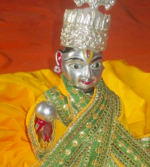
Selectively picking mythic episodes from the Purana and the Tantra texts, Doniger describes relations between Gods and Gods, between Gods and Goddesses, between Goddesses and animals. Here, a God beheads another God; there, a Goddess “hooks up” with a buffalo [demon] and so on. See for instance chapter 14, “Goddesses and Gods in the Early Puranas” and chapter 15 “Sects and Sex in the Tantric Puranas and the Tantras.”
 I will leave it to professional psychiatrists (like Dr. Shreekumar Vinekar) to analyze and interpret Doniger’s preoccupation with sex and the perverse joy she finds in abstracting from Hindu myths sexual encounters (natural and “unnatural”) between Gods/Goddesses and humans or animals. Doniger claims that she is a “recovering Orientalist.” Orientalism, she asserts, refers to a cluster of attitudes that implicated the first European scholars of India in the European colonization of India, overwhelming reliance on textual studies being one of them, (pp.34-35). In truth, Doniger seems to have added a sexual dimension to the textual one in her so-called studies of India and Hinduism.
Elsewhere Doniger does betray an awareness that Hindu views of animals are far more complex to capture by words like “sacred” or “impure.” Other people’s zoological taxonomies look bizarre only to people who view them through their own rather ethnocentric lenses (p. 659). The fact is: Doniger continues to look at all Hindu taxonomies through her unique ethnocentric lens.
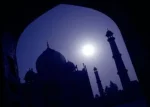
 Here, I will deal with two specific instances where Doniger clearly abandons the role of an unbiased, academic historian. While discussing the Taj Mahal in chapter 24, “The Past in the Present”, she claims, “One advocate of Hindutva has argued, on the basis of absolutely no evidence, that the Taj Mahal, in Agra, is not a [sic] Islamic mausoleum but an ancient Shiva temple…”(p. 679). Doniger herself does not bring any clear evidence for her assertion that the Taj Mahal is an Islamic mausoleum nor does she refer to any legitimate archaeologicalstudy of Taj Mahal. To date, the Archaeological Survey of India has not carried out a systematic survey of the Taj Mahal. Doniger does not mention P. N. Oak by name (the end note does provide reference to his book Taj Mahal: The
  True Story, 1989). There is growing evidence suggesting that it is still not clear who actually built the Taj Mahal or what its purpose was (see my blog “P. N. Oak: the lone fighter, etymologist, and historian” on http://www.sulekha.com for details).
After 686 pages, comes chapter 25 “In Conclusion, or, the Abuse of History,” which is only 3 1/ 2 pages long! It begins with a long quotation attributed to Madhav Sadashiv Golwalkar (1906-1973) who, claims Doniger, used the justifiable Hindu pride in religious tolerance to justify intolerance (p. 687). I have seen this quotation attributed to Golwalkar in dozens of so-called scholarly monographs by Western and Indian academics, historians, and indologists who conveniently create a “straw-man” out of Golwalkar as an iconic Hindu fanatic.
 Like others Doniger demonizes Golwalkar and his thought as intolerant on the basis of just one paragraph from a small pamphlet We, Our Nationhood Defined (p 48-49). This is unhistorical, besides being incompetent and biased scholarship considering the fact that Golwalkar only translated that work into Hindi, originally written in Marathi by Balarao Savarkar, the younger brother of Vinayak D. Savarkar. It does not necessarily mean that Golwalkar, as the translator, endorsed or espoused all the ideas presented by Balarao Savarkar. Furthermore, Golwalkar was active in India’s public life thirty-five years after the pamphlet came out and his collected works run up to thousands of printed pages collected in twelve volumes. One would expect a more nuanced assessment of Golwalkar from “one of the foremost scholars of Hinduism in the world” as claimed in the blurb. Those interested in an “alternative” perspective on Golwalkar may consult my Reawakening to a secular Hindu nation: M. S. Golwalkar’s vision of a dharmasapeksha Hindurashtra (Charleston, SC, USA: Book Surge Publications, 2008).
In sum, those who will rely on “The Hindus” to learn about Hindus in the history of India will do so at their own peril.
Further reading:
- Oh, but you do get it wrong!
- Rajiv Malhotra on Wendy Doniger
- Ten challenges to the Washington Post by Rajiv Malhotra
- Review of The Hindus: An Alternative History
- Hinduism Studies and Dhimmitude in the American Academy
- Invading the Sacred: An Analysis of Hindu Studies in America
- The Hindus: A chapter-wise review by Vishal Agarwal
Filed under: india | Tagged: christian, christianity, culture, ethics, hindu nation, hinduism, history, hubris, indian history, national identity, neo-colonialism, orientalism, psychological warfare, religious politics, sex and religion, shrinivas tilak, theology, university of chicago, wendy doniger | 6 Comments »





 BHARATA BHARATI