














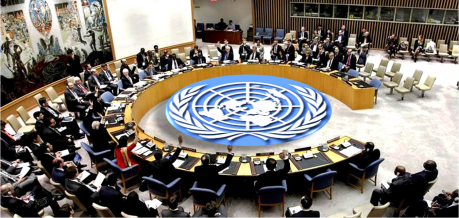
Until the UN Security Council finds the courage to speak the names of terrorists it has already recorded in its own ledgers, the world will continue to watch its marble halls and wonder whether the global watchdog has any bark left or only a convenient, selective silence – Rahul Pawa
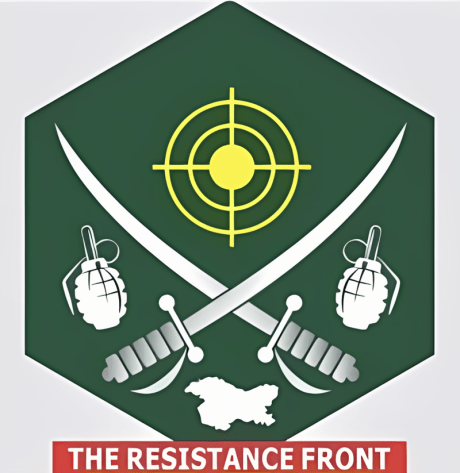
The smoke had hardly cleared from the pine-clad meadow of Baisaran when the United Nations Security Council issued its obligatory press communiqué. 26 holidaymakers, executed for being Hindus, lay dead in Pahalgam; dozens more were maimed. Yet the document that emerged from New York on April 25 read like an anodyne form letter: the Council “condemned in the strongest terms the terrorist attack in Jammu and Kashmir” and urged States to bring the faceless perpetrators to justice. Faceless, because the statement did not dare utter the name of the outfit that had already claimed the slaughter, The Resistance Front (TRF).
The capitulation worked like clockwork. Within hours of the Council’s whitewashed statement, TRF performed a carefully scripted pirouette: it declared its earlier claim of responsibility an “unauthorised message” uploaded by hackers and now blames Indian cyber-warriors for the confusion. Pakistan’s foreign-office spokesperson promptly echoed the farce, labelling the massacre a “false-flag operation”. Thus, a terror brand that the UN already recognises as an LeT proxy was allowed to vanish, as though global proscription were a theatrical costume that can be slipped on or off depending on the diplomatic weather.
The dissonance is astounding. On one page of the UN website, TRF’s parent organisation is condemned as an Al-Qaida collaborator that hosted bin Laden’s foot soldiers in Faisalabad safe houses. On another note, the same institution shrinks from acknowledging LeT’s own mouthpiece after it sprays automatic fire into picnicking families. The Council cites Resolution 2610—its flagship legal instrument against terror—yet flinches from naming a Resolution 2610 listee’s offspring. That is not merely bureaucratic inertia; it is moral self-harm. Every time the Council wilfully obscures the authors of carnage, it signals to victims that international law is performative rhetoric, not a shield.
China’s fingerprints are etched into this cycle of impunity. Beijing has wielded the “technical hold” like a stiletto to protect Islamabad’s proteges for over a decade—stalling Masood Azhar’s listing for four years, blocking Abdul Rauf Azhar, and, as recently as June 2024, vetoing the attempt by India and the United States to add 26/11 operations commander Sajid Mir.
Only when global opprobrium became unbearable did Beijing lift its block this January, allowing LeT deputy chief Abdul Rehman Makki to be blacklisted. The pattern is unmistakable: China protects Pakistan’s jihadi franchises until the political cost exceeds the strategic dividend, and the Council’s consensus rule gives it veto power over the entire sanctions architecture.
Apologists for this diplomatic horse-trading like to shrug that a press statement is “merely symbolic”. Exactly so—symbols are the marrow of counter-terror messaging. When the Council can call out the Balochistan Liberation Army’s Majeed Brigade for bombing the Jaffar Express inside Pakistan yet lapses into coy generalities after Pakistan-reared militants butcher Indian tourists, it advertises a hierarchy of victims. It signals to would-be attackers that equally proscribed organisations will face different levels of censure depending on whose blood is shed and which patrons occupy the veto chairs. Had the Council retained even a sliver of conscience, it would have appended three unassailable words, “The Resistance Front”, to its Pahalgam statement. Naming TRF would simply have reminded Islamabad of its Chapter VII obligation to prosecute, or extradite, the murderers it continues to shield.
The hypocrisy corrodes the credibility of multilateralism far beyond South Asia. How can the Council lecture Africa on sanctioning Islamic State offshoots in the Sahel or lambaste Kabul for harbouring Al-Qaida remnants when it chokes on the name of a group it has already blacklisted? How can it demand that smaller states prosecute terror financiers when permanent members indulge their clients’ proxies? The answer, whispered in chancery corridors from New Delhi to Nairobi, is that the Council has mutated from a guardian of collective security into a marketplace of vetoes where terror designations are bartered like commodities.
Condemnation alone will not resurrect the dead nor mend the limbs of the wounded. But naming the murderer is the first prerequisite of justice, and the United Nations, of all bodies, claims that mantle. When the Council flinches at a name it has already inscribed in the blacklist, it renounces the moral authority that underpins every resolution it passes, from Libya’s arms embargo to Haiti’s gang sanctions. The parents who packed their children onto ponies for a summer ride did not know the labyrinthine etiquette of press-statement negotiations, and they should not have had to. They were owed something better than a platitude stripped of accountability.
The crimson grass of Pahalgam now bears witness to two insults: the bullets of terrorists and the cowardice of a chamber that pretends not to know who pulled the trigger. Until the Security Council finds the courage to speak the names it has already recorded in its own ledgers, the world will continue to watch its marble halls and wonder whether the global watchdog has any bark left or only a convenient, selective silence. – Firstpost, 28 April 2025
› Rahul Pawa is an international criminal lawyer and director of research at New Delhi-based think tank Centre for Integrated and Holistic Studies.
Filed under: india, pakistan, kashmir | Tagged: hindumisia, pahalgam terror attack, political cowardice, the resistance front, united nations security council | 2 Comments »










 BHARATA BHARATI