














 “P-note is a financial instrument which enables a foreign entity not registered in India to invest ands trade in Indian equities and other securities. There are many versions of P-note; but the key aspect is that the instrument is designed specifically to maintain the holder’s anonymity. The investor is not asked to disclose source of funds and does not put the money into India. … The only category that still has use for P-notes is the hawala operators, transferring monies of you know who. They can use the P-Note route to channel money of their clients back into India. By asking the taxman to stay away from them, the finance minister has made life easier for persons with political exposure.” – Virendra Parekh
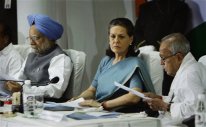 India, ruled de facto by an Italian, seems to be taking to the ways of Ancient Rome: Rex is Lex (the king is the law). Nothing else can explain the government’s decision to exempt Participatory Notes (P-notes) from tax, and its directive to Coal India to sign fuel supply agreements with power producers. At the very moment time when the UPA government is chasing tax money even from telephone bills, finance minister Pranab Mukherjee has declared that P-Notes will not be taxed.
After government in 1992 allowed foreign institutional investors (FIIs) to participate in the Indian equity market and later in debt, it found that there were multiples of other investors who were willing to invest here, but not keen to spend on the additional cost of setting up an office, a custodian bank relationship and so on, which a FII had to do. So, taking a leaf out of other markets, the government allowed the FIIs to issue participatory notes (P-Notes) to such entities.
P-note is a financial instrument which enables a foreign entity not registered in India to invest ands trade in Indian equities and other securities. There are many versions of P-note; but the key aspect is that the instrument is designed specifically to maintain the holder’s anonymity. The investor is not asked to disclose source of funds and does not put the money into India.
 The P-Note holder pays into the accounts of FIIs abroad in foreign currency. A registered FII buys Indian securities (rupee equity, bonds, or derivatives based on rupee assets) and issues him a P-note, based on those underlying instruments. When he wants to sell, on his behalf, the FII trades in shares in rupees in Indian stock markets, and credits the proceeds to his bank account abroad, which are settled through the internal books of the FII. So P-notes are traded by anonymous entities, with all capital gains (or losses), interest, dividends and so on passing to the anonymous holder.
FIIs report only net P-note exposure, so trade volume, cross-hedging, offsets and so on are all opaque to observers, including regulators and tax authorities. Because of the opacity and scope for mischief, regulators such as RBI or SEBI have never been fully comfortable with P-notes. There have been credible assertions that P-notes are employed for round-tripping hawala money back into India. They are also a convenient route for laundering funds from other dubious sources.
Every time there is any talk of regulating P-notes, FIIs threaten massive sell out on bourses and bond markets; and the government caves in. In October 2007, when capital market regulator SEBI issued directions for checking P-Notes, the market lost 1,400 points in two days, the largest intra-day fall till then. Since then, India has made it easier to ship money in and out of the country in foreign exchange and SEBI has hugely eased the rules for getting registered as a FII.
 But the resistance to taxation or regulation of P-notes continues unabated. Recently, when the finance ministry made strong noises about taxability, the volatility index of National Stock Exchange (colloquially known as fear index) shot up by 15 per cent. Then Mr. Mukherjee stepped in. Why? And for whose benefit?
In terms of principle, tax exemption to P-notes makes no sense. Vodafone is sought to be taxed on the principle that all income emerging from capital assets held in India will be taxable. This writer disagrees with government’s stand on Vodafone. But if the ministry sticks to its guns there, then its stand on P-Notes does not hold. If Vodafone has to pay tax on capital gains as it bought from Hutch shares representing Indian capital assets, then a P-Note that trades on similar Indian shares (which are claims on Indian assets) should also be subject to capital gains taxation.
Instead, Mr. Mukherjee has perpetuated the attraction of P-Note as a conduit for slush money for an indefinite period into the future through his blanket assurance. The use of P-notes is ruled out for investors in regulated markets such as US etc. where Financial Action Task Force (FATF) guidelines disallow any investor from concealing his identity when investing abroad. Tax havens too are making it difficult for investors in their banks from concealing their identity, so as to gain legitimacy.
 The only category that still has use for P-notes is the hawala operators, transferring monies of you know who. They can use the P-Note route to channel money of their clients back into India. By asking the tax-man to stay away from them, the finance minister has made life easier for persons with political exposure.
Equally brazen is the government’s directive to Coal India to sign 20-year fuel supply agreements, including penalty clauses, with power producers for plants commissioned after March 2009, even after its board decided against signing them. It shows how government policies remain trapped in the command and control mindset of the licence raj. And it also reveals the fickle nature of the autonomy of public sector companies.
The PMO directive followed a petition from power producers, including Ambanis and Tatas, who claimed that new projects commissioned since April 2009, with an aggregate capacity of 50,000 MW, have been running below capacity for want of coal supplies from CIL. They wanted firm supply commitments from Coal India for their plants.
Coal India’s directors were wary of making such commitments. Shortfalls in the guaranteed supply will attract penalties and bleed CIL, as the company estimates that its production will meet only half the coal for the power projects and the rest will have to be imported even when the steadily rising international coal prices make such imports very risky.
 This is precisely the kind of action that has prompted The Children’s Investment Fund, a UK-based organization and Coal India’s second largest shareholder, to threaten legal action against the government for its coal pricing policies.
Even more revealing of the government’s mindset is the audacious stance taken by coal minister Sriprakash Jaiswal. According to him, TCI should have known that India is a socialist country and has a large number of poor people, so PSUs like Coal India cannot be allowed to run on purely commercial lines.
We must presume that the government has a similar approach to PSUs like ONGC and IOC that lose around a lakh crore rupees each year due to oil subsidies. The approach is outdated and dangerous.
An obvious fallacy in Jaiswal’s argument is that kerosene subsidies paid for by ONGC do not get to the poor, and coal given cheap by CIL does not necessarily lead to lower power costs. More pertinently, if CIL (or ONGC) is listed on stock exchanges, surely this signals to investors that the company is going to be run on commercial lines? If all investors in PSUs have to know and accept that the government has the sovereign right to make the company do what it wants, what is the purpose of disinvestment?
 It is true CIL’s draft red herring prospectus listed the possibility of government intervention in pricing decisions as a risk factor, which most investors seem to have missed or taken lightly. It had also made it clear that “interests of the Government of India may be different from our (company) interests or the interests of our other shareholders. As a result, the GoI may take actions with respect to our business and the businesses of our peers and competitors that may not be in our or our other shareholders’ best interests”.
The government may win the TCI case for CIL by pointing out that the investors were warned in advance, but it will be a pyrrhic victory. It will spook away foreign (and domestic) investors like few things will at a time when India needs every dollar that comes its way.
It is amazing but true that all these shenanigans are taking place when the country’s external account has deteriorated alarmingly. The current account deficit for December 2011quarter was an unprecedented 4.3 per cent of GDP and may top 4 per cent for the year 2011-12. The capital receipts failed to fill the deficit on the current account and the RBI had to drawn down its forex reserves by a record 12.8 billion to meet the outflow of foreign exchange.
The government, it seems, could not care less. It exists for itself and its favourites. Let the country go to the dogs. – Vijayvaani, Mumbai, 13 Aoril 2012
» Virendra Parekh is Executive Editor, Corporate India, and lives in Mumbai
Filed under: india | Tagged: black money, budget, business, CIL, economics, economy, FDI, FII, foreign funds, foreign institutional investors, globalisation, government, hawala, india, nationalism, nehru-gandhi family, NSE, ONGC, PMO, politics, pranab mukherjee, PSU, SEBI, sonia gandhi, sriprakash jaiswal, tax, taxes | Leave a comment »











