











 According to British archaeologist Mortimer Wheeler, “There is her little Baluchi-style face with pouting lips and insolent look in the eye. She’s about 15-years-old I should think, not more, but she stands there with bangles all the way up her arm and nothing else on. A girl perfectly, for the moment, perfectly confident of herself and the world. There’s nothing like her, I think, in the world.” — Daily-O
 A new research paper published in Itihaas, the Hindi journal of Indian Council of Historical Research (ICHR), has said the famous statue of the “Dancing Girl” of Mohenjodaro from 2500 BC is actually the goddess Parvati, reports The Indian Express.
In the research paper called “Vedic Sabhyata Ka Puratatva” (Archaeology of Vedic Civilisation), retired professor Thakur Prasad Verma of Banaras Hindu University claims the Dancing Girl being Hindu goddess Parvati is evidence that the Harappan civilisation worshipped Shiva.
This claim that the Dancing Girl is Parvati has been made for the first time. Supriya Verma, historian and Jawaharlal Nehru University professor, told Express: “Till date, no archaeologist has ever interpreted the Dancing Girl as a goddess, let alone Parvati. This particular artefact has always been seen as the sculpture of a young girl.”
The small, barely 10.5cm tall, bronze statue is estimated to be around 4,500 years old and has fascinated archaeologists and historians ever since she was found in Mohenjodaro in 1926.
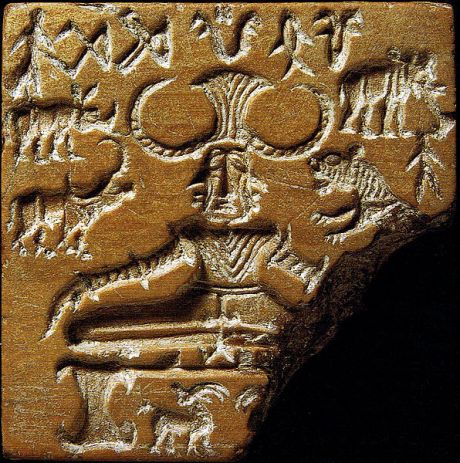
Verma claimed that several artefacts have been found among the ruins of the civilisation that prove that its citizens worshipped Shiva, among them “Seal 420”. The seal shows a horned figure sitting in a yogic posture surrounded by animals. While some historians support this theory, others have contended that the seal shows a woman, not a man.
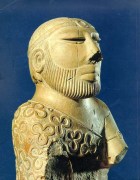 He adds that the trefoil pattern on the shawl of the “Priest King” sculpture, also excavated from the region, was evidence of Shiva worship because the pattern, according to him, is like the “vilva” or “bilva” leaves that are used to worship the Hindu god.
The article was published in Itihaas’s first edition since Y. S. Rao’s took over as ICHR chairman.
A controversy had generated when Rao was appointed the ICHR head in 2014 by the BJP-led government. Several historians had questioned Rao’s credentials for the post. They were concerned that they had appointed a little known historian to head the Indian Council of Historical Research.
Eminent historian Romila Thapar says Rao’s research is little visible and the articles authored by him on the historicity of Indian epics have not been published in any peer-reviewed journals.
Before taking over as ICHR chief, Rao was working on a project to “fix” the date of the Mahabharata war. He had invalidated the argument of historians like D. D. Kosambi that the Ramayana and Mahabharata have different versions added to them over almost a 1,000 years.
Ten things to know about ‘Dancing Girl’
1) According to PTI Islamabad, a Pakistani lawyer has filed a petition in the Lahore High Court asking his government to bring back “Dancing Girl”, a 5,000-year-old bronze statue so-called, from India.
2) This 10.8cm long bronze statue was found in 1926 from a broken down house on the “ninth lane” in Mohenjo-Daro, Pakistan. It was found by excavator D. R. Sahni during the 1926-1927 field season.
3) The “Dancing Girl” is a free-standing bronze figurine, with about 25 bangles on her left arm, and holding a small bowl in her right hand. She has a relatively short trunk and long legs and arms; her head is tilted slightly back and her left leg is bent at the knee. Her right arm is bent, with her hand placed on the back of her hip, that hand apparently clenched around an object, perhaps a baton, which is now missing. She wears a necklace with three large pendants, but is otherwise naked.
4) Experts have it that the “lost wax” method used by the metallurgist involved carving the sculpture out of wax, then covering it in wet clay. Once the clay was dried, holes were bored into the mould and the mouldwas heated, melting the wax. The empty mold was then filled with a melted mixture of copper and tin. After that cooled, the mould was broken, revealing the lady.
5) According to National Museum of India website, “The statue is suggestive of two major breakthroughs. One, that the Indus artists knew metal blending and casting and perhaps other technical aspects of metallurgy, and two, that a well-developed society Indus people had innovated dance and other performing arts as modes of entertainment”.
 6) According to British archaeologist Mortimer Wheeler, “There is her little Baluchi-style face with pouting lips and insolent look in the eye. She’s about 15-years-old I should think, not more, but she stands there with bangles all the way up her arm and nothing else on. A girl perfectly, for the moment, perfectly confident of herself and the world. There’s nothing like her, I think, in the world.”
7) Petitioner Javed Iqbal Jaffrey claimed that the statue is the property of the Lahore Museum. “It was taken to India around 60 years ago at the request of the National Arts Council, Delhi, and was never brought back,” a report in Dawn said.
8) On October 10, he called for a suo motu action by the court.
9) He contended the 5,000-year-old statue enjoyed the same historical importance in Pakistan as Mona Lisa in Europe.
10) Jamal Shah, director general of the Pakistan National Museum of Arts, in a statement said a letter would be written to the United Nations Educational, Scientific and Cultural Organisation (UNESCO) to bring the statue back. – Daily-O, 11 October 2016 & 26 December 2016
» Praveen Shekhar is an associate producer for TV Today Network.
Filed under: india | Tagged: archaeology, dancing girl statuette, goddess parvati, history, ICHR, india, indian civilisation, indus valley civilisation, mohenjo-daro, mohenjodaro | Leave a comment »