











 “China today has moved far ahead of us, militarily and economically. It’s recent decision to depict the South China Sea, together with Arunachal Pradesh and parts of Ladakh as Chinese territory in maps on Chinese passports has to be seen in the light of growing Chinese readiness to use force to enforce territorial claims.” – Prof. G. Parthasarathy
 In an age of “breaking news” and live television news coverage, public memory of past events is inevitably short. Who after all remembers, or is still outraged, by the corruption and mismanagement that characterised the conduct of the Commonwealth Games just over a year ago? Even worse, scandals have sadly come to public attention since then. Is there still institutional memory of the horrendous bomb blasts in Mumbai in 1993, when over 250 innocent people lost their lives? In these circumstances, it has been very heartening that as we mark the 50th anniversary of the national humiliation we faced in October/November 1962, when Chinese forces overran large portions of our territory, there have been wide-ranging national discussions and media focus on what really happened and what are the lessons we need to learn from the conflict of 1962.
 The broad conclusion which emerged from these discussions was that newly independent and overly idealistic India had bungled badly in the key areas diplomacy, defence preparedness and in intelligence gathering. Sardar Patel had sounded the alarm bells about the serious security implications of the new reality of a physical Chinese occupation of Tibet in 1950. Prime Minister Jawaharlal Nehru ignored this warning and surrendered all India’s rights in Tibet unilaterally, without even insisting that the Chinese should first reach agreement with us about the precise definition, delineation and demarcation of the border between India and Tibet. What followed was a steady Chinese ingress into areas which were hitherto regarded as Indian territory. When alarm bells rang throughout India, we adopted a “forward policy” of deploying troops in forward outposts with little or no logistical and material support. What followed was a superbly timed and planned Chinese attack which overran ill-equipped and ill-prepared Indian troops. Internationally, the Chinese moved even more skilfully and ensured that neither the US nor the Soviet Union backed us.
 China today has moved far ahead of us, militarily and economically. It’s recent decision to depict the South China Sea, together with Arunachal Pradesh and parts of Ladakh as Chinese territory in maps on Chinese passports has to be seen in the light of growing Chinese readiness to use force to enforce territorial claims. China has already seized territories claimed by the Philippines and Vietnam and is threatening Japan’s presence on disputed islands. With jingoistic propaganda, together with a military build-up, coercion is being used by the Chinese Communist Party leadership to assert territorial claims. It is evident that China is in no mood to show any flexibility on its territorial claims along the Sino-Indian border. As Chinese passports are generally valid for 10 years, there can logically be no change in its territorial claims in this period.
 India’s reaction to these developments has been surprising. While brushing aside the implications of these Chinese actions, National Security Adviser Shivshankar Menon voices optimism that “we are in the process of agreeing on a framework to settle the boundary”. More astonishingly, Army Chief General Bikram Singh describes bilateral ties with China as “absolutely perfect” and adds that mechanisms were now in place to solve any issues between the two countries. All this is taking place when there have been reports that because of the growing budget deficit, the government has been compelled to go slow in equipping the armed forces with crucial weapons and equipment. Moves to establish strike formations on the China border and improve border infrastructure are also reportedly not moving ahead as expeditiously as envisaged.
 Diplomatically, we seem averse to providing countries like Vietnam and Philippines with weapons like the Brahmos cruise missile to enable them to deter Chinese adventurism, or strongly insisting on respect for the UN Convention on the Law of the Sea. We may soon find that we have no friends to support us in our neighbourhood, as we did in 1962. Are we fated to repeat the mistakes of 1962?
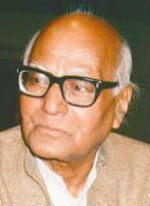
» Prof. G. Parthasarathy is presently Visiting Professor in the Centre for Policy Research in New Delhi. He is also a Senior Fellow and the Centre for Strategic and International Studies and a member of the Executive Committee of the Centre for Air Power Studies in New Delhi. Contact him at dadpartha@gmail.com
Filed under: india, pakistan | Tagged: aksai chin, arunachal pradesh, bikram singh, brahmos cruise missle, chinese passports, hegemony, india, indian army, indian politics, indo-china border, indo-china border map, indo-china relations, indo-china war 1962, jawaharlal nehru, kashmir, militaristic, pakistan, politics, sardar patel, shivshankar menon, south china sea, spying | Leave a comment »