









While the Islamic regime of Iran, with the Ayatollah as its head, never outwardly supported India, lakhs of Indian Muslims mourned the death of a tyrant who not only imposed inhuman laws on the women of his country but massacred people left, right, and centre, particularly those who opposed his tyrannical rule. – Dr Chandni Sengupta
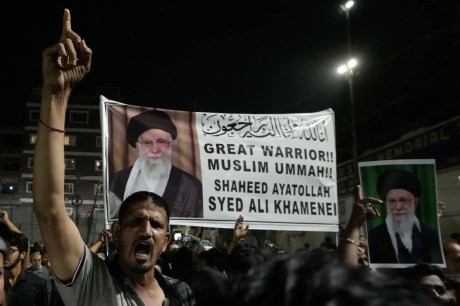
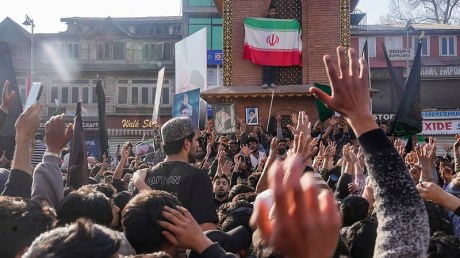
The seemingly “organic” outrage and protests in various states and union territories across India, including Jammu and Kashmir, Uttar Pradesh, Madhya Pradesh, Rajasthan, Bihar, Jharkhand, Telangana, Karnataka, Delhi and even Punjab with a minuscule Muslim population, following the assassination of Iran’s dictatorial supreme leader, Ayatollah Ali Khamenei, on 28 February 2026, are emblematic of a deep-rooted malaise—one which everyone needs to sit up and take note of. The colossal meltdown in the Islamo-Marxist camp, especially on social media and news channels, is both cringe-worthy and laughable.
It is, therefore, critical to examine a few significant questions: Why are Muslims across India, particularly the Shias, enraged at the killing of the leader of a fanatic regime almost 2,000 miles away from their homeland? Why do Muslims not protest or even as much as grieve the death of an Indian leader or innocent civilians killed in terror attacks in India—the country of their birth, and the one whose passport they flaunt while on pilgrimages to their holy land? Lastly, why are the champions of democracy, feminism, and secularism—anarchists disguised as activists, journalists, and academics—thumping their chests at the death of a murderous, tyrannical, fanatical religious leader whose diktats were far removed from every Western notion of secularism and feminism they hold dear?
The answer to the first question perhaps lies in the fact that Ayatollah Ali Khamenei—referred to as Rehbar or Spiritual Guide by his followers—was considered the supreme religious leader by Shias across the globe, and his assassination came as a shock for the Shia community in India as well. While reverence and respect are personal matters, the violent display of emotion through protests, marches, and collective prayers appears grotesque and over the top. So much so that some protestors, including children barely in their early teens, blamed PM Modi for the US-Israel attack on Iran and the consequent elimination of Khamenei.
The video of a child pointing fingers at PM Modi for the assassination of Khamenei went viral on X. The child seemed disturbingly outraged at the death of his “leader”, who had, for him, been killed at the behest of PM Modi—and what evidence did the boy have to substantiate his bizarre claims? The recent visit of the prime minister to Israel, which concluded on 26 February, two days before the US-Iran attack on Israel!
The boy did not stop at making false claims. When asked how he would react if something untoward happened to the prime minister of India—ostensibly his own country—his answer was even more shocking: “I have nothing to do with him,” he said. Another chest-thumping protestor cried inconsolably as the reporter asked him to share his thoughts. “We have lost our father,” he claimed.
Women and children were not left behind. Young girls in their teens, some even younger, clothed in black burqas and chadors, held placards and chanted the name of their Rehbar, as their mothers and aunts vocally expressed their desire to produce sons who could die for the protection of Iran’s Islamic regime in a war against the Yehudis (Jews) and America. One burqa-clad girl proudly proclaimed: “We don’t care about India. We are Irani but live in India.”
Expectedly, the Congress tried to impute that PM Narendra Modi had a hand in the ongoing war in West Asia merely because of his visit to Israel and his commitment to building a strong partnership with one of our most trusted allies.
Israel has been India’s strategic partner for decades, with relations between the two countries extending beyond trade to include intelligence-sharing, research collaborations, cultural exchange, tourism, and people-to-people contact. Israel has been one of the first countries to vocally condemn all acts of terror on Indian soil. Iran, on the other hand, has been simply a useful trade partner for India but, at the same time, a firm ally of Pakistan. To illustrate, never has Iran supported India’s stand on Kashmir.
After the 26/11 attacks, Iran officially declared that Pakistan was not behind the attacks but a real “victim” of terror. In 2017, Ali Khamenei urged all Islamic nations to support the “oppressed” Muslims of Kashmir. After the abrogation of Article 370 in 2019, the Iranian foreign minister Javad Zarif expressed his concern over the “deteriorating human rights situation in Kashmir”, thereby towing Pakistan’s line. Furthermore, during the 2020 Delhi riots, the deceased Ali Khamenei expressed his “concern” over the supposed “massacre” of Muslims in India in his post on X, dated 5 March 2020. These are hardly friendly statements.
While the Islamic regime of Iran, with the Ayatollah as its head, never outwardly supported India, lakhs of Indian Muslims mourned the death of a tyrant who not only imposed inhuman laws on the women of his country but massacred people left, right, and centre, particularly those who opposed his tyrannical rule.
Interestingly, these very protestors, for whom Ali Khamenei is dearer than their own prime minister, cry hoarse when questioned about their loyalty to their country and quote Rahat Indori’s crude and questionable line: “Sabhi ka khoon hai shaamil yahan ki mitti mein, kisi ke baap ka Hindustan thodi hai.” If this be the case, why do Muslims not protest at the passing of an Indian leader or the brutal killing of civilians in terror attacks sponsored and perpetrated by Pakistan?
The answer to this question can be sought in the views espoused by Vinayak Damodar Savarkar, who had rightly pointed out several decades ago that communities who do not consider Bharat to be both their Pitribhumi (Fatherland) and Punyabhumi (Holy Land) can never be completely and unflinchingly loyal to the nation. Savarkar, much derided for his patriotism by the Nehru-Gandhi clan and their followers, had correctly envisioned the state of a nation with a sizeable population of those who can never be loyal to their country because their hearts evidently beat for religious sites, leaders, and preachers miles away from where they were born, live, and perhaps will die.
A notable example of Indian Muslims mourning the death of a Muslim political leader was when Benazir Bhutto, the former prime minister of Pakistan, was assassinated on 27 December 2007. Benazir Bhutto was a former Pakistani prime minister and the daughter of Zulfiqar Ali Bhutto, who developed a strategic military doctrine for Pakistan, at the heart of which was the desire to “bleed India with a thousand cuts”. Muslims wailed in mourning across India at Benazir’s assassination. Why?
By contrast, when members of the Pakistani terror outfit Harkat-ul-Mujahideen, trained by the Pakistani army and aided and abetted by the ISI, hijacked the IC-814 Indian Airlines flight from Kathmandu to Delhi on 24 December 1999, with 191 passengers on board, no Indian Muslims protested. There was no outrage on the streets of state capitals following the 26/11 attacks in 2008 or the brutal killing of 40 CRPF personnel in Pulwama on 14 February 2019; no marches and placard-toting after the gunning down of 26 innocent civilians in Pahalgam on 22 April 2025; and absolute silence after the blast near the Red Fort that shook Delhi on 10 November 2025. When have Indian Muslims come out in such large numbers and condemned an act of terror? Their hearts do, however, bleed for Bhutto, Khamenei, and their ilk.
A close analysis of the thoughts and writings of those bemoaning the death of Khamenei leads to only one conclusion: they are no champions of democracy, secularism, or feminism; they are Islamo-Marxists, Hindu-haters who can go to any extent to peddle false narratives against the BJP government, even if it means siding with a tyrant who, according to some sources, ordered the killing of 32,000 Iranian protestors who participated in the protests that rocked Iran in December 2025-January 2026.
Those who are wailing at the death of the Ayatollah, those who have never shed a single tear for their fellow Indians, as well as those who are questioning the position of the Indian government, stand thoroughly exposed. While the final outcome of the ongoing war remains shrouded in mystery, the attack on Iran and the death of Khamenei have once again, and without an iota of doubt, revealed the true faces of those who stand with India and those who do not. – News18, 3 March 2026
› Dr Chandni Sengupta is Assistant Professor of History at Sri Aurobindo College, University of Delhi.
Filed under: india, iran, USA, world | Tagged: 2026 US-israel-iran war, ali khamenei, islamo-marxists, muslim protest, muslims in india | Comments Off on War in West Asia has exposed anti-nationals in India – Chandni Sengupta




 BHARATA BHARATI