

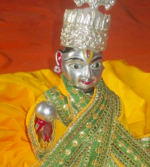














From ancient sciences to everyday essentials, let’s find 10 fascinating inventions that trace their roots to India showcasing the nation’s rich legacy of innovation and creativity. – Vinay Prasad Sharma
1. Chess
The game of chess (chaturanga) was born in India during the Gupta dynasty in the 6th century. Today, over 1500 years later, it is played in 172 countries. This game is one of India’s contribution to world culture, with games played in the court of kings, to those played in villages, and now, is a professional sport.
2. Shampoo
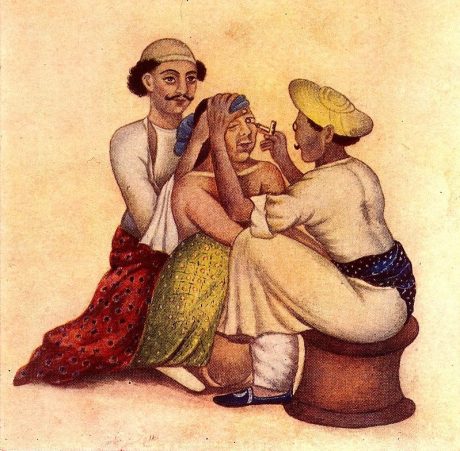
Shampoo originated in the Indian practice of using herbal hair cleansers and head massages (champi) centuries ago, with the word and practice introduced to the West in the early 1800s. The first commercial shampoos emerged around 1814 in Britain by Sake Dean Mahomed, an Indian entrepreneur, but the powdered form was developed in 1903 by Hans Schwarzkopf, who also launched the first liquid shampoo in 1927.
3. Ayurveda
Ayurveda was developed over thousands of years, with its origins tracing back to ancient Indian traditions and the Vedic period, around the middle of the first millennium BCE.
4. Fibonacci Numbers
The Fibonacci sequence was first described by the ancient Indian mathematician Pingala around 200 BC in his work on Sanskrit poetry. It was later introduced to the Western world by the Italian mathematician Leonardo of Pisa, also known as Fibonacci, in his 1202 book Liber Abaci.
5. Quadratic System, Decimal System
The decimal system is one of the most crucial advancements in mathematics. The earliest evidence of the decimal system can be found in the ancient India around the 3rd century BCE. In addition, Quadratic equations, involving squared (ax² + bx + c = 0), were extensively studied by ancient Indian mathematicians. The earliest known solutions to quadratic equations traces back to the Sulba Sutras (circa 800 BCE), which were composed during the Vedic period.
6. Cataract Surgery
Cataract surgery traces back from the ancient Indian technique of couching (around the 6th century BC) to extracapsular extraction performed by Jacques Daviel in 1747, and was further modernised with the invention of phacoemulsification by Charles Kelman in 1967 and the development of intraocular lenses (IOLs) in the mid-20th century.
7. Diamond Mining
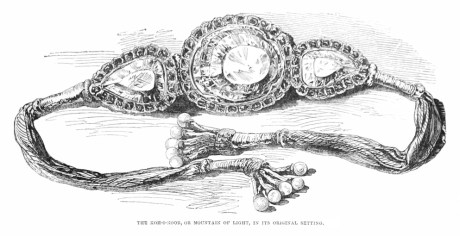
Diamond mining was originated in India between 800 BCE and the 4th century BCE, when humans began collecting and trading diamonds found along riverbeds and in stream beds. The double diamond drill technique was also in use in western India prior to 600 BCE.
8. Radio and Wireless Communication
It was first invented by Sir Jagadish Chandra Bose. In November 1895, he demonstrated the transmission of electromagnetic waves at Calcutta’s Town Hall by ringing a bell and igniting gunpowder from 75 feet away, even through walls. He is regarded as the father of wireless telecommunication, having invented the Mercury Coherer, a radio wave receiver later used by Guglielmo Marconi to develop the first functional two-way radio, as per India Today report.
9. Binary Code
A form of binary system was first described by the ancient Indian mathematician Pingala around 200 BCE in his work Chhandahshastra, which analyzed poetic meters using short (laghu) and long (guru) syllables, a concept analogous to binary 0s and 1s.
10. Fibre Optics
Dr. Narinder Singh Kapany is widely recognised as the ‘Father of Fibre Optics’. He created such technology that assists in transfer and sharing of data. Today we could use internet with super speed all because of fibre optics. It help in transmitting data, voice, and images by the passage of light through thin, transparent fibres. – WION, 7 September 2025
› Vinay Prasad Sharma is a Delhi-based journalist currently working as a Sub-Editor at WION.

Filed under: india | Tagged: hindu civilisation, indian history, indian inventions, indian mathematics, indian scientists | Comments Off on Ten incredible inventions India gave the world – Vinay Prasad Sharma








 BHARATA BHARATI