














 Hinduism is not merely Pagan, not merely “polytheistic”, and not monotheistic either, despite its insistence on tad ekam (“that One”) or tat satyam (“that Truth”), a single all-pervasive divinity which later became the Brahman and has nothing in common with the biblical god. – Prof Michel Danino
Previous articles in this series focused on India’s sacred geography, sacred ecology and the rich interactions between “tribal” and “mainstream” cultures. Why bother about all that when so little of it is apparently relevant to our “official” definition of today’s India? The “apparently” can be disputed: the country’s many sacred geographical landmarks, for instance, remain of great cultural importance to a large proportion of Indians, though they may not have the privilege of belonging to our urbanised, Anglicised and secularised elites. But there is a compelling reason to revisit those traditions: They help us to define Hinduism. Again, why bother to do so? Because, whether we like it or not, Hinduism has been a major historical component in the making of India, and its definition remains at the centre of some of today’s hottest controversies.
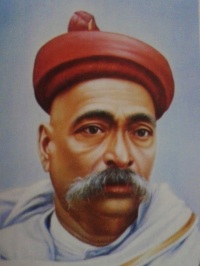 Defining Hinduism has been an exercise perhaps as unsuccessful as the ancients’ attempt to square the circle. It is reasonably easy to define Judaism, Christianity or Islam: An article of faith in their single book, founder or prophet will do. There is no single book in Hinduism, no founder, no prophet; it has no set of well-defined tenets either. What would then be its anchorage points and boundaries? The nationalist leader Bal Gangadhar Tilak once attempted a definition: “Acceptance of the Vedas with reverence; recognition of the fact that the means or ways to salvation are diverse; and the realisation of the truth that the number of Gods to be worshipped is large, that indeed is the distinguishing feature of Hindu religion.” When, in 1995, the Supreme Court rejected the Ramakrishna Mission’s plea to recognise “Sri Ramakrishna-ism” as a religion distinct from Hinduism, it found Tilak’s definition an “adequate and satisfactory formula” and broadened it thus (I abridge): (1) Acceptance of the Vedas as the highest authority; (2) Spirit of tolerance and willingness to understand the opponent’s viewpoint, as the truth is many-sided; (3) Acceptance of the great world rhythm of creation, maintenance and dissolution in endless succession; (4) Belief in rebirth and pre-existence; (5) Recognition that the ways to salvation are many; (6) Worship of many gods, but not necessarily in the form of idols; (7) No single definite set of philosophic concepts. Although this definition reads more like a loose compilation, it may satisfy most practising Hindus, provided “Vedas” is taken in an extended sense to include the Upanishads and a few more texts.
The Supreme Court’s definition omitted one feature: A stubborn attempt to sacralise every aspect of life, the environment and indeed the universe. This is closely related to Hinduism’s well-known assimilative and syncretic behaviour, but it is not unique to Hinduism: It is shared with Pagan religions (those of Native Americans, for instance) and stands in stark contrast to our imported, feckless and disembodied concept of secularism. However, Hinduism is not merely Pagan, not merely “polytheistic”, and not monotheistic either, despite its insistence on tad ekam (“that One”) or tat satyam (“that Truth”), a single all-pervasive divinity which later became the Brahman and has nothing in common with the biblical god.
The above is a theological definition. Curiously, there is no legal definition of Hinduism; the Hindu Marriage Act defines a Hindu as anyone born of Hindu parents or converted to Hinduism, which is no definition at all (especially when there is no procedure for “conversion”). The Constitution does not help, providing only an “explanation” (to article 25(2)(b)) that an earlier reference to “Hindus” will extend to “persons professing the Sikh, Jaina or Buddhist religion”.
Historical definitions prove tricky: Interpretations fluidly range from locating the roots of Hinduism in the Indus civilisation or in the Gupta Age to arguing that Hinduism did not exist until it was “constructed” or “imagined” by nineteenth-century European Orientalists and Christian missionaries—a view elaborated by several postmodern Western scholars and their Indian followers, who speak of the “myth” or “invention” of Hinduism. But while the European impact on Hinduism’s self-definition is undeniable, it cannot erase a millennia-long historical evolution and the centrality of texts like the Upanishads, the Gita, the two Epics or the Puranas, all of which occupied the public mind some 1,500 years ago.
This leads us to an anthropological definition: Starting from its Vedic roots and growing endless ramifications, an organic Hinduism accepts no Lakshman Rekha as its outer boundary. From that perspective, it may be defined as the result of the meeting ground between central Vedic and Puranic concepts and texts on the one hand, and folk and tribal worldviews and cults on the other. Some of our scholars, activists and politicians will take objection at this point, pursuing the colonial dogma that tribal religions have nothing to do with Hinduism (see “Mainstream and Marginal in Ancient India”), which they usually define as an elitist “Brahminical” religion, at least in its origins. But caste is almost completely absent from the Vedas; the Upanishads extol seekers like Satyakama Jabala, of unknown father and whose mother was a servant; the two Epics pointedly stress Vyasa’s and Valmiki’s non-Brahmin origins and tell stories of proud Brahmins being humbled and taught by outcastes. More importantly, scholars have shown how folk elements have been absorbed right from the Vedas onward: Its core is partly Brahminical and partly not, while its peripheries are delightfully blurred.
While we carry colonial legacies of imagined adivasis with “non-Hindu” cultures, we will do well to remember that Hinduism is a continuum in time, in space and in belief systems. Once again, categories emerging from post-Pagan Western religions and societies do not apply, yet remain the dominant criteria in the academic world and in our public debates. – The New Indian Express, 8 March 2017
» Prof Danino teaches at IIT Gandhinagar and is a member of the Indian Council of Historical Research. Email: micheldanino@gmail.com

Filed under: india | Tagged: hindu, hinduism, india, monism, pagan, polytheism, sanatana dharma | 3 Comments »











