














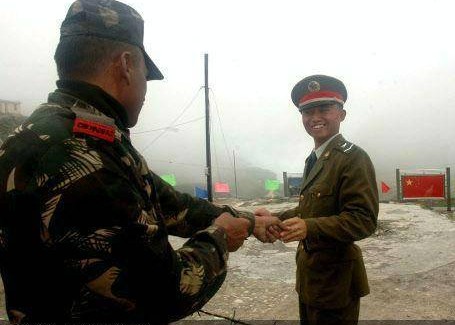
 If China decides to play an aggressive border game, India could easily point out that Eastern Turkestan (now Xinjiang) was militarily annexed by the Peoples’ Republic of China in October-December 1949 and Tibet was occupied in 1950. – Claude Arpi
In the months to come, the 4,056-km long India-China border will be in the news, probably for the wrong reasons. Despite the “Chennai Connect” in October between Prime Minister Narendra Modi and Chinese President Xi Jinping at Mamallapuram, Beijing continues its aggressive stance on Ladakh. The formation of two Union Territories— &K and Ladakh—seems to have irritated Beijing.
A sore point for China
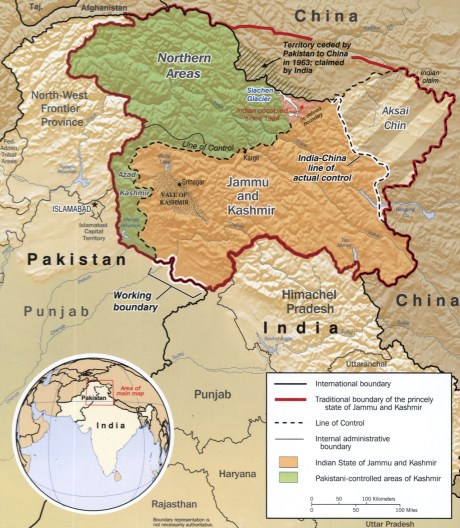
“China deplores and firmly opposes this. This is unlawful and void and this is not effective in any way and will not change the fact that the area is under Chinese actual control,” Geng Shuang, a spokesman of China’s Ministry of Foreign Affairs told the media. He urged India to “earnestly respect Chinese territorial sovereignty and uphold peace and tranquillity in the border areas”.
“We do not expect other countries, including China, to comment on matters that are internal to India, just as India refrains from commenting on the internal issues of other countries,” said India’s ministry for external affairs spokesman. He requested China to stick to the “Political Parameters and Guiding Principles” jointly agreed by the two sides to proceed on the border issue in 2005. He also pointed out that China “illegally” acquired Indian territories from Pakistan-occupied-Kashmir through a China-Pakistan Boundary Agreement of 1963, referring to the Shaksgam Valley.
If China decides to play this game, India could easily point out that Eastern Turkestan (now Xinjiang) was militarily annexed by the Peoples’ Republic of China in October-December 1949 and Tibet was occupied a year later. In the present context, it is vital for India to develop its northern borders—open new roads, provide better telecom facilities, decent health services and education infrastructure for locals, who have already started migrating. A way to stop the hemorrhage is sustainable tourism. Arunachal Pradesh CM Pema Khandu created a stir on Twitter when he was seen riding a buggy, near the Tibet border, north of Tawang to promote tourism. Union minister of state for youth affairs and sports, Kiren Rijiju, accompanied Khandu as they rode an ATV Polaris for a distance of 107 km from PT Tso (also known as Madhuri Lake) to the remote village of Mago. The roads are slowly coming up but infrastructure development remains far slower than in Tibet. India is finally taking measures to tackle the problem from Ladakh to Arunachal.
Thanks to a “dual use” approach, China has done remarkably well to develop its side of the borders—for example, every piece of infrastructure can be used to accommodate tourists (last year, some 7 million visited Nyingchi, the prefecture bordering Arunachal Pradesh) or by the People’s Liberation Army, when required.
Boost border growth
“Sharing a 25-km border with Bhutan where the average altitude tops 5,300m above sea level, Puma Changthang is known as the world’s highest township,” according to an article in China Daily which added that 133 villagers from 29 households had been resettled at Puma Changthang. This was aimed at making these border areas prosper, according to the article, and some 200 such model villages are said to have been built close to India’s border over the past three years.
In India, despite efforts, everything moves slowly. Defence minister Rajnath Singh recently inaugurated the strategically located Col Chewang Rinchen Setu, a bridge built over River Shyok, connecting Durbuk and Daulat Beg Oldie in eastern Ladakh.
He reiterated: “The government’s unwavering commitment to bolster border infrastructure to effectively deal with any threats that undermine the peace and tranquillity in the country.” He also announced the opening of the Siachen glacier base camp for tourism. The government has recently approved the construction of 18 border tracks along the border. Union minister of state for home affairs Kishan Reddy called it a critical infrastructure to enhance the capability of the Indo-Tibetan Border Police (ITBP).
Spruce up Arunachal
Sadly, this is far from enough. While being firm with China and getting ready for the worse, new ways to diffuse the tensions have been tried. For example, India and China will have “coordinated patrols” in disputed areas along the Line of Actual Control, such as the Fishtail 1 & 2 in Arunachal Pradesh.
“India made the proposal for coordinated patrolling at a high-level meeting between the Indian Army and the PLA in June,” an Indian English daily reported. Another factor is to look after the border populations. The residents of 10 villages of Upper Siang (Arunachal Pradesh) have recently decided not to claim compensation for their land for the construction of a road to improve the connectivity to the border, showing their keenness to be integrated.
This will greatly help the construction of a proposed 150 km-long Yingkiong-Bishing two-lane highway; Bishing, the last Indian village near the McMahon Line, is home to around 100 people from the Memba tribe. In many ways, India still lives under the British Raj. The most blatant example is the Inner Line Permit system in Arunachal Pradesh which still hampers the state’s development. It is difficult to understand that while the world speaks of artificial intelligence and facial recognition, India can’t find a better way to monitor unwanted elements on the borders. In the meantime, China will continue to put pressure. – Daily-O, 11 november 2019
› Claude Arpi is French-born author, journalist, historian and tibetologist. He is the director of the Pavilion of Tibetan Culture at Auroville, Tamil Nadu.
See also
Filed under: china, india | Tagged: border development, india-china border dispute, india-china relations, mcmahon line | Comments Off on The threat on India’s northern borders – Claude Arpi











