












 Cannabis has enormous medical value. It is used to alleviate nausea and pain in cancer victims and amputees, for instance. It is also among the least harmful of recreational drugs. – Devangshu Datta
In the past decade, there’s been a sea change with respect to the global attitude to cannabis. Its use has been legalised in some form or another across most of the US, many EU nations, Argentina, Mexico, Canada, Brazil, Switzerland, Australia, New Zealand, Turkey, South Africa, and South Korea.
India, however, is completely out of step with this global trend, as the use of cannabis—both medical and recreational—remains illegal in the country.
Globally, these bans have been rescinded as nations have realised two things: First, bans didn’t work over a period of many decades. Since cannabis is easy to grow and process, bans only led to the creation of a large criminal industry that smuggled and distributed the drug, with police forces, customs services, etc. being corrupted into the bargain and large numbers of people being thrown into jail for personal use. Second, cannabis has enormous medical value. It is used to alleviate nausea and pain in cancer victims and amputees, for instance. It is also among the least harmful of recreational drugs.
Cannabis has become a legal, tax-paying, multi-billion industry with listed companies traded on the US and Canadian stock exchanges. The global market for legal cannabis is expected to reach $145 billion by 2025 with double-digit growth rates projected.
Legalisation has been a win-win for both industry and governments. As legal access to cannabis has increased, ancillary crime associated with the trade has fallen. Growers and distributors have become tax-payers. Medical and bioscience research into the plant’s potential uses has increased. Secondary and tertiary employment has been generated by marketing and branding of both recreational and medical cannabis, complete with the sale of accessories.
Why India
India, too, could quickly become a major player if it entered the global cannabis industry. This would work on many levels.
India has suffered an agrarian crisis for the past three years. Low produce prices and drought conditions in several regions have led to widespread distress, triggering suicides, and demonstrations by farmers. This has also led to lack of rural demand, which has affected other industries as well. Cannabis production could provide a large new revenue stream, including export earnings.
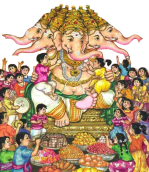
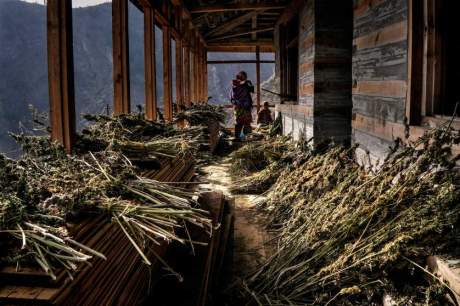
The expertise to rapidly scale up cannabis production, process, and market it with appropriate branding already exists. Ganja, charas, and bhang (three chemically similar substances derived from the same family of plants, Cannabis sativa and Cannabis indica) have been used in religious ceremonies across India for millennia. The plants grow wild across the entire country.
Until the 1980s, these used to be freely available; indeed they were sold from government shops. (Bhang still is, in certain states). However, in the 1980s, these were banned under the Narcotic Drugs and Psychotropic Substances Act, 1985. The 1980s ban was imposed under diplomatic pressure from western countries, including the US.
Desi strengths
What are India’s advantages in entering the cannabis trade? Apart from suitable soil and climate, India already has a “branding moat.” Ganja and bhang have strong global recall and mental association with India’s cultural traditions—that’s why India is a favoured destination on the [youth tourist] trail.
India already has unofficial geographical indicator trademarks for ganja and charas. Specific districts in states like Kerala, Manipur, Himachal Pradesh for instance, are famous the world-over for the quality of the local produce. Much like Darjeeling tea or champagne, cannabis from Manali, Malana, Manikaran and Idukki are names to conjure with, globally. Officially locking in branding with regional indicators could give India a big edge. The medical and bioscience research expertise also exists to develop new medical prescription drugs.
Legalising cannabis could create a new cash-crop with a revenue stream that has multi-billion dollar export potential. This could help to pull the agrarian economy out of the doldrums and generate employment for thousands of farmers. – Quartz India, 31 May 2019
» Devangshu Datta is a columnist and contributor to Quartz India in New Delhi.
Filed under: india | Tagged: cannabis, cannabis legalisation, charas, ganja, hashish, marijuana | 1 Comment »