














 “A major national daily earlier this month hinted a tectonic shift was underway as the interlocutors may recommend that barring defence, foreign affairs, and communications, J&K should be exempt from Central oversight in all matters.” – Sandhya Jain
 Several events have conspired to create apprehensions about the report the Union Home Ministry-appointed interlocutors will submit regarding Jammu and Kashmir. As some dangerous formulations can be argued to fall within the purview of the constitution, and the valley is excited over the recent ‘private’ visit of a former executive of Occupied Kashmir (whom chief minister Omar Abdullah reputedly addressed as ‘former prime minister of Azad Kashmir’), the nationalist anxiety is legitimate.
But even the arrogant Omar Abdullah must have been taken aback when the ‘guest’ blurted, “I do not recognize mainstream politicians like Chief Minister Omar Abdullah as elected representatives of the people of Kashmir… Officially Pakistan and PoK Governments does not recognize Jammu and Kashmir Government and the election process. But Omar Abdullah and other leaders of the mainstream political parties are no doubt stakeholders…”
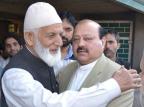 What was the UPA thinking of, granting this man a visa? Though barrister Sultan Mehmood Choudhary (Pakistan People’s Party) visited Srinagar to attend a wedding, the timing of his visit was unfortunate. Exploiting his celebrity status, he proposed free travel across the Line of Control; an intra-Kashmir conference to solve the Kashmir issue; and said the international community must realise that peace in Afghanistan requires a solution in Kashmir. He met separatist and mainstream leaders, and interlocutor Radha Kumar. He had the audacity to ask New Delhi not to hang Afzal Guru, convicted in the terrorist attack on the Indian Parliament.
 There are other disturbing voices. A major national daily earlier this month hinted a tectonic shift was underway as the interlocutors may recommend that barring defence, foreign affairs, and communications, J&K should be exempt from Central oversight in all matters.
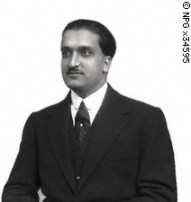
This indicates a virtual return to the situation that prevailed prior to 1953, which caused deep anxiety to Prime Minister Jawaharlal Nehru and his colleagues, particularly Home Minister Sardar Patel. Although the Instrument of Accession signed by the princes who acceded to the Indian Union, including Maharaja Hari Singh, was exactly on these lines, all States followed the nationalist momentum towards full integration in the new nation.
But Sheikh Abdullah created problems from the start, exploiting India’s vulnerability in the Security Council where Britain and America showed unexpected hostility towards India. The Sheikh projected himself as sole spokesman of the people of the erstwhile kingdom (much as Jinnah did for the subcontinent’s Muslims when demanding Pakistan), but acted on behalf of Muslims alone. He had the Maharaja booted out of the State and dealt a series of cruel blows to the Dogras of Jammu, and was exceedingly harsh on Hindu and Sikh refugees from Occupied Kashmir. Indeed, they have been denied state citizenship to this day.
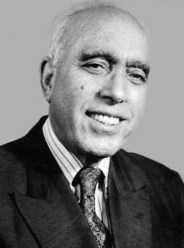 Though Sheikh Abdullah promised Nehru that “Kashmir will be a part of India,” he all along toyed with the idea of independence. In this spirit, he called for a Constituent Assembly without discussing the matter with Nehru (a step that annoyed the Security Council, to New Delhi’s embarrassment), and ensured unanimous election of National Conference delegates by getting all opposition nominations rejected! Sheikh then used the state Constituent Assembly to abolish the rule of the Maharaja and replaced him with a Sadar-e-Riyasat (Governor) to be elected by the Kashmir Legislative Assembly. For political expediency, he got Yuvraj Karan Singh elected as the first Sadar-e-Riyasat in November 1952. This Constituent Assembly also approved a separate flag for the state for all normal occasions, with the Indian flag restricted to formal functions. At the same time, he ensured that the national Constituent Assembly adopted Article 370 which gave J&K special status.
The state Constituent Assembly was a stratagem towards Sheikh’s ultimate objective of an independent, Switzerland-like tourist paradise. Though leaders like Bakshi Ghulam Mohd, G.M. Sadiq, D.P. Dhar, and others tried to ensure some integration with India, the Sheikh group fought to keep Kashmir as autonomous as possible, with only a tenuous bond with India via accession on defence, communications and foreign affairs. Hence he resented the Centre’s attempts for financial integration and extending the jurisdiction of the Comptroller and Auditor General to the state, insisting that “Kashmir’s accession to India will have to be of a restricted nature”. His growing recalcitrance compelled Maulana Azad and Rafi Ahmed Kidwai to urge Nehru to dismiss him.
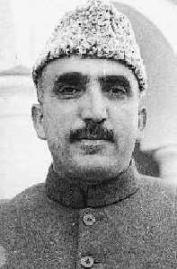 In July 1953, Sheikh Abdullah suddenly went to Tanmarg, near Gulmarg, to meet an emissary from Pakistan, leaving Nehru with no choice but to order his dismissal and arrest. Thereafter, Bakshi Ghulam Mohd was sworn in as state prime minister. He led J&K ably and achieved considerable progress in all spheres. Bakshi took the initiative to integrate the top level administration and police with the all-India services, and brought the jurisdiction of the Supreme Court to J&K. Several other measures of integration were concluded by the time he resigned in 1963 under the Kamraj Plan. This is the crux of the pre- and post-1953 position.
Obviously, any attempt to undo these linkages and restore the pre-1953 position would trigger off secessionism in the Muslim-majority valley and Muslim-majority districts. This is what London and Washington sought to achieve through UN auspices via Dixon and others. President Barack Obama may re-ignite Kashmir via Farooq Kathwari, member of his Advisory Commission on Asian-Americans and Pacific Islanders. Recently, Kathwari visited Srinagar to attend a wedding.
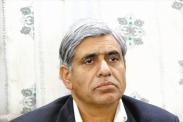 Then, People’s Democratic Party MLA Nizam-ud-din Bhat moved a private member’s bill in the J&K Assembly, seeking deletion of sub-clause (b) of Section 147 in the state constitution, which bars legislation challenging J&K’s status as an integral part of India. The Speaker rejected the bill on Sept 16. Formally, the PDP repudiated Bhat’s move, but its October 2008 document, “The Self-Rule Framework for Kashmir Resolution,” had proposed shared sovereignty with Pakistan, economic integration between the two parts of Kashmir, dual currency, demilitarization, and abolition of Article 356 (imposition of President’s Rule) to J&K.
 Simultaneously, the British House of Commons’ debate on alleged human rights violations in Kashmir fizzled out for poor attendance. But, Admiral Mike Mullen, chairman of the US Joint Chiefs of Staff, speaking at the end of his term at the Carnegie Endowment, said events in Iran, Pakistan, India and China and other neighbouring countries cannot be separated from US strategy in Afghanistan, and solving the complicated issue of Kashmir would also unlock many issues between India and Pakistan… An ominous trend. – Vijayvaani, New Delhi, Sept. 27, 2011
» Sandhya Jain is editor of www.vijayvaani.com
Filed under: india, pakistan | Tagged: bakshi ghulam mohammad, ethnography, geelani, hari singh, history, indian parliment, indian politics, kashmir, kashmir autonomy, kashmir interlocutors, mike mullen, nationalism, nizam-ud-din bhat, omar abdullah, pakistan, patriotism, RSS, sessionism, sheik abdullah, sultan mehmood choudhary | 1 Comment »











