








 India should develop the concept of One Culture, One Region (OCOR) to counter OBOR as history doesn’t support China’s claim on the Silk Road. – Ravi Shankar & Newton Mishra
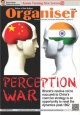
The imperialistic designs of China’s ambitious One Belt, One Road (OBOR) initiative has been discussed across the world, even as Beijing claims the initiative will serve as a platform to promote free-trade, counter anti-globalisation trend and promote harmonious coexistence and cooperation among participating nations. An article in Organiser, mouth piece of Rashtriya Swayam Sangh (RSS), argues that China’s claims are lies. It says that by OBOR, China is trying to show that the “Silk Road” was its historical contribution to the world civilisation.
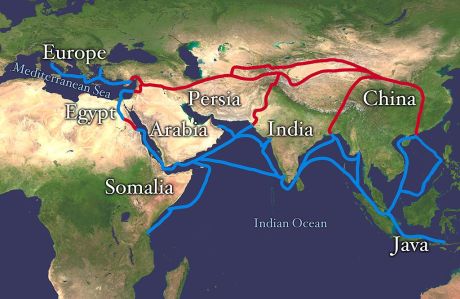
The OBOR initiative includes a maze of roads and port projects including China–Pakistan Economic Corridor (CPEC), Bangladesh, China, India, Myanmar (BCIM) Economic Corridor, New Eurasian Land Bridge, China-Mongolia-Russia Economic Corridor, China-Indochina Peninsula Economic Corridor and 21st century Maritime Silk Road.
The article claims that China “actually wants to dominate the region to overpower India” with the help of OBOR. Similar concerns were also raised by the international media after the first OBOR Summit in China in May. The New York Times had termed OBOR as “global commerce on China’s terms.” It said that Beijing aims to “create a new kind of globalisation that would dispense with the rules of the ageing Western-dominated institutions. The goal is to refashion the global economic order, drawing countries and companies more tightly into China’s orbit.”
So, how to counter OBOR? The article in RSS mouthpiece suggests India should develop the concept of One Culture, One Region (OCOR) to counter OBOR as “history doesn’t support China’s claim on the Silk Road.”
The article has been jointly written by Ravi Shankar, Research Director at Center for Civilisational Studies, New Delhi and Newton Mishra, co-founder, India Internal and International Relationship Research Center, New Delhi.
The authors have tried to bust, what they believe to be “myths” about the Silk Road. First, they say Silk Road is not just a road. According to the article, the term Silk Road was first coined by German geographer Ferdinend Von Rekthofan in 1877 and later supported by another German geographer August Hermann in 1915. Hermann’s essay “The Silk Roads from China to the Roman Empire”, the article argues, “highlighted a common, but misleading sense attached to the silk-road notion: that its importance lay mainly in linking China to the Mediterranean basin.”
According to the authors, the name of Silk Road came into existence only in 1877 but the trade in the Eurasian region had flourished since ancient times. Shankar and Mishra say the region was termed as “Uttarapath” by King Ashoka in 232 BC. Even as China claims that this trade road was developed during Han Dynasty rule in 220 BC, the authors say the map of the period show China was a very small country then. “In fact, before Yuan Dynasty in the thirteenth century, China had never had any say in the Eurasian region. The Yuan dynasty was not a Chinese dynasty; it was the great Mongol Empire. China was only a part of that Empire and at that time the capital Beijing was also not the part of China.”
Second, the authors say Silk Road was not meant only for the business of Silk. Many items and ideas were transmitted across Eurasia through the route. The items like domesticated horse, cotton, spices, chemicals, paper and gunpowder) had a “far greater impact than silk.”
Third, Shankar and Mishra say the Silk Road was not dominated by Chinese traders but by “Indian traders who actually travelled and traded in the entire Eurasian region.” They mention Multan as the biggest trading centres on the so-called Silk Road route, even before the Mauryan Dynasty. “The Hindu traders were at the heart of the Eurasian economics.”
The authors say that all rulers of the region had extended their “protection” to Hindu traders from India. “The Uzbek Khans created a separate administrative post Yasavul-i-Hinduwan meaning Guardians of Hindus. Persian Safavid Empire also gave protection to the Hindu traders so that they can practice their rituals despite the protest of locale Muslims.”
With these “facts”, the article says India, not China had developed the trade route and contributed culturally in the form of ancient Hindu and Buddhist thoughts. “It was Indian philosophy that influenced China. But despite this commercial and cultural supremacy, India never tried to gain political advantage.”
The authors say that the cultural vacuum cannot be fulfilled by “imperialist concept” like OBOR. It can be done by a “human and philosophical approach” and only India has the history of doing so and the country can do it again by promoting “OCOR”.
They suggest that OCOR should be developed as SAARC for the Eurasian countries and Pakistan, Afghanistan, Iran and all Eurasian countries should become a part of it. “OCOR will provide only a common platform for the trade of the commodities and ideas. Its agenda can be developed on the theories of common points of all the different ideological beliefs of this region,” they write.
While OCOR will help in curbing terrorism, war insurgencies, violence and ideological hatred, the authors say it can also teach the world about how to live and progress “with the ideological differences leaving behind all the hatred, unrest and authoritarianism.” – Financial Express, 24 July 2017

Filed under: india | Tagged: culture wars, geopolitics, india, india-china relations, international trade, OBOR, OCOR, psychological warfare | 3 Comments »