















 “Christians who allege that Hindus mix up yoga with the worship of another supreme being than the jealous god Yahweh, have a point. And Hindus who think that yoga implies the worship of a Hindu god likewise have a point — the same point. But those are modern Hindus who talk a lot about yoga but are unlikely to practise it. Contemporary Hinduism is a lot more God-centred than the ancient originators of yoga, such as Patanjali, or even the late-medieval pioneers of Hatha Yoga. Ancient Yoga was certainly “Hindu” in any normal use of the term, but it was not theistic.” — Dr. Koenraad Elst
 A county judge in San Diego CA has ruled that yoga is not always religious (Washington Post, 2 July 2013). Parents in a San Diego school district had complained that yoga is intrinsically intertwined with the Hindu religion and that its practice in a public school setting violates the constitutional separation of church and state. The court ruling means that these parents had it wrong: it is possible to divorce yoga from Hinduism, and that is how the local school authorities have gone about their yoga classes.
While yoga may be religious in some contexts, and then notably Hindu, it can also be practised and taught purely for its benefits. Modern school authorities see these benefits mostly in the form of strength, suppleness and nervous relaxation, as well as combating aggressiveness and bullying. Therapists might add the benefit of restoring or at least improving normalcy in individuals afflicted with burn-out, nervous breakdown, certain complexes and other mental disorders. Serious practitioners would invoke calmness, renunciation, even Liberation (howsoever defined), as worthy goals for human beings who are perfectly healthy from the beginning. But all of them would do so without reference to Shiva or Ganesha or whichever God it is that Hindu yogis invoke.
 Yoga is intrinsically Hindu
This judgment is part of a broader struggle over the origins and nature of yoga. Some Christians, apparently including the litigating parents from San Diego, object that yoga is intrinsically Hindu and that it serves as a conduit for Hindu polytheistic God-worship and even for “evil Hindu social mores” such as caste discrimination, arranged marriage and widow-burning. It is of course also debated in how far these mores and this polytheism are bound up with Hinduism, but it is universally agreed that at least as a system of worship, Hinduism is different from Christianity. For the same reason, these circles had in the past opposed Transcendental Meditation, a simplified form of mantra meditation, for being obviously Hindu even though advertised as “scientific”. They had hired specialized lawyers (or “cult busters”) to show that the various Gurus who seduced Americans into yoga were salesmen of Hinduism-based cults.
These Christians find odd allies in the Hindus who insist that yoga is indeed naturally Hindu, and that the bead-counting and incense-waving and greeting gestures and indeed prayers that Hindu yogis practise all come with the yoga package and cannot be divorced from it. They criticize American yoga aficionados such as many showbiz stars and indeed the San Diego yoga schoolteachers for reducing yoga to a fitness system without its cultural roots.
Yoga is up for grabs
On the other side of the divide are those Hindus who say that yoga is scientific and universal, so that it is only normal for it to take on local cultural forms wherever it goes. The motorcar was invented in Germany, but few people driving a Japanese car still remember this. The aeroplane was invented in America, but this invention is now available to travelers all over the world. The Chinese don’t put a sign “invented in America” on their planes, nor do they pay intellectual property rights on them. Of course, Chinese textbooks have a line or two on the aeroplane’s invention by the Wright brothers, and that nod to American honour will suffice. As the late Bal Thackeray used to say: “You cannot take the ‘national produce’ (swadeshi) policy too far, for then Indians would have to do away with the light bulb.” So, Hindus should be happy that Americans are willing to practise their yoga, and apart from a historical detail of origins, India or Hinduism no longer come in the picture.
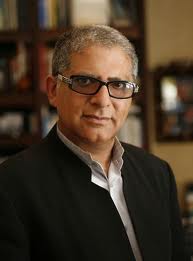 And this still is a neutral rendering of the viewpoint of a sizable number of Hindus. We don’t even mention money-makers like Deepak Chopra who try to obscure yoga’s Hindu origins in order to claim certain yoga techniques as their own. Some yoga schools, whether manned by native Hindus or by Christian-born Westerners, have patented their own brand name and techniques so that nobody, and certainly not Hindu tradition, can claim these. This tendency is strengthened by the attempt of some Hindus to deny a Hindu identity even to the worldview they themselves are advertising, e.g. the Hare Krishnas worship Krishna, a Hindu god par excellence, yet tell Western audiences that they are not Hindu; or the Ramakrishna Mission, founded in the late 19th century under the motto “Say with pride, we are Hindus”, now say that their message is “universal” rather than “narrowly Hindu”.
Again these Hindus find odd allies in many Christians, both of the lukewarm and of the activist kind. Lukewarm Christians as well as New Age ex-Christians see yoga as a neutral and universal commodity. For them, it can be practised as a fitness system without having any serious implications on their worldwide or religion. Just as the European colonizers used the compass and gunpowder without bothering that these were Chinese inventions, American yogis have taken yoga for its tangible benefits without bothering about its Hindu origins. Even the Sanskrit names of the yoga exercises have been translated, so that you can become an accomplished yogi without even being reminded of its exotic origins.
Activist Christians, by contrast, admit that yoga is not religiously neutral. They want to adapt yoga because of its inherent attractiveness and transform it into “Christian yoga”. To them, yoga has indeed historically been linked with Hinduism, but can be delinked from it and tied to another religion. We have even reached the stage where some Christian centres and schools in India offer classes in “Christian yoga”.
Yoga has Hindu roots
So, the San Diego verdict was a victory for lukewarm Hindus and adaptable Christians, and a defeat for serious Hindus and doctrine-conscious Christians. But what do we ourselves make of the issue?
First off, it is a matter of course that yoga is Hindu. The word “Hindu” is a very general term encompassing every Indian form of Pagan religion no matter how old. It is therefore simply silly to say “Yoga is older than Hinduism”, as salesman Deepak Chopra does. The question then becomes: whether yoga can be divorced from Hinduism and given a neutral universal identity, as claimed by the San Diego yoga teachers, or even relinked to another religion, as is claimed by the adepts of “Christian Yoga”.
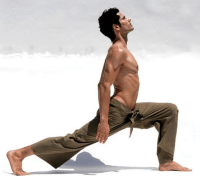 A system of physical fitness, if it is only that, can certainly be integrated in modern Western or purportedly global culture. The Shvetashvatara Upanishad already says, and the later Hatha Yoga classics more colourfully assert, that the yoga practitioner develops a healthy and lustrous body. They even lure the readers into practice by intimating that one becomes irresistible to the opposite sex – the very reason why most modern Americans take up Yoga. Like the aeroplane or the light-bulb, a system of physical fitness can be exported and inculturated, divested of its original couleur locale.
However, it is worth emphasizing that yoga, and even particularly Hatha Yoga, does have Hindu roots, because this seemingly trivial knowledge is now being challenged. A few academics have claimed that Chinese “internal alchemy” (neidan) travelled overseas to coastal India and influenced Indian Siddha yoga and Siddha medicine. A few techniques of Hatha Yoga do seem similar to Daoist exercises from China. The influence has been posited but by no means proven. I am willing to consider it probable, but even then it was only an influence on a few exercises in a long-existing native tradition. It is nobody’s case that the Rg Vedic reference to “muni-s”, wandering ascetics with ashes over their naked bodies (still recognizable as the Naga sadhu-s), or the Upanishadic glorification of the breath as the key to consciousness and self-mastery, or Patañjali’s description of a whole yoga system, is due to foreign influence.
 Very recently, the American media have gone gaga over a theory claiming that hatha yoga is very recent and is essentially a gift of the British colonizers. This can of course not be said for the breathing exercises so typical of Hatha Yoga, but many of the postures are said to be standard exercises of British soldiers, or to be part of Western systems of gymnastics. Even in this limited form, the claim is ridiculous. The essence of hatha-yogic postures is relaxation and allowing a steadily held pose to take its effect over time. By contrast, Western gymnastics pride themselves on being “dynamic”, on emphasizing movement and muscle strength. Further, a very physical circumstance comes in the way: yogic exercises are mostly done on the floor. In cold England, the floor is avoided, witness the generalized use of chairs and of the “English” water closet. Any influence would have to be confined to the standing exercises. At any rate, if at all there was Western influence, it can never have been more than an influence touching the skin of an already old native tradition.
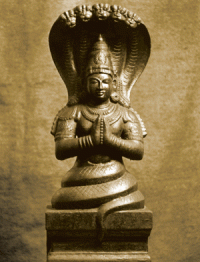
But even Hatha Yoga sees its physical and breathing exercises only as a means to a higher end: liberation. A fortiori, the ancient yoga synthesized by Patañjali was totally geared towards liberation, howsoever defined. The definition of the Buddha’s nirvana (“blowing out”, as of a burning candle) is to get off from the wheel of reincarnations by stopping its motor, viz. desire. Patañjali’s definition is less metaphysical: quieting the mind so that it consciously rests in itself and is not absorbed by its usual objects. It doesn’t matter whether you believe in reincarnation or an afterlife or nothing at all: it suffices to let the Self rest in itself, right now. Whatever liberation may be, it is definitely different from, and incompatible with Christian salvation.
But this is a goal not pursued in most American yoga studios. They aim to make singers better singers, caregivers better caregivers, workers better workers. This has been done before: after the Buddhists had familiarized the Chinese with meditation, some Confucians still rejected the Buddhist philosophy of renunciation and liberation but embraced the practice of meditation, just to “tune their instrument”, to function better in society. You can do this, but it is not the fullness of yoga. Also, all the Western therapeutic adaptations of yoga, as a treatment of physical or mental ailments, are designed to make a defective human being normal; while the original yoga was meant to make normal people liberated. So, by commodifying yoga, Americans are importing something from India, but not the whole package.
 Yoga is not religious
Yoga is Hindu, but it is not religious. When Hindus go deep into the issues raised by the court verdict, they are bound to encounter some problems with their own tradition.
In my opinion, Christians who allege that Hindus mix up yoga with the worship of another supreme being than the jealous god Yahweh, have a point. And Hindus who think that yoga implies the worship of a Hindu god likewise have a point — the same point. But those are modern Hindus who talk a lot about yoga but are unlikely to practise it. Contemporary Hinduism is a lot more God-centred than the ancient originators of yoga, such as Patanjali, or even the late-medieval pioneers of Hatha Yoga. Ancient Yoga was certainly “Hindu” in any normal use of the term, but it was not theistic.
On Rajiv Malhotra’s discussion list, where the verdict is debated, one Hindu recently quoted Arya Samaj founder Swami Dayananda Saraswati with approval as asserting that yoga is “restraining all activities (vritti-s) of mind (chitta) from all evil and unrighteous affairs and fixing the same in God alone, for the bliss and beatitude is yoga and disobedience of God’s injunction and indulgence in evil thoughts and deeds is viyoga, i.e., remaining away from God”. I am not sure about the exactness of this “quote”, but it gives the gist of Dayanada’s thinking, and it certainly renders the thinking of this particular Hindu and many millions of contemporary Hindus.
In reality, yoga is not about evil at all. It restrains good motions of the mind (i.e. thoughts) as much as evil ones. Hinduism is quite conscious of good and evil, but unlike Christianity, it subordinates this concern (on which the Christian core doctrines of hereditary sin and salvation are based) to the concern for liberation. Patañjali defines yoga as “restraining the movements of the mind”, full stop. Dayananda’s additional considerations of good and evil, and especially his bringing in “God”, are typical of modern devotional Hinduism or bhakti. This very successful movement, which eclipsed the non-theistic trends in Hinduism (Advaita Vedanta, Sankhya, Mimansa, Buddhism), is the historical antagonist of Hatha Yoga. It teaches that liberation does not mean “isolation” (of consciousness from its objects, Patañjali’s goal), does not mean identity with the Absolute, but aspires no higher than watching God face to face, much like Sufi and Christian mysticism. It also rejects the emphasis yoga puts on techniques. If God’s grace is there to help you, what use are techniques? By contrast, yoga means reaching the goal, liberation, by means of techniques.
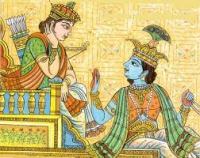 The trouble already started with the Bhagavad Gita. I have it on good Hindu authority, but I have also seen it for myself, that the Gita is a work of “synthesis”. Then already, Hindus were enamoured of synthesis. Thus, this is where we first find the notion of an equality between three disciplines: karma yoga, “the discipline of action” (then meaning Vedic sacrifice, now moralistically interpreted as good works), jñana yoga, “the discipline of knowledge” (meaning Upanishadic knowledge of the Self, i.e. yoga proper), and bhakti yoga, “the discipline of devotion”. In fact, when Yajñavalkya introduces the notion of the Self, he pits its knowledge against the Vedic rituals. The ancient Vedas and esp. the Brahmanas (the technical manuals of ritual) are centred on karmakanda, “the (ritual) action half”, while the Upanishads are centred on jñanakanda, “the knowledge half”. While yogis would simply choose the latter, the Gita proposes a synthesis, viz. the third pole, bhakti.
The book discusses a number of then-popular Hindu philosophies, but interjects in every chapter one sentence that does not follow from these philosophies at all, namely that all this shall be given to you if you are but devoted to Me, Krishna. You can read Patañjali’s Yoga Sutra, but you will not find Krishna there. You can read the Buddha’s teachings on meditation, but Krishna is not there. Yoga can perfectly exist without Krishna.
Modern bhakti Hindus project their own bhakti beliefs on the whole of Hindu history. They deny the reality of change (both progress and degeneration) in Hindu history. In fact, it is they who realize the Westerners’ fond image of Hinduism as frozen in time, unchangeable. So, they rewrite the theory of yoga as dealing with God. In fact, the more God, the less yoga, and the more yoga, the less God. – Koenraad Elst Blog, 10 June 2013
Filed under: india, USA | Tagged: christian inculturation, church and state separation, culture, god, hatha yoga, hindu, hindu philosophy, hindu religion, inculturation, india, psychological warfare, religion, USA, yoga | 8 Comments »










 BHARATA BHARATI