










 On 7-10 January 2014, a Vedic conference has been taking place at Kozhikode (Calicut), Kerala, India. This is the town where Vasco da Gama first landed in 1498, thus starting the colonial entreprise in Asia. It was very well-organized and took place in the Gateway Hotel. This is a very expensive place, but so far, I think every rupee spent was worth it.
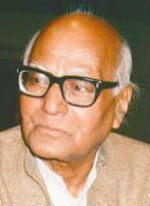
The first non-personnel person I met here was, of all people, conference convenor Michael Witzel, Wales professor of Sanskrit at Harvard. For quite some time now I have taken my distance from the counterproductive Hindu habit of treating him as a hate figure. Feelings about persons stand in the way of a focus on ideas, and all these fulminations against Witzel or against Max Müller have not contributed anything at all to a solution of the Aryan debate. In fact, I had a rather positive impression of Witzel, and seeing the old man with his Japanese wife made all doubts disappear. I guess divorced men tend to admire couples growing old together.
 AIT assumptions
Apart from a number of Nambudiri Brahmin as well as non-Nambudiri Keralite traditions, most of the conference concerned technical points of Vedic philology, with which I will not bore my readership. But one of the reasons for me to participate here was that I expected some speakers who assume an Aryan invasion to nonetheless give specific data that, when well considered, give “testimony against interest”, viz. support the Out-of-India theory. The same thing has happened at the Indo-European conferences I participated in during the past six months (Leiden, Louvain-la-Neuve, Münster and Leipzig): speakers who had never even considered the OIT innocently gave information that contradicted their AIT assumption and supported the OIT.
Many participants here never even think about Aryan origins. They study the Nambudiri traditions of transmission, the way the Vedas are taken to underpin the Shastras (lawbooks), or the distinctive  interpretation by some medieval commentator. Those who bring it up, usually have learned it in university and never seen an occasion to question it. Those who, like Witzel, actually try to underpin it with arguments, are few and far between. There are only a handful of scholars competently arguing for the OIT, but on the AIT side, it is not really different.
T.P. Mahadevan wove the invasion narrative into his (otherwise very interesting) presentation about the genealogies of the Vedic seers and their descendants, so I asked him straight-away if he had any evidence for the framework he was using. As expected, he admitted he had no evidence but “knew” that the invasion scenario just had to be true and that it had been certified by the linguists. Yes, in this debate, there is always someone else who has the evidence.
 Finally the evidence?
Kanad Sinha, a young researcher from Jawaharlal Nehru University, presented a paper on the early Rg-Vedic Battle of the Ten Kings and of the use made by posterity of the antagonism between the seers for both contending sides, Vasishtha and Vishvamitra. Though he had announced during a conversation beforehand that his paper would give evidence for the AIT, I waited in vain for this evidence. He used the AIT-generated categories of “Aryan invaders” versus “natives” profusely to explain all kinds of later developments, but assuming the Aryan invasion framework is not the same as proving it. The 19th-century translator Ralph Griffith frequently refers to an Aryan invasion in his footnotes (taking every reference to “black” as referring to the skin colour of the natives, for instance), but you will scan his book in vain for any “proof” of this invasion. Sinha’s chosen subject at any rate concerned a battle whose parties were “already” based in India, so no evidence of the invasion could be expected.
If he had given any evidence for the Aryan invasion, his name would be made instantly. After all, at least 90% of his audience consisted of people who assume the same framework but have never seen any evidence for it. If specifically dealing with the Aryan question, they have generally conceded in writing that the Vedas contain no reference to an invasion, nor does the archaeological record. So they would applaud him if he came up with the long-awaited proof.
Is Kanad Sinha a bad person, as Hindu nationalists with a conspiratorial mindset are sure to allege? I, for one, did not have that impression. But like most youngsters in India, he has imbued a large dose of Aryan invasion propaganda, and he has been put off AIT paradigm and applying AIT-derived categories then subjectively fortifies their belief in the theory. As long as this approach doesn’t land them in consciously experienced contradictions, they think that they have “proven” the theory. Lazy-minded Hindus, no doubt good at making money but thoroughly bad at analysing historical problems, have been saying for at least fifteen years that “nobody believes in the AIT anymore”, when the reality once more proves to be that one half of the scholars consciously uphold the AIT while the other half just assumes it without even knowing that it is being challenged.
 Avesta younger than Rg-Veda
A British professor from Oxford, Elizabeth Tucker, read a paper on the worship of the waters in the Atharva-Veda and the Avesta. To explain water names like praskadvari and takvari, she first focused on the suffix –vari, which in the Rg-Vedic family books formed the feminine counterpart of the masculine –van, but in the later books became an independent suffix. For the Avesta, she did not find this ancient Vedic pairing. As for the water goddesses, this was a cult typical of the Avesta and the Atharva-Veda but not of the family books, where another mythology prevailed, viz. of Indra releasing the waters by defeating the reptile Vrtra.
In both cases, the linguistics of -vari and the religious status of the waters, the situation in the Avesta differed from that in the family books but was the same as in the later Vedic literature. I deduce that the Avesta is younger than the family books but synchronous with the younger layers of the Vedas, as parts of a common Indo-Iranian culture. The AIT-necessitated scenario given by the speaker, viz. that there first was an Indo-Iranian culture with the worship of the water goddesses, which was preserved in the Avesta but lost in the family books and later revived in the Atharva-Veda, doesn’t hold water.
So, this is a modest case of a scholar who assumes the AIT but presents data that are more logically explained by the OIT. By contrast, not a single speaker managed to prove the AIT (which most didn’t think necessary anyway), let alone present data that were force-fitted into the OIT but somehow fit the AIT better. – Koenraad Elst Blog, 9 January 2014
» Koenraad Elst distinguished himself early on as eager to learn and to dissent. He studied at the KU Leuven, obtaining MA degrees in Sinology, Indology and Philosophy. After a research stay at Benares Hindu University he did original fieldwork for a doctorate on Hindu nationalism, which he obtained magna cum laude in 1998. As an independent researcher he earned laurels and ostracism with his findings on hot items like Islam, multiculturalism and the secular state, the roots of Indo-European, the Ayodhya temple/mosque dispute and Mahatma Gandhi’s legacy. He blogs at http://koenraadelst.blogspot.in/
Filed under: india | Tagged: aryan invasion theory, avesta, history, india, indian history, indology, linguistics, michael witzel, out of india theory, psychological warfare, rishis, sanskrit, sanskrit literature, t.p. mahadevan, vedas | 7 Comments »







 BHARATA BHARATI