














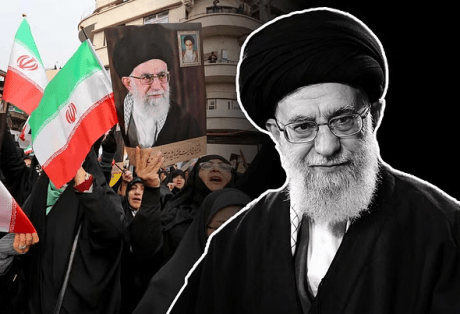
 Iran has chosen to criticise India based on unfounded allegations regarding the treatment of Muslims. Perhaps this is a “heat of the moment” reaction, given Iran’s current difficulties in the region, particularly with Israel and its allies. – Monica Verma
This is not the first time an Iranian leader has criticised India over its treatment of Muslims. In 2019, after India repealed Article 370 in Kashmir, Khamenei condemned the move and expressed concern for the Muslim population in the region. He made similar remarks after the 2020 Delhi riots, where police investigations revealed a broader Islamist conspiracy to incite violence in India’s capital, but Khamenei blamed it on “extremist Hindus.” This year’s remark, made on the occasion of Prophet Mohammed’s birth anniversary, echoes a similar call concerning the ‘plight’ of Indian Muslims that Khamenei made in 2018.
Meanwhile, India has condemned Khamenei’s remarks in the strongest terms, calling them “misinformed and unacceptable.” India has also urged Iran to reflect on its own track record before commenting on India. According to a United Nations report, over 400 people have been executed in Iran in the past year alone, including around 15 women. Human rights activists in the country claim that due process was not followed in these cases, with people being charged with petty crimes such as not wearing a hijab or consuming drugs. Even minors have faced the same fate, with a 16-year-old executed last year on murder charges.
Ironically, on the same day Khamenei made these remarks indicting India over the treatment of its Muslim minorities, people in Iran were observing the second anniversary of Mahsa Amini’s death in police custody. Several girls and young women raised the slogan, “Jin, Jiyan, Azadi” (Woman, Life, Freedom) and went on hunger strike on Monday to mark Amini’s tragic death in 2022, after she was brutally tortured by Iran’s morality police for not wearing a hijab. This incident sparked a wave of protests across the country, with many taking to the streets to voice their opposition to state repression and express dissatisfaction with the regime.
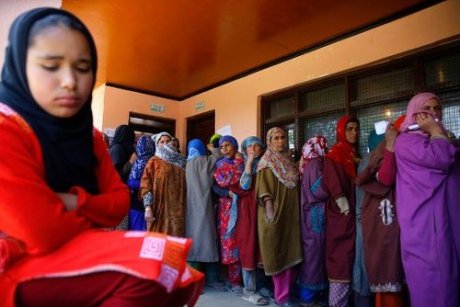
Interestingly, while people in Iran are fighting against the repressive state, Kashmiri Muslims—whose cause Khamenei has championed in recent years—are enjoying a much better quality of life, with new opportunities emerging. In fact, Kashmir is set to witness a major electoral exercise starting this month, with around 219 candidates contesting for 24 assembly segments. Over 2.3 million people have registered to vote in the upcoming elections, with about 150,000 first-time voters aged 18 or above.
Unlike in Iran, where women are struggling to have their voices heard in the country’s political system, more than 1.1 million female voters in Kashmir will be freely exercising their right to vote. Moreover, there has been a 57 per cent increase in the number of women candidates compared to the last election in 2014. Observing the vibrant democratic landscape in Kashmir, one could easily point out to Khamenei that Indian Muslims enjoy far more political freedom than Iranian Muslims can dream of in their lifetime.
Despite being aware of how well India treats its minorities, including Muslims, it is difficult to expect an Iranian leader to not make it a matter of politicking. After all, Iran is locked in a battle for supremacy with the Arab world over who is the true leader of the Islamic community. This signalling to fellow Islamic countries prompts Iranian leaders to repeatedly raise the plight of Palestinians, Rohingyas, and Kashmiri Muslims. Yet even in this, Khamenei comes across as hypocritical. If he truly cared for the plight of Muslims, he would also address the persecution of Shia Muslims in Pakistan or the state-led suppression of Uighur Muslims in China’s Xinjiang province.
Genuine concern would also lead him to thank, rather than criticise, India because, outside Iran, the safest place for Shia Muslims is, arguably, India. In my conversations with Kashmiri Muslims, a vast majority of whom are Shia, I have often been told how they feared the prospect of “Azadi” or a merger with Pakistan in the past, as it was the Indian state that ensured their safety.
Iran is a friendly country for India and an important part of the nation’s strategic outreach in West Asia. Despite strengthening ties with the Arab world and Israel over the last decade, the current Modi government has worked to maintain first-order relations with Iran. A significant motivation behind this is India’s desire to secure connectivity to Central Asia and beyond, into Eurasia, via the Chabahar Port in Iran. India has also positioned the port as part of the International North-South Trade Corridor, which could help Iran mitigate its economic isolation by the West.
Yet, Iran has chosen to criticise India based on unfounded allegations regarding the treatment of Muslims. Perhaps this is a “heat of the moment” reaction, given Iran’s current difficulties in the region, particularly with Israel and its allies. Israel has intensified its actions against Iranian proxies, including Hezbollah and Hamas, which may have rattled Iran.
Recently, a section in India also criticised the country’s arms exports to Israel, which are being utilised in the conflict. It is highly likely that this may be Iran’s way of avenging India’s arms supply to Israel. But again, this is not justified, as India is not violating any international laws and is merely pursuing its national interest of building a robust defence industrial base.
As for Iran’s repeated calls regarding the “Ummah,” it is inappropriate to raise such concerns with a pluralistic country like India. India is home to multiple religions and ensures equality and freedom through its constitution. Indian Muslims, like all other citizens, deserve to live with dignity, free from repression, but it is India’s constitutional framework that is best suited to arbitrate this, not any external country. – News18, 18 September 2024
› Dr. Monica Verma is a New Delhi-based commentator on geopolitics and foreign policy.
Filed under: india, israel | Tagged: ali khamenei, criticism of india, india-iran relations, indian muslims, theocracy | Comments Off on Theocracies like Iran should stay out of India’s affairs – Monica Verma











